



















Blog
Best Welding Earth Clamps for Trade Work
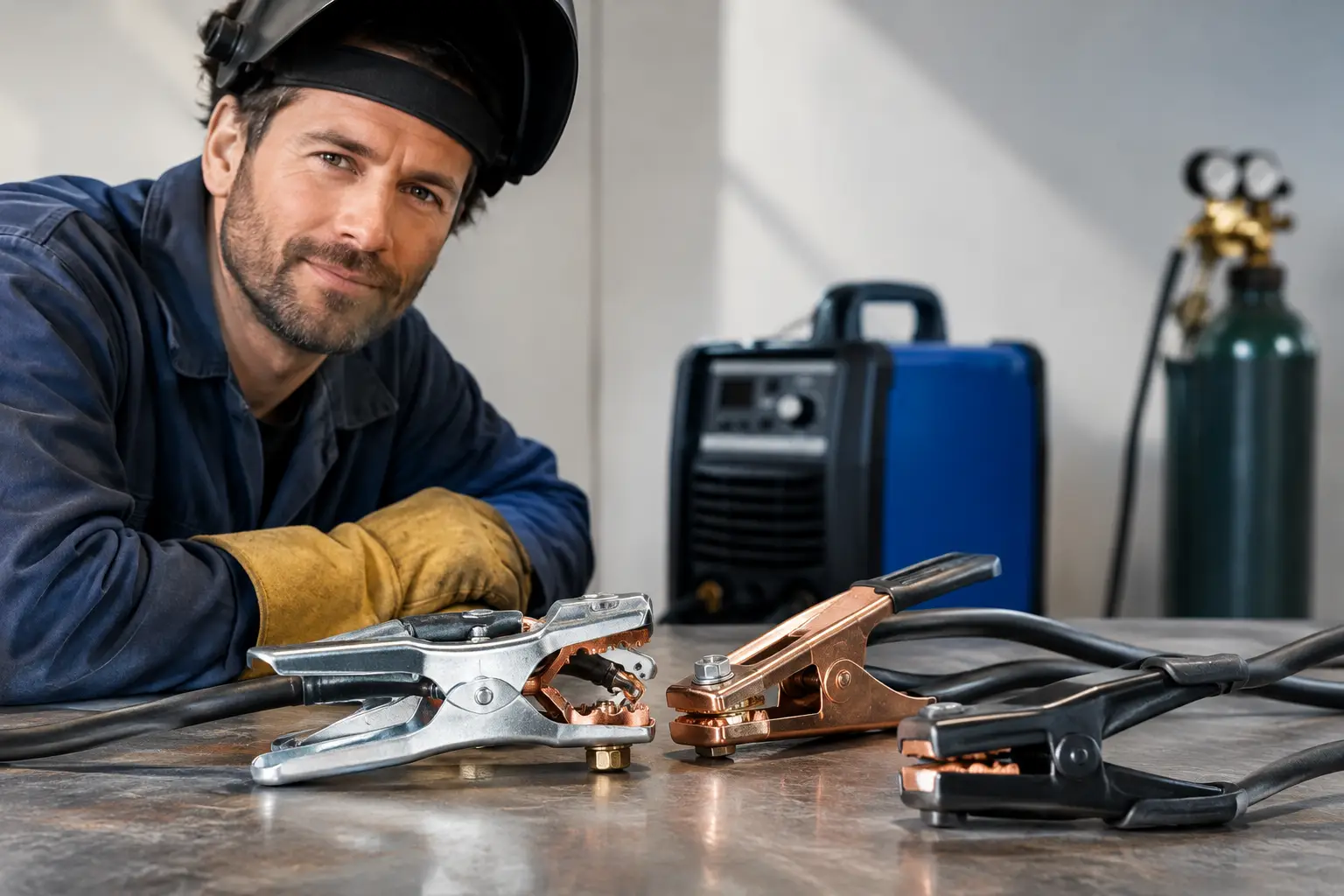
A welding set can have the correct power source, sound consumables and an experienced operator, yet still perform poorly because the return connection is inadequate. The best welding earth clamps maintain firm, clean contact with the workpiece, carrying welding current back to the machine without excessive resistance, heat or voltage loss.
Often called an earth clamp on site, this component is more accurately the welding return clamp. Its condition directly affects arc starting, arc stability and the amount of heat generated at the connection. A weak, corroded or undersized clamp can lead to erratic welding performance that is too easily blamed on the torch, electrode or machine settings.
What Makes the Best Welding Earth Clamps?
A good earth clamp is not simply the one with the highest quoted amperage. Current rating matters, but it must be matched with contact pressure, jaw design, cable capacity and the actual duty cycle of the job.
For regular fabrication work, the clamp needs to grip securely without being easily knocked loose when the work is repositioned. It also needs a broad enough contact area to carry current effectively. A small point of contact can concentrate resistance and heat, particularly during sustained high-amperage welding.
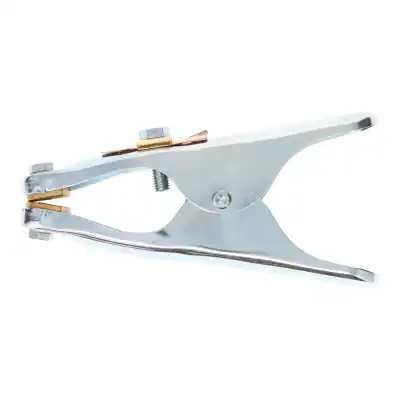
Material quality is equally relevant. Copper and brass contact components generally offer better conductivity than light steel alternatives, while a strong steel body provides the mechanical durability needed in a busy workshop. The most dependable designs combine a substantial conductive path with a spring or screw mechanism capable of maintaining pressure over time.
It is also worth checking how the cable terminates into the clamp. A poor connection at the cable lug can create just as much resistance as poor jaw contact. The cable should be securely fixed, correctly sized for the welding current and protected from repeated flexing where it enters the clamp.
Choosing an Earth Clamp by Welding Application
The right clamp depends on the process, output and working conditions. There is no benefit in fitting an oversized clamp to a light repair inverter if the cable and connectors are rated lower. Equally, a light-duty spring clamp is not a sensible choice for a fabrication bay running prolonged welds at high current.
General Fabrication and Repair Work
For routine MIG welding, MMA repairs and general steel fabrication, a heavy-duty spring earth clamp is often the practical choice. It is quick to fit, works across a range of section sizes and can be moved easily as the job progresses.
Look for strong spring tension, thick jaws and clean conductive contact faces. The clamp should open wide enough to grip plate, box section, channels and fabricated assemblies without forcing the operator to search for a narrow edge. For this type of work, reliability and speed matter more than specialised features.
High-Amperage or Extended-Duty Welding
Where welding current is high or arc-on time is significant, choose a clamp with a current rating that provides a realistic margin above normal operating output. A clamp working constantly at its limit will run hotter, lose spring performance more quickly and may damage the cable connection.
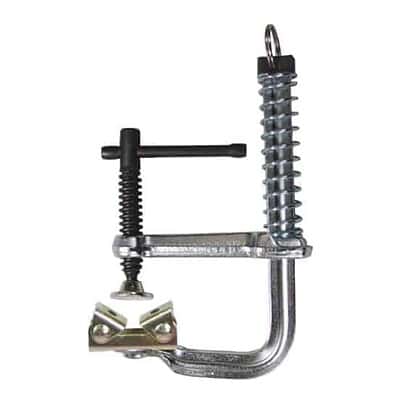
Screw-type earth clamps are often a strong option for static, heavy-duty work. Once tightened onto clean steel, they provide consistent pressure and a large contact area. They take longer to position than spring clamps, but that trade-off is worthwhile where the work remains in one place and a dependable return path is critical.
Pipework, Structural Steel and Site Repairs
Site work introduces dirt, paint, weather exposure and awkward access. A clamp may need to attach to a structural member rather than directly beside the weld. In these conditions, jaw depth and grip are as important as headline amp rating.
A sturdy spring clamp with serrated jaws can grip irregular steel effectively, but the contact point must still be prepared. Removing paint, rust, galvanising residue and heavy scale at the connection point reduces resistance and helps prevent heat damage to the clamp. Do not rely on the jaws cutting through coatings to make a suitable electrical connection.
Bench Work and Repetitive Production
For repeated welding on a fixed bench or jig, a permanent return point can be more efficient than moving a clamp for every component. The return lead may be secured to the bench structure, provided the bench is electrically continuous and the workpiece has a clean, reliable conductive path to it.
This arrangement must be inspected regularly. Paint, spatter build-up, loose bolts and corroded joints can interrupt continuity. For precision work, clamping directly to the component or fixture remains the safer choice when there is any doubt about the return path.
Clamp Rating Must Match the Full Return Circuit
An earth clamp does not work in isolation. Its rating needs to make sense alongside the return cable, dinse connector, machine output and duty cycle. A 500 A clamp fitted to a light return cable does not create a 500 A return circuit. The lowest-rated component remains the limiting factor.
When selecting a clamp, consider the maximum welding current likely to be used, not just the machine’s nominal setting for most jobs. Also consider whether the output is continuous or intermittent. A workshop completing short tack welds places very different demands on an earth clamp compared with a team depositing long fillet welds on heavy fabrication.
Cable size is particularly important. An undersized return cable causes voltage drop and heat build-up, even with a quality clamp. If a lead feels hot after normal use, inspect the entire circuit: clamp jaws, cable lug, cable condition, machine connector and workpiece contact point.
Signs Your Existing Earth Clamp Should Be Replaced
Earth clamps are consumable workshop items in all but name. They are exposed to weld spatter, grinding dust, impacts and repeated heating cycles. A clamp that still physically grips may no longer be performing properly.
Replace or repair the clamp if the spring has weakened, the jaws are badly pitted, the copper contact surfaces are damaged, or the cable lug is loose. Heat discolouration around the cable entry is another warning sign. It usually indicates high resistance at the connection and should not be ignored.
Intermittent arc starting, unstable arc characteristics and localised heating at the clamp can also point to a failing return connection. Before changing welding parameters or replacing consumables, clean the contact point and inspect the earth lead assembly. This simple check often identifies the fault quickly.
Good Earth Clamp Practice on the Job
Clamp position affects weld quality and equipment life. Position the return clamp as close to the weld area as practical, particularly on large fabrications. This reduces the length of the current path through the workpiece and helps avoid unwanted current travelling through bearings, moving joints, electronic components or poor mechanical connections.
Attach directly to bare, clean metal wherever possible. Grind a small contact area if necessary, then place the clamp where it will not be exposed to excessive spatter or accidental impact. Avoid attaching the return clamp to lifting chains, hydraulic components, machine shafts or assemblies containing sensitive electrical equipment.
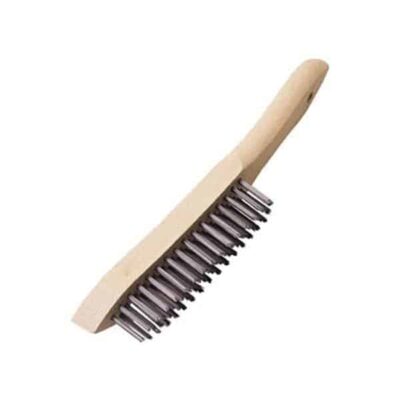
Keep the jaws clean. A quick wire-brush clean during routine workshop maintenance removes spatter and oxidation before they become a resistance problem. Check spring action at the same time. If the clamp no longer closes firmly, replacement is normally more economical than trying to extend its service life.
A Practical Buying Decision
For most professional fabrication environments, the best choice is a heavy-duty earth clamp with a genuine current rating suited to the machine, strong spring pressure, substantial conductive jaws and a secure cable termination. Where current is high and the work remains fixed, a screw-type clamp may provide a better connection and longer service life.
Avoid choosing solely on price or on the largest number stamped on the handle. A correctly specified clamp, fitted to sound cable and connected to clean steel, protects welding performance every time the arc is struck. It is a small part of the set-up, but it is one of the parts that keeps the whole job moving.