










Blog
Bolted Versus Welded Brackets for Fabrication
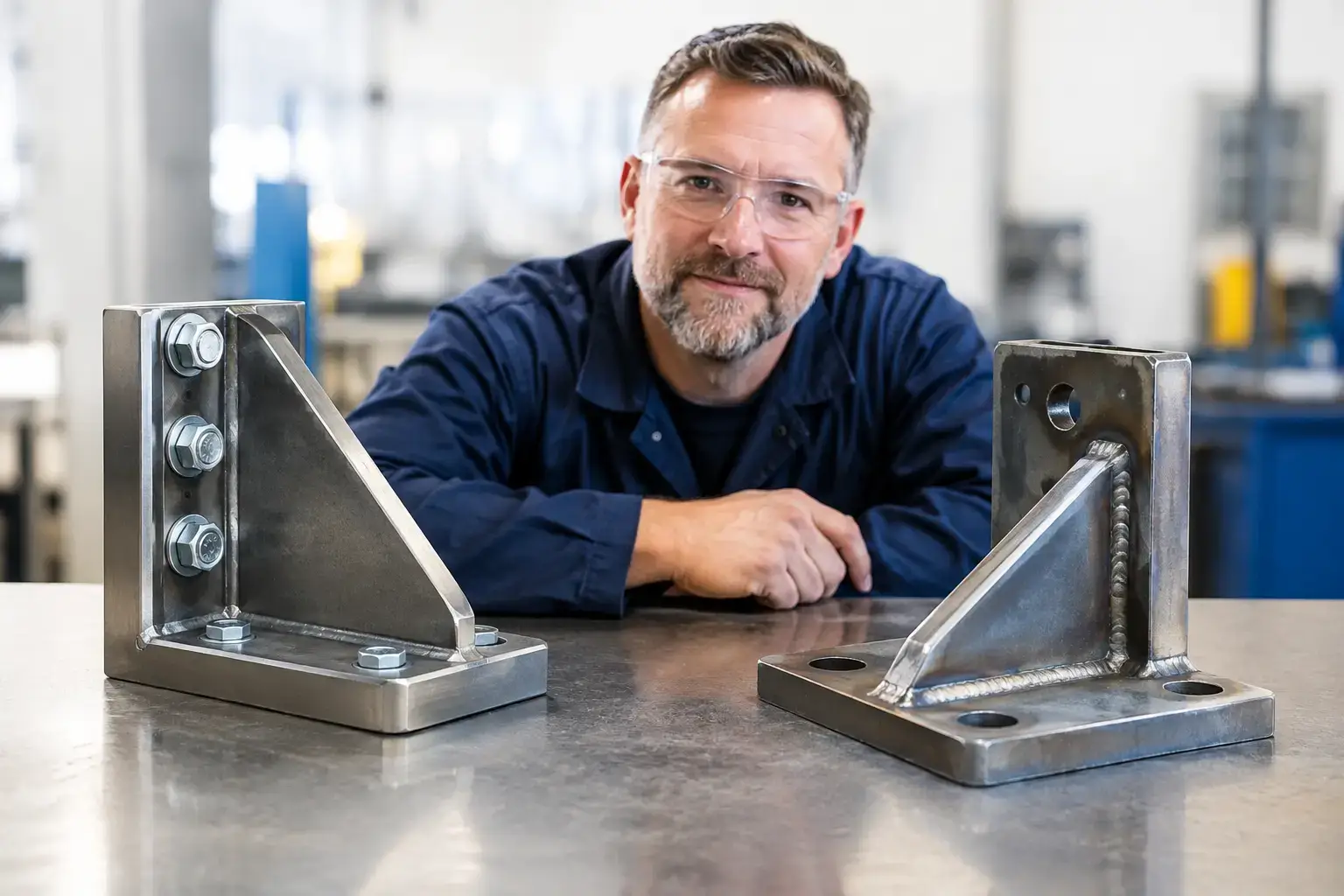
A bracket that takes ten minutes to fit can dictate years of maintenance access, alignment accuracy and structural performance. The decision between bolted versus welded brackets is therefore not simply a question of what is quickest on the shop floor. It determines how the assembly can be inspected, adjusted, repaired and, if necessary, replaced.
For fabrication managers, welders and maintenance teams, the correct choice starts with the load path and ends with the working environment. A welded bracket can create a permanent, compact connection with no separate fasteners to check. A bolted bracket can provide controlled installation, easier site work and a practical route for future removal. Neither is automatically stronger or more professional. The detail, material and application decide it.
Bolted versus welded brackets: the main difference
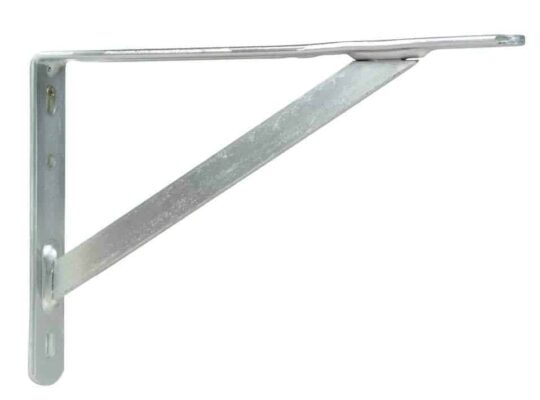
A welded bracket transfers load directly into the parent structure through a designed weld joint. When correctly specified and welded, it becomes part of the assembly. This makes welded brackets well suited to frames, machine bases, guard structures, supports and fabricated components where permanence, stiffness and a clean profile matter.
A bolted bracket uses mechanical fasteners to clamp the bracket to the supporting member. Load is carried through bolt shear, tension, friction in a slip-resistant joint, bearing against the holes, or a combination of these. The connection remains removable, which is often its greatest operational advantage.
The comparison is not just weld strength against bolt strength. A welded joint must be assessed for weld size, weld length, access, parent metal thickness, heat input and fatigue loading. A bolted joint must be assessed for bolt grade, diameter, tightening method, edge distances, hole condition, joint slip and access for spanners or sockets. Poorly detailed versions of either can fail early.
When welded brackets are the better engineering choice
Welded brackets are normally preferred where the bracket is intended to remain for the life of the fabrication and where the connection needs maximum stiffness. A bracket supporting a fixed cross-member, guarding panel frame or structural cleat can often be made more compact when welded than when designed around bolt clearances and tool access.
They are also useful where the supporting section is too thin for a reliable bolted connection. Bolting through thin-wall box section, sheet or light channel can crush the material, pull through under load or introduce local distortion unless backing plates, crush tubes or spreader plates are added. In these cases, a correctly designed weld may be the cleaner solution.
Welding removes the need for protruding bolt heads, nuts and washers. This matters around moving equipment, narrow clearances and surfaces that need to remain flush. It can also reduce parts count, which is useful for repeat production. A fabricated bracket can arrive as a completed item rather than as a kit requiring installation hardware.
There are limits. Welding introduces heat, and heat can distort a bracket or the component it is fitted to. This is particularly relevant on thin material, machined parts, galvanised steel and assemblies that must hold close tolerances. Welding also changes the local metallurgy of some materials. High-strength steels, aluminium alloys and stainless steel all require material-specific procedures, consumables and cleaning controls.
Weld quality must match the service duty
A welded bracket is only as dependable as its joint preparation and execution. The required weld type should be stated clearly: fillet weld, full penetration butt weld, intermittent weld or another engineered detail. Do not specify a heavy continuous weld where a properly sized weld is sufficient, especially on light sections where excess heat will create distortion.
For cyclic loading, weld terminations and geometry need particular attention. Sharp transitions, undercut, stop-start defects and poor access at the root can become fatigue initiation points. If the bracket supports vibrating plant, repeated impacts or rotating equipment, the weld detail needs engineering consideration rather than a visual judgement alone.
Where bolted brackets make more sense
Bolted brackets are the practical choice when future access, adjustment or replacement is expected. Plant maintenance teams regularly need to remove guards, supports, sensors, cable trays, service panels and machine attachments. A bolted connection allows this without cutting, grinding or repainting the parent structure.
They are often the better option for site installation. Welding on site may require hot-work permits, fire watch arrangements, isolation of nearby equipment and surface preparation that is difficult to achieve in a live facility. A bolted bracket can usually be fitted with standard hand tools or controlled torque equipment, provided the installer has adequate access.
Bolted connections also avoid heat damage to finished coatings. If a structural member has already been painted, galvanised or otherwise protected, welding will burn back the protective layer and require careful repair. This can be managed, but it adds labour and creates a potential corrosion point if the repair is incomplete.
Adjustment is another advantage. Slotted holes can allow controlled positional movement during installation, which is useful for aligning guards, railings, conveyors and secondary steelwork. Slots must be designed deliberately, however. They reduce net section and can allow movement under vibration if the joint is not clamped and tightened correctly.
Fastener selection is part of the bracket design
A bolted bracket should never be treated as a generic plate with whichever bolts are available in the stores. Bolt diameter and property class must suit the applied load, while washers must spread load adequately and protect the bracket surface where needed. The bracket thickness around the hole must resist bearing and tear-out, and the support member must be capable of taking the local load.
For exposed locations, corrosion compatibility matters. Using unsuitable fasteners against stainless steel, aluminium or coated steel can create staining, galvanic corrosion or seizure during later removal. If the joint will see vibration, specify the locking method rather than relying on a standard nut alone. This may involve prevailing-torque nuts, lock nuts, tab washers or another appropriate retention system.
Tightening is equally critical. Under-tightened bolts can loosen, fret and permit joint movement. Excessive tightening can strip threads, crush thin material or overstress the fastener. Where preload is essential to prevent slip, use a defined tightening procedure and make it achievable with the available access.
Strength, stiffness and fatigue are not the same thing
It is common to describe a welded bracket as stronger, but that statement is incomplete. A well-designed bolted bracket can carry substantial loads, and a poorly welded bracket can be weak or unreliable. The relevant question is how the connection behaves under the actual service load.
For a static load, both options may have ample capacity. Under repeated loading, vibration or shock, stiffness and movement become more significant. A welded bracket may offer higher local stiffness because there is no interface between connected parts. A bolted joint can also perform well in fatigue if it is correctly preloaded and designed to prevent relative movement, but a loose or slipping joint will deteriorate quickly.
Consider eccentric loading as well. A bracket carrying a load away from its fixing face creates a bending moment. This can place high demand on the weld toes or on the upper bolts, depending on the layout. Increasing bracket depth, adding gussets, spreading bolt centres or revising the load position may improve performance more effectively than simply increasing weld size or bolt diameter.
Fabrication and installation considerations
In a controlled workshop, welding may be faster and more economical for repeated bracket assemblies. Jigs can hold components in position, weld sequences can be standardised and inspection is easier. The labour saving from avoiding drilling, hardware selection and final bolting can be significant across a production run.
For one-off modifications or work on installed plant, bolting can reduce disruption. There is no weld spatter, no heat-affected area and less requirement to protect adjacent hoses, cables, bearings or finished surfaces. This is especially useful in maintenance environments where downtime is expensive.
Access can reverse the decision. A bracket may look straightforward to bolt until the rear face is inaccessible for a nut and washer. Threaded holes, rivet nuts or captive fasteners may solve the issue, but each brings its own load and service limitations. Similarly, a weld may be specified on a drawing but impossible to place properly because the torch cannot reach the joint at the required angle.
Corrosion protection and finish
Welded brackets need attention after fabrication. Slag, spatter and surface contamination should be removed before coating. Weld profiles should allow paint coverage, and crevices that trap water should be avoided. If galvanising is planned, provide venting and drainage where hollow sections are involved, and account for the effect of the process on fit-up and threads.
Bolted brackets introduce interfaces where moisture can sit between plates. Sealants, suitable coatings and drainage details may be required in external or washdown environments. Fasteners should be selected to suit the corrosion category, not merely the initial appearance of the assembly.
If the bracket will be removed regularly, avoid finishes that make later release difficult. A practical maintenance connection needs both corrosion resistance and a realistic method of disassembly after years in service.
Specify the bracket for its full working life
The right choice comes from asking what the bracket must do after installation. If it is permanent, highly loaded, space constrained and fabricated under controlled conditions, a welded detail is often the sensible route. If it needs adjustment, regular removal, site installation or protection from welding heat, a bolted connection is usually more practical.
Before releasing the job, check the load direction, support material, access for welding or tightening, environmental exposure, inspection requirement and maintenance plan. A bracket should not merely survive the first installation. It should continue to do its job safely when the plant is vibrating, the coating is ageing and a fitter has to work on it years later.