




Blog
Choosing Industrial Fasteners for Fabrication
A failed joint rarely gives much warning. In fabrication, maintenance and site work, the difference between a sound assembly and a call-back often comes down to the fastener specification rather than the visible steelwork around it. Industrial fasteners are not just consumables picked from a bin. They are load-bearing components that affect strength, service life, inspection results and downtime.
For buyers working across welding, metalworking and plant maintenance, that matters. The right bolt, nut, washer or threaded fixing has to suit the substrate, the environment, the load path and the installation method. If one of those is wrong, even a well-made structure can loosen, corrode or distort long before the rest of the job reaches the end of its design life.
What counts as industrial fasteners?
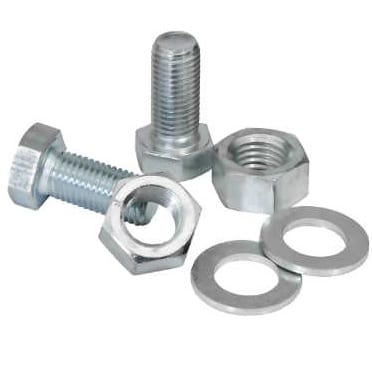
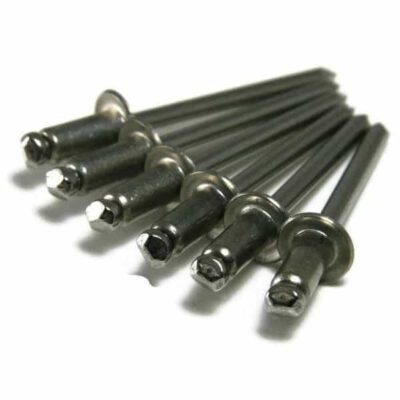
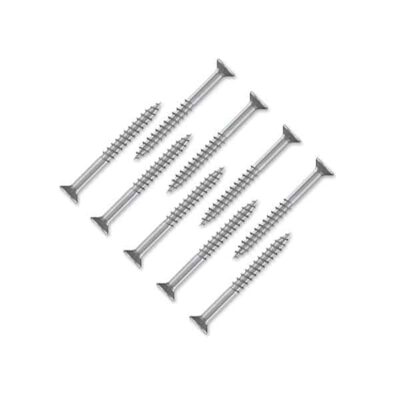
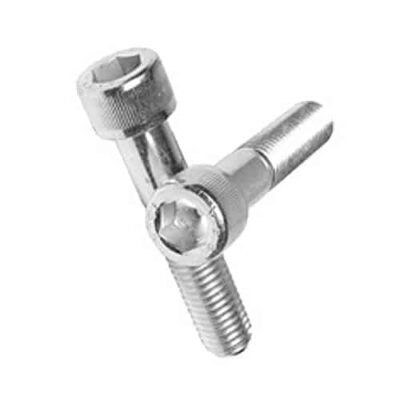
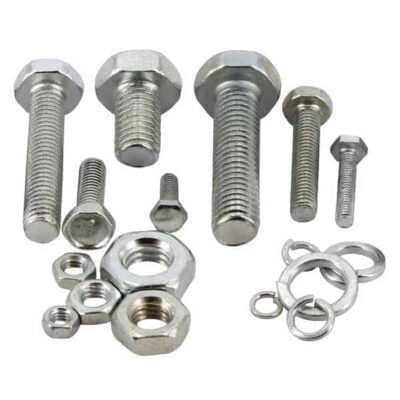
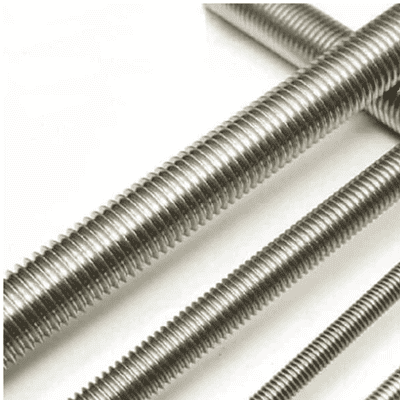
In practical terms, industrial fasteners are the mechanical components used to join, clamp, secure or position parts in commercial and heavy-duty applications. That includes standard bolts, nuts and washers, along with socket screws, set screws, machine screws, threaded rod, anchors and specialist fixing systems used in workshops, factories, construction and maintenance environments.
The key distinction is not simply size. It is performance. Industrial fasteners are selected against known mechanical and environmental requirements. They are expected to hold tolerance, resist vibration, cope with repeated loading and perform consistently in conditions that would quickly expose low-grade retail fixings.
In fabrication, they also sit alongside welded joints rather than replacing them outright. Some assemblies need permanent welded connections. Others need a removable fixing for service access, alignment, transport or future modification. On many jobs, the best result is a combination of both.
Why fastener choice affects more than the joint
Fastener selection is often treated as a late-stage purchasing task, but it has knock-on effects across the whole job. A higher tensile bolt may improve clamping force, but if the connected material is relatively thin, the assembly can still fail by bearing or pull-through. A stainless fixing may solve one corrosion issue, but in contact with the wrong metals it can create another. A locking nut may resist vibration, but it can slow maintenance if regular strip-down is part of the service routine.
That is why specification needs to match the real working conditions, not just the drawing or the stock on hand. Fabrication managers and maintenance buyers usually know this from experience. The challenge is keeping procurement practical without cutting corners on performance.
Material choice in industrial fasteners
Material is one of the first decisions because it drives corrosion resistance, strength and compatibility. Carbon steel fasteners are common because they are cost-effective, widely available and suitable for many indoor or protected applications. Once plated or coated, they offer a useful balance of performance and price for general fabrication and machinery assembly.
Stainless steel is often chosen where moisture, washdown conditions or exposure to corrosive environments make plain steel a poor long-term option. It is not automatically the stronger choice, though. Depending on grade and application, stainless can offer better corrosion resistance but lower tensile strength than high-tensile carbon steel fasteners. For that reason, material should never be chosen on appearance alone.
There is also the issue of compatibility. Using stainless fasteners against mild steel, galvanised components or aluminium can work well in some settings and cause galvanic corrosion in others. If the assembly is going outdoors, into a chemical environment or onto coastal work, the surrounding materials matter as much as the fastener itself.
Coatings and finishes
Coatings are not decorative extras. Zinc-plated, galvanised and other treated finishes are there to improve corrosion resistance and extend service life. The right finish depends on the environment and on how the fastener will be installed. A coating damaged during tightening, cutting or rework loses much of its value.
There is also a temperature question. Some finishes and locking elements are less suitable where the joint is exposed to sustained heat. In welding-adjacent applications, buyers should consider whether nearby fabrication processes or operating temperatures could degrade coatings or nylon inserts over time.
Strength grades and load requirements
Strength grade is where many avoidable mistakes happen. A bolt that fits the hole is not necessarily suitable for the load. Industrial fasteners are specified by grade because tensile strength, yield performance and clamp capability vary significantly. In structural or load-critical assemblies, grade selection should always reflect the design requirement rather than convenience.
High-tensile fasteners are commonly used where heavy clamping force or dynamic loading is involved. They are valuable in machinery, bracketry, frames and plant equipment, but only if the mating components and tightening method are appropriate. Over-specifying can be as unhelpful as under-specifying if it leads to thread damage, crushing or difficult installation in softer materials.
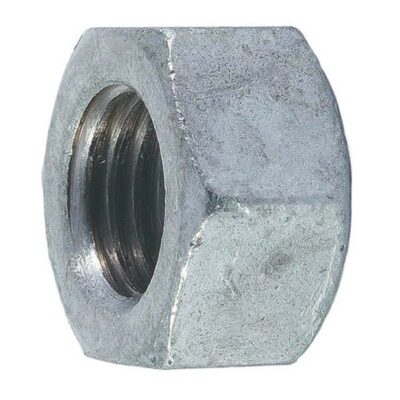
Washers and nuts also need to match the application. A strong bolt paired with an unsuitable nut or an undersized washer creates a weak point in the system. Fasteners work as an assembly, not as isolated parts.
Vibration, movement and locking methods
Plant, transport frames, access equipment and machinery often face repeated vibration or cyclic movement. In those environments, clamp loss can be a bigger risk than outright overload. Standard nut-and-bolt combinations may perform well under static load but gradually work loose in service if there is no suitable locking method.
The right answer depends on how the assembly is maintained. Lock nuts, spring washers, tab washers, prevailing torque nuts and threadlocking compounds all have their place. If the joint is frequently dismantled, a reusable mechanical locking option may make more sense than adhesive locking. If inspection access is poor, a more secure long-term locking method may justify the extra installation time.
This is one of those areas where field conditions matter more than theory. A workshop-built assembly on stable indoor equipment has different demands from a site-installed unit exposed to impact, weather and regular handling.
When to use fasteners instead of welding
For a welding-focused buyer, this is usually a practical decision rather than an either-or argument. Welding gives permanence, continuity and compact joint design. Fasteners give serviceability, adjustment and speed in the right context.
Bolted assemblies make sense where components need future removal, where heat from welding could distort finished parts, or where galvanised and coated items would be compromised by weld prep and local burn-off. Fasteners also help with staged assembly, transport breakdown and installation sequencing on larger fabricated items.
In mixed assemblies, tolerance control becomes important. Welded sections can move slightly during fabrication, and that affects hole alignment, bracket fit and clamping faces. Choosing the correct industrial fasteners is only part of the answer if the fabricated parts themselves are not prepared to suit the fixing method.
Common specification mistakes
The most common issue is treating all M-size fixings as interchangeable. Diameter and thread pitch are only the start. Grade, finish, nut type, washer selection and installation torque all affect performance.
Another regular problem is using indoor specification parts in outdoor or washdown environments. The fastener may look fine at installation and deteriorate quickly once exposed. The same applies to mixing metals without checking compatibility, especially on external steelwork or maintenance repairs.
Thread engagement is another weak spot. Too little engagement reduces holding capacity, while excessive protrusion can interfere with surrounding parts or create safety issues. On maintenance work, replacing a failed fixing with the nearest available size can solve the immediate problem and introduce a longer-term one.
Buying industrial fasteners with fewer headaches
For trade buyers, the goal is not simply to get hold of stock. It is to get consistent specification across repeat jobs and avoid rework. That usually means buying from a supplier that understands the difference between general-purpose fixings and application-led industrial fasteners.
Clear product information helps. Buyers should be able to confirm size, thread form, grade, finish and intended use without second-guessing. For fabrication shops, stock range matters as well. It saves time when bolts, nuts, washers and related metalworking components can be sourced together, especially where assemblies involve both welded and mechanically fixed elements.
This is where a specialist trade supplier earns its place. A business such as ProWeld serves buyers who need more than a packet count. They need confidence that the part on the shelf is suitable for workshop, site or maintenance use and that it will match the wider demands of the job.
A practical approach to selection
Start with the joint itself. Ask what load it carries, whether it needs to come apart, what material it passes through and what environment it will live in. Then work through strength grade, corrosion resistance, locking method and installation requirements. That process is more reliable than starting from price or from whatever was used on the last job.
There is always a balance to strike. Some applications justify higher-grade or corrosion-resistant fasteners because failure would be costly. Others only need a sound standard fixing correctly specified and correctly fitted. The point is to make that decision deliberately.
Good fabrication depends on details that hold up after handover. Fasteners are part of that. Choose them with the same care you give to material section, weld prep and finishing, and the whole assembly is more likely to stay where it belongs.