

























Blog
TIG Torch Consumables List for Daily Use
A missing cup or worn collet is enough to stop a TIG job before it starts. A proper tig torch consumables list is not just a stock check – it is what keeps arc stability, gas coverage and fit-up quality consistent across routine production and repair work.
For fabricators and maintenance teams, the issue is rarely whether a torch has consumables fitted. The real issue is whether the right ones are fitted, in the right size, and replaced before they start affecting weld quality. Small torch parts wear gradually, so poor starts, overheating and contaminated tungsten can creep in long before a complete failure.
What belongs on a TIG torch consumables list
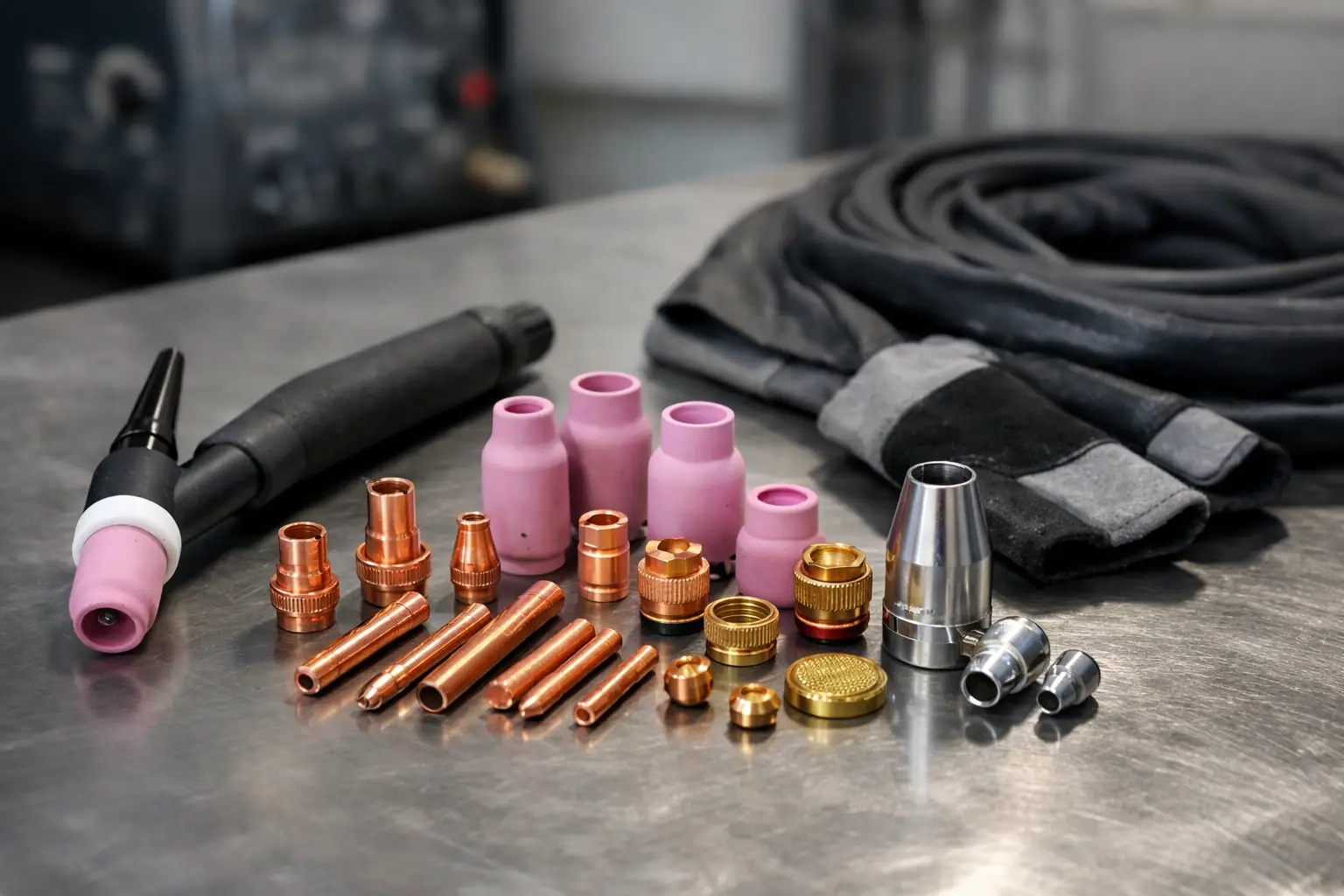
A useful TIG torch consumables list covers the items that directly affect current transfer, shielding gas flow, tungsten retention and operator access. Some are genuine wear parts. Others last longer but still need to be kept in stock because they are easy to damage, lose or mismatch.
At minimum, most workshops should account for ceramic cups, collet bodies, collets, back caps, tungsten electrodes, gas lenses where used, torch insulators and O-rings. Depending on torch type, you may also need adaptors, heat shields and power cable fittings. Air-cooled and water-cooled torches differ slightly, but the core consumable set is much the same.
The mistake many buyers make is ordering by torch style alone and not by exact series and size. A No. 6 cup from one range is not automatically right for another setup. Consumables need to match the torch head, collet body style and tungsten diameter being used on the bench.
Ceramic cups and shielding performance
Ceramic cups are usually the first item people think of, and for good reason. They control shielding gas direction and coverage at the weld zone. If the cup is cracked, chipped or the wrong size for the joint, gas protection suffers and contamination becomes more likely.
Cup size selection depends on access, gas lens use and the weld being made. Smaller cups help in tight corners and root access, but they can be less forgiving if stick-out is excessive. Larger cups give broader shielding coverage, especially on stainless and titanium work, but they need the torch angle and gas flow set correctly. Simply fitting a bigger cup does not guarantee a better result.
In everyday steel and stainless work, workshops often keep a spread of common cup sizes rather than relying on one standard option. That gives welders room to adjust for fillets, outside corners and tube work without forcing a poor compromise.
Collets and collet bodies
Collets grip the tungsten. Collet bodies hold the collet and direct shielding gas through the torch head. Together they are central to arc consistency, because poor fit here leads to loose tungsten, current transfer issues and uneven gas flow.
Collets wear through heat cycling, over-tightening and simple handling damage. If a collet no longer grips evenly, the tungsten can sit off-centre or move during setup. That affects arc direction and can make repeat work difficult, particularly on thin material or detailed pipe joints.
Collet bodies also need attention. Thread damage, distortion or contamination inside the gas path can create problems that look like poor technique but are actually hardware related. Keeping matched collets and collet bodies in the main tungsten sizes used by the workshop saves time and avoids improvised fixes at the bench.
Gas lenses and standard collet bodies
A gas lens replaces the standard collet body and improves gas flow by smoothing and distributing shielding gas before it exits the cup. This gives a more stable gas envelope and generally allows longer tungsten stick-out, which helps when access is restricted.
Gas lenses are particularly useful for stainless fabrication, thin gauge work and joints where torch reach matters. They can improve appearance and reduce turbulence, but they are not always the right answer. They cost more than standard bodies, and the fine mesh can be damaged or blocked if handled roughly or exposed to debris.
For that reason, many shops keep both types in stock. Standard collet bodies are practical for heavier work and general use. Gas lenses make sense where weld appearance, access or gas control justify the change.
Tungsten electrodes
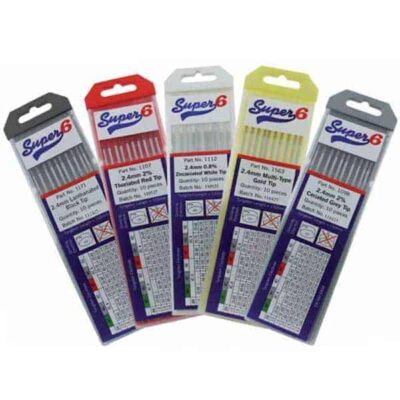
No tig torch consumables list is complete without tungsten electrodes in the correct diameters and grades for the work being done. Tungsten choice affects arc starting, current handling and tip life, so it is not just a preference item.
Diameter must suit the amperage range and the torch setup. Too fine, and the tungsten overheats or deforms. Too large, and arc control can feel dull on lighter work. Workshops commonly hold several diameters because one size rarely covers thin stainless sheet, medium section fabrication and higher-current aluminium work equally well.
Storage matters too. Tungsten should be kept clean, dry and separated by type. Mixed packs, damaged tips and contaminated electrodes lead to wasted time on regrinding and inconsistent starts. In production settings, that becomes expensive very quickly.
Back caps, insulators and O-rings
Back caps are simple parts, but they matter more than they get credit for. They secure the tungsten and complete the torch assembly. Standard, medium and short back caps each have their place depending on access behind the torch. A short back cap can make the difference when welding close to a frame, vessel wall or guarding.
Insulators and O-rings are easy to overlook because they are small and inexpensive. They are also common causes of gas leaks and poor torch sealing when worn or damaged. In water-cooled systems, neglected seals can create larger reliability issues. It is sensible to treat them as routine stock items rather than emergency replacements.
If a torch is being stripped for service, these parts should be checked as a matter of course. Reusing visibly worn seals to save pennies often costs more in gas loss, downtime and fault-finding.
Heat shields, adaptors and torch-specific parts
Some torch setups use separate heat shields or adaptors to suit larger cups or gas lens configurations. These are not universal. They need to match the torch family and the front-end parts being fitted.
This is where ordering errors often happen. Buyers may know the tungsten size they need but miss the fact that the heat shield or adaptor changes with the cup system. Keeping torch model details recorded in stores or on the job system reduces wasted orders and incompatible stock.
For larger operations running multiple torch styles, it is worth standardising where possible. Fewer torch platforms mean fewer consumable variations, simpler stockholding and less risk of operators reaching for the wrong part.
How to stock the right TIG torch consumables list
The best way to manage a TIG torch consumables list is to build it around actual workshop use, not catalogue breadth. Start with the torch models in service, the materials most often welded and the tungsten diameters used day to day. From there, stock the front-end parts that support those jobs without overcomplicating the stores shelf.
For many fabrication environments, that means holding a sensible range of cups, collets, collet bodies or gas lenses, back caps, seals and tungsten electrodes in the sizes already proven on site. If aluminium, stainless and mild steel all move through the same area, the stock profile needs to reflect that. One generic consumable bin is rarely enough.
It also helps to separate fast-moving items from slower backup parts. Cups, collets and tungsten electrodes tend to move quickly. Adaptors and insulators may not, but when they are needed the torch is often out of service until they are found. Stocking depth should follow downtime risk as much as purchase price.
Common signs your consumables need changing
A worn consumable does not always fail dramatically. More often, weld quality drifts. Arc starts become less consistent, the tungsten discolours sooner than expected, gas coverage seems patchy, or the tungsten will not stay centred after tightening.
Cracked cups, loose collets, blocked gas lenses and hardened O-rings are all common causes. If operators are increasing gas flow to compensate for shielding issues, that is often a sign that something in the torch front end needs inspection rather than more gas.
Consumables should not be treated as incidental. They are part of process control. When quality, rework and uptime matter, a disciplined approach to torch parts pays for itself.
A well-managed torch setup keeps the welder focused on the joint, not on chasing faults through a handful of worn parts. Keep the right consumables on hand, matched to the torches and work you actually run, and the job moves as it should.