





















Blog
The Future of Fabrication Automation
A fabrication shop does not feel change when somebody talks about strategy. It feels it when lead times shorten, labour gets tighter, rework costs rise, and customers expect repeatable quality on every batch. That is where the future of fabrication automation is being decided – not in theory, but on the shop floor, one process at a time.
For most fabrication businesses, automation no longer means a fully lights-out plant or a wholesale replacement of skilled welders and fabricators. It means targeted investment in the areas where manual work is hardest to scale, hardest to standardise, or hardest to staff. The firms that get value from automation are usually the ones that treat it as a production tool, not a marketing line.
What the future of fabrication automation really looks like
The future of fabrication automation will be practical before it is dramatic. In most workshops, progress will come from semi-automated and modular systems rather than a complete rebuild of production. That includes robotic welding cells, automated cutting and material handling, CNC-driven part processing, positioners, fixturing systems, and software that reduces delays between estimating, nesting, fabrication and inspection.
This matters because fabrication work is rarely uniform. A shop producing repeat batches of brackets, frames or structural assemblies has very different automation potential from a workshop handling one-off architectural metalwork or varied repair work. Automation works best where there is pattern, part consistency and measurable bottlenecks. Where variation is high, flexible tooling and better workflow control may deliver more value than a robot on its own.
That distinction is often missed. Automation is not a single purchase. It is the combination of machine capability, part design, fixturing accuracy, consumable control, operator input and production planning. If one of those is weak, the return on investment can fall quickly.
Why labour pressure is pushing automation forward
Most fabrication managers do not need convincing that skilled labour is harder to recruit and retain than it was a decade ago. Welding in particular depends on experience, process discipline and consistency under pressure. When labour supply tightens, production capacity becomes vulnerable.
Automation helps in two ways. First, it allows shops to move repeatable welds and handling tasks away from the most labour-intensive stations. Second, it lets experienced staff focus on fit-up, quality control, programming, complex joints and jobs that still need judgement. In a good setup, automation supports skilled labour rather than replacing it.
There is a trade-off, though. A robotic cell still needs competent people around it. Somebody has to prepare parts correctly, maintain torch condition, manage wire and gas supply, check tolerances, and troubleshoot defects. Shops that invest in automation without investing in process discipline often find they have simply automated inconsistency.
Welding automation will keep expanding, but not everywhere
In welding and metal fabrication, automated welding remains one of the clearest growth areas. Repetitive fillet welds, standard assemblies and production runs with stable tolerances are obvious candidates. Where joint geometry is predictable and fixtures hold parts accurately, automated welding can improve deposition consistency, reduce spatter-related cleanup and raise throughput.
Even so, not every welding application suits automation. Heavy distortion, inconsistent fit-up, coated material variation, awkward access and low-volume mixed work can all reduce the benefit. Some fabricators are better served by improving workholding, upgrading power sources, tightening consumable selection and standardising welding procedures before introducing robotics.
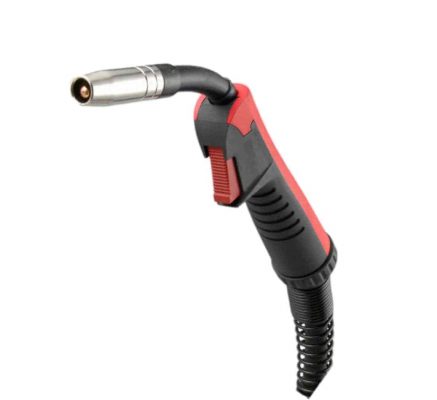
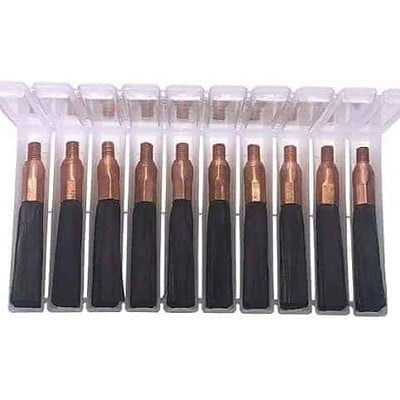
This is where a specialist supply partner can add value. Choosing the right torch setup, contact tips, wire, shrouds, anti-spatter products, clamping equipment and replacement wear parts has a direct effect on uptime. The future of fabrication automation is not only about machines. It also depends on the reliability of the smaller components that keep a cell producing.
Data will matter more than headline machine speed
A common mistake is to judge automation only by arc-on time or cycle speed. Those metrics matter, but they are not the full picture. The better question is whether the process gives you predictable output across a shift, a week and a quarter.
That is why data is becoming more important. Fabrication businesses are starting to look harder at downtime causes, consumable usage, reject rates, weld traceability, maintenance intervals and job costing accuracy. Once that information is visible, automation decisions become less speculative.
For example, a shop might assume a new robotic welding station is the answer, only to find that the actual production loss comes from poor material presentation or waiting time between cutting and fit-up. Another business might discover that excessive consumable wear is affecting weld quality more than operator travel speed. In both cases, the strongest investment case comes from measured production facts rather than broad assumptions.
The next gains will come from integration
The most effective automation projects tend to connect several stages of work instead of improving one machine in isolation. Cutting, drilling, coping, forming, welding and finishing all affect one another. If upstream accuracy is poor, downstream automation becomes harder to justify.
Integration can be simple. Better part marking from cutting operations can reduce identification errors later in fabrication. Standard fixturing can reduce setup times between jobs. Positioners and manipulators can improve weld access and consistency even where welding remains manual. These are not minor improvements. In many shops, they are the difference between theoretical capacity and actual delivered output.
Software will also play a bigger role, especially where jobs move between quoting, production scheduling and inspection. If drawings, revisions and part data are not controlled properly, automated equipment will not save the day. It will produce the wrong part more efficiently.
What smaller fabrication firms should do now
Smaller workshops sometimes assume automation is only for large manufacturers. That is no longer true. Entry costs can still be significant, but the barrier is increasingly about process suitability rather than company size. A smaller firm with repeat work, disciplined setup and clear production data may be in a better position to benefit than a larger business with chaotic workflows.
The practical starting point is to identify work that is repetitive, measurable and margin-sensitive. If a part family runs regularly, causes bottlenecks and has stable dimensions, it is a candidate. If the job changes every day and fit-up is inconsistent, money may be better spent elsewhere first.
Before investing, shops should look at fixture quality, material consistency, consumable availability, operator training and maintenance routines. They should also cost the full process, including programming time, downtime risk and floor space. Automation can reduce labour per part, but it may increase dependence on tighter planning and faster fault response.
Safety and quality will shape buying decisions
Automation is often discussed in terms of speed, but safety and quality are just as important. Material handling, fume exposure, repetitive strain and awkward welding positions all affect workforce performance and risk. Mechanised handling, controlled welding cells and better process containment can reduce those pressures.
Quality benefits are equally significant where repeatability matters. Consistent torch angle, travel speed and weld length help reduce variation between operators and shifts. That can support compliance, reduce rework and make inspection more predictable. For buyers in sectors with strict quality demands, that consistency is often more valuable than headline throughput.
Still, quality gains are not automatic. If joints are badly prepared or fixtures allow movement, an automated process will repeat those faults very efficiently. Good fabrication practice remains the foundation.
Where the future of fabrication automation is heading next
Over the next few years, expect more flexible systems rather than fewer people. Collaborative setups, easier programming, smarter sensing and modular workcells will make automation more accessible, especially for mixed production environments. The strongest growth is likely to come from businesses that automate selected tasks while keeping skilled fabricators in control of setup, inspection and problem-solving.
There will also be more attention on total process reliability. Buyers will look beyond the machine itself and ask harder questions about service intervals, consumable life, fixture repeatability, spares availability and compatibility with existing workshop practices. That is the right approach. A fast system that is awkward to maintain or difficult to integrate can become an expensive bottleneck.
For fabrication companies, the sensible view is straightforward. Start with the constraint that costs the most, standardise what you can, and automate where repeatability justifies it. The future belongs to shops that combine skilled people, dependable equipment and disciplined process control – because in fabrication, output only matters when the part is right and delivered on time.