

















Blog
Robotic Welding Trends Reshaping Fabrication
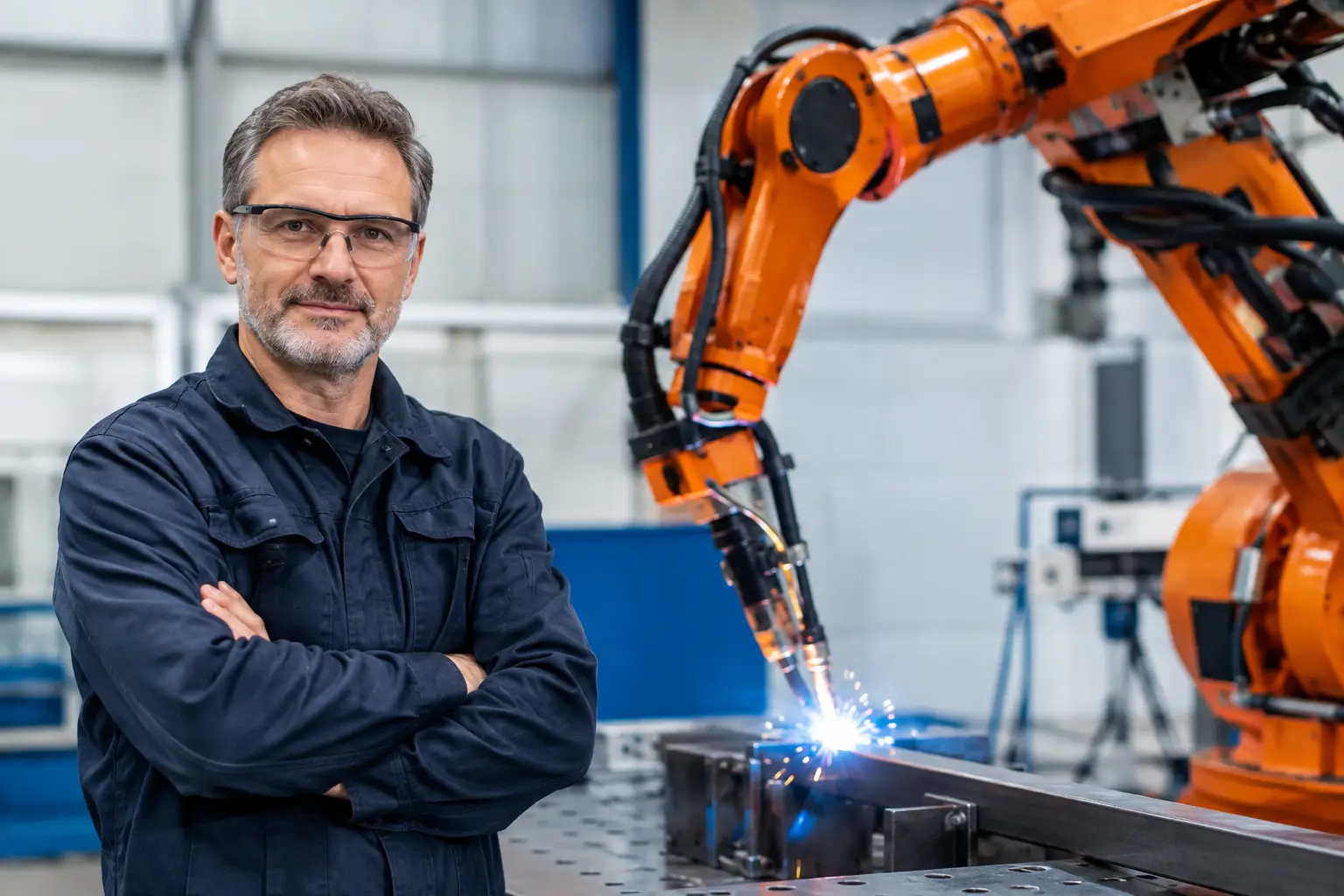
A robotic welding cell is no longer reserved for automotive plants producing thousands of identical assemblies. Fabricators are installing automation to deal with repeat work, rising labour pressure and tighter delivery commitments. The most useful robotic welding trends are not about replacing welders with machines. They are about putting repeatable joints through the right process, while skilled people handle setup, inspection, complex fit-up and the work that still depends on judgement.
For workshop owners and fabrication managers, the question is practical: where will a robot remove a genuine production constraint, and where will it simply add capital cost, programming time and another system to maintain?
Robotic welding trends are moving towards flexible cells
Fixed robotic lines still have a place where part volumes are high and joint geometry rarely changes. However, much of the current demand is for flexible cells that can process families of components rather than one dedicated product. Jobbing fabricators need to change fixtures, programmes and wire consumables without losing an entire shift to reconfiguration.
This has pushed more attention towards offline programming, modular fixtures and positioners that present several faces of a part to the torch. A well-designed positioner is often as important as the robot itself. If it keeps the joint in a favourable welding position, it can improve bead profile, reduce spatter and shorten cycle time. It also reduces the number of awkward overhead or vertical-up welds the cell must make.
Flexibility has limits. A cell built for every possible job can become slow, difficult to fixture and expensive to prove out. The strongest candidates remain parts with stable dimensions, repeatable joint preparation and enough annual volume to justify the engineering effort. Weldable hinges, brackets, frames, elbows and fabricated sub-assemblies can be suitable where the design is controlled and material presentation is consistent.
Better sensing does not remove the need for fit-up control
Vision systems, touch sensing and seam tracking are increasingly used to locate components and adjust a welding path when parts vary. These tools can make automation more tolerant of normal manufacturing variation, particularly on longer seams or fabricated assemblies that are not machined to close tolerances.
They should not be treated as a cure for poor preparation. A robot cannot create a sound weld from inconsistent root gaps, contaminated material, distorted components or badly positioned tack welds. Sensing can find a joint, but it cannot always determine whether the joint is suitable for the specified weld procedure.
The practical trend is towards combining sensing with disciplined upstream control. That means repeatable cutting, formed parts that hold their shape, clean joint faces and fixtures that positively locate the datum surfaces. It also means checking that bought-in items, such as weldable fittings and components, have the dimensional consistency required by the cell. Small variations that a manual welder would compensate for instinctively can stop an automated cycle or produce an unacceptable weld.
Quality data is becoming part of the welding process
Robotic systems increasingly record arc-on time, current, voltage, wire feed behaviour, alarms and cycle duration. Used properly, this information helps managers identify whether a problem comes from a worn contact tip, poor earth return, wire feeding, gas coverage, fixture movement or a change in incoming material.
Data alone does not certify a weld. Visual inspection, dimensional checks and the testing required by the job remain necessary. What process data does provide is traceability and earlier warning. If a recurring parameter shift appears before defects reach final inspection, maintenance teams can intervene before a batch has to be reworked.
This is particularly valuable for fabricators working to documented procedures or supplying safety-critical assemblies. A repeatable programme, verified parameters and controlled consumables make it easier to maintain the process discipline that customers and auditors expect.
Cobots have a place, but not on every welding job
Collaborative robots are often presented as the answer for smaller workshops. Their lower footprint and simpler deployment can make them attractive for short, repetitive welds, especially where an operator loads parts and the robot completes a defined section of work.
The trade-off is output. A collaborative setup may operate at lower speeds or require additional safety measures once welding hazards are considered. Arc flash, hot workpieces, fume and moving fixtures still require a proper risk assessment. The word collaborative does not mean an operator can stand beside an active welding arc without suitable controls.
For high deposition rates, long seams or larger assemblies, an industrial robot in a properly guarded cell may be the more productive option. For lower-volume components that recur regularly, a smaller collaborative application can be viable if the fixture is straightforward and programme changes are limited. The decision should be based on part mix, cycle time, safety requirements and available floor space, not the label attached to the robot.
Consumables and torch maintenance remain production issues
Automation makes consumable performance more visible. A manual welder can often feel a deteriorating torch, adjust technique or stop before a feeding problem becomes serious. A robot will continue until a fault is detected, potentially producing defects or losing valuable arc time.
Wire quality, correct liner selection, drive-roll condition, contact-tip wear and gas delivery must therefore be managed as part of cell uptime. Poor wire feeding can cause unstable arc characteristics, burn-backs and unplanned stops. Contaminated or inadequate shielding gas can lead to porosity and unacceptable surface oxidation. These are familiar welding problems, but automation amplifies their cost because the whole cell may be waiting.
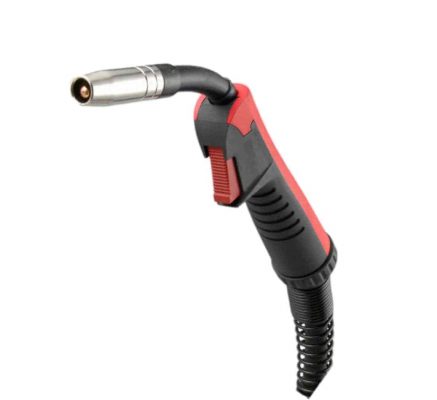
Torch cleaning stations and automatic wire cutters can reduce interruptions, but they do not remove the need for inspection. Operators should have clear checks for liners, tips, nozzles, anti-spatter systems, torch neck alignment and earth connections. Stock control matters too. The right tips, liners, nozzles and wire must be available when planned maintenance is due, rather than being ordered after the cell is already down.
Fume control and safety are being designed in earlier
A productive cell still needs safe access for loading, unloading, cleaning and maintenance. More fabricators are considering extraction layout, guarding, interlocks and material flow at the planning stage rather than treating them as additions after installation.
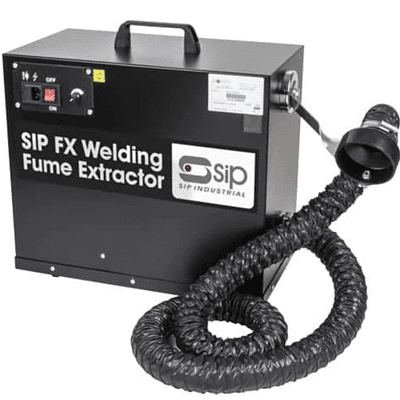
Local extraction must capture fume at the source without interfering with shielding gas coverage or access to the weld. The arrangement depends on the process, component size, welding position and enclosure design. A large fabricated frame may need a different approach from a compact bench cell producing small brackets.
Material handling is another constraint. If operators have to manually lift heavy fabrications into a fixture, the robot may move the welding bottleneck while creating a handling risk. Jigs, turntables, lifting aids and sensible load heights are not secondary details. They determine whether the cell can run safely for a full shift.
Skilled welders are shifting towards higher-value work
The shortage of experienced welding labour is one reason automation is being adopted, but the best installations do not treat skilled people as surplus. Their knowledge is needed to qualify procedures, establish acceptable fit-up limits, set welding parameters, inspect output and diagnose faults that software cannot explain.
In many workshops, robotic welding frees qualified welders from repetitive production seams so they can focus on prototypes, repairs, complex assemblies, difficult materials and final quality control. It can also create more structured roles in fixture development, robot operation and preventive maintenance.
Training should reflect this change. The operator needs more than a start button and an alarm reset. They need to understand joint location, programme selection, consumable condition, basic welding defects and when to stop production. A cell is only repeatable if the people around it recognise when conditions are no longer repeatable.
Choosing the right first application
The first automated welding project should be deliberately narrow. Select a component with steady demand, limited variants, accessible joints and an existing manual process that can be measured. Establish the real cycle time, including loading, unloading, cleaning, inspection and changeover. Arc-on time is not the same as total production time.
Before committing, examine the fixture requirement and the condition of the incoming parts. A robot project often exposes weaknesses that manual welding has concealed: variable holes, inconsistent bends, loose component tolerances or poorly defined tack-up methods. Correcting these issues may require work with design, purchasing and production teams, but it is usually where the lasting benefit lies.
A well-specified cell is not a shortcut around fabrication discipline. It is a way to apply that discipline consistently, shift after shift. For businesses with repeatable work and a clear plan for fixturing, consumables, safety and operator ownership, robotic welding can turn a persistent capacity problem into a controlled production process.