















Blog
Workshop Dust Extraction Systems Sized Right

A fabrication bay can look clean five minutes after a grinding job and still have a dust problem. Fine particles settle on machines, stock, cable runs and ledges, then become airborne again when work resumes. Properly specified workshop dust extraction systems remove contamination at the point of production, rather than relying on general ventilation or end-of-shift sweeping.
For welding and metalworking businesses, the right system is not simply the largest collector available. It must suit the process, the material, the number of extraction points, the duct layout and the volume of work taking place at the same time. Get those details wrong and an expensive unit can deliver poor capture where it matters most.
Start with the dust and the process
The first decision is understanding what the system must collect. Grinding mild steel produces a different waste stream from aluminium sanding, stainless finishing, plasma cutting or thermal spraying. Particle size, temperature, spark load and combustibility all affect the type of collector, filter media and safety measures required.
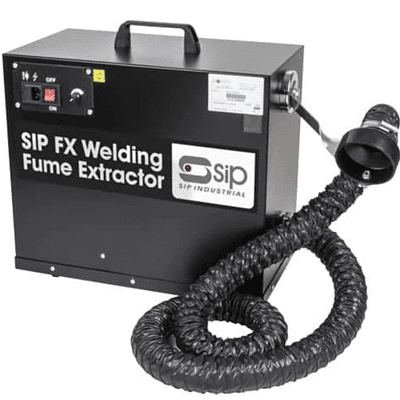
Welding fume also needs to be considered separately from heavier grinding dust. Fume rises with the thermal plume and is best controlled close to the arc using local exhaust ventilation, such as extraction arms, on-torch extraction or purpose-designed booths. A central dust collector positioned across the workshop will not reliably capture fume before it reaches the welder’s breathing zone.
For mixed fabrication work, separate extraction arrangements may be the practical answer. A system serving abrasive grinding stations can be designed around heavier particulate and higher duct velocities, while dedicated fume extraction serves welding cells. Combining every process on one duct run may reduce initial installation costs, but it can complicate filtration, maintenance and fire risk management.
Materials that need extra attention
Ferrous dust from general fabrication is common, but it should never be treated as harmless housekeeping waste. Fine particulate can affect respiratory health, contaminate bearings and electrical equipment, and reduce visibility around work areas.
Aluminium, magnesium and other potentially combustible metal dusts require particular care. These materials can present a serious fire and explosion hazard when collected incorrectly. Do not connect them to a standard general-purpose extraction system without a proper assessment of the process, dust characteristics, collector design and disposal method. The same applies where sparks, hot swarf or cutting debris can enter ducting.
Size airflow at the extraction point, not the collector label
The quoted airflow of a fan or collector is only one part of the specification. What matters is the air volume still available at the hood, bench or machine after resistance from ductwork, bends, dampers, filters and separators has been accounted for.
A system may appear adequately rated on paper but underperform at the furthest grinding bench because the duct route is too long, undersized or full of sharp changes in direction. Every restriction increases static pressure. As filters load with dust, resistance rises again, reducing airflow unless the fan and control arrangement allow for it.
A useful specification starts at each extraction point. Establish the hood type, the required capture distance and the expected process. Then calculate the air volume required when all likely points are open. In a workshop where only one operator uses extraction at a time, blast gates can reduce the required system capacity. In a busy fabrication shop with four active bays, the system must be designed for realistic simultaneous use rather than best-case assumptions.
Duct diameter matters as much as fan capacity. Ducting that is too small increases pressure losses and noise. Ducting that is too large can allow heavier particles to settle before they reach the collector. Smooth metal ducting, gradual bends and properly installed branch connections help maintain transport velocity and reduce internal build-up.
Put capture close to the work
Extraction is most effective before dust disperses. A hood positioned too far from a grinder, linisher or cutting table will draw plenty of room air while missing the dust cloud itself. The operator then experiences the exposure even though the extraction unit is running.
For bench grinding and hand finishing, downdraught benches, backdraft panels or articulated extraction arms can work well, depending on the size and shape of the component. A downdraught bench provides consistent capture for parts that can be placed flat on the work surface. An extraction arm offers flexibility for repairs, large fabrications and variable work positions, but it must be positioned correctly each time.
Work habits are part of system performance. If an arm is awkward to move, operators will leave it parked out of range. If a bench grille clogs quickly, airflow drops and the unit is bypassed. Choose equipment that suits the way the workshop actually operates, then make inspection and cleaning part of the routine.
Choose filtration for the job, not just the visible dust
A collector needs filters that match the particle size and volume being generated. Cartridge collectors are often used for fine dry dust because they provide a large filtration area in a compact footprint. Bag filters can suit some larger-volume applications. The correct choice depends on the process, duty cycle, maintenance access and required discharge air quality.
Automatic filter cleaning can maintain performance during heavy use, but it does not remove the need for planned maintenance. Filter condition, pressure differential readings, seals and dust bin capacity all need checking. A unit that repeatedly blocks filters may be undersized, incorrectly set up, or collecting a material that needs a different separation stage.
Where recovered air is returned to the workshop, filtration performance and system integrity become especially significant. Leaks in ducting, damaged filter seals or poor emptying procedures can reintroduce the same contamination the system was installed to control. In some applications, exhausting safely outdoors may be the more appropriate arrangement, subject to site conditions and applicable requirements.
Build in safe dust handling and maintenance access
Collected dust must be removed without creating a second exposure point. A small hopper that needs emptying several times a shift is rarely practical in a production environment. Equally, an oversized bin that is difficult to move may be left until it overfills. Select a collection method that suits the volume generated and the available handling equipment.
Maintenance access should be considered before installation. Filters, bins, fans and inspection points need to be reachable without dismantling surrounding equipment or working around stored steelwork. Leave room for safe access, particularly where the collector is installed outside or in a plant area.
A practical maintenance schedule should cover:
- checking airflow indicators or pressure gauges;
- emptying collection bins before they become overloaded;
- inspecting duct joints, blast gates and flexible hoses for damage;
- cleaning hoods, grilles and spark arrestors where fitted;
- examining filters and replacing them when cleaning no longer restores performance.
For local exhaust ventilation used to control hazardous substances, formal thorough examination and testing is also required at suitable intervals. Keeping records is not paperwork for its own sake. It provides evidence that the control measure is working and makes declining performance easier to identify before it affects staff or production.
Plan the system around the workshop layout
The best time to specify extraction is before benches, welding screens and machinery are fixed in place. Map where grinding, cutting, welding and finishing will happen, then plan duct routes with short, direct runs. Consider future bays too. Adding a branch later is simpler when the main duct and fan have been sized with sensible capacity in reserve.
Noise, power supply, compressed air requirements for filter cleaning and access for waste removal should all be addressed at the planning stage. A collector located too close to workstations may create unnecessary noise, while one placed at the far end of a poor duct layout may lose valuable performance.
For smaller workshops, a mobile extractor can be a sound choice where processes move frequently or only run intermittently. For fixed, high-use grinding and fabrication stations, a central installation is usually easier to control and maintain. The correct answer depends on duty, layout and the need for flexibility, not simply the floor area.
A dust extraction system earns its keep when it captures contaminants reliably, stays usable for the people on the tools and can be maintained without disrupting production. Specify it around the process first. The collector, ductwork and filter arrangement can then be selected as one working system rather than a collection of parts.