















Blog
Flux Cored Versus Solid Wire for Fabrication
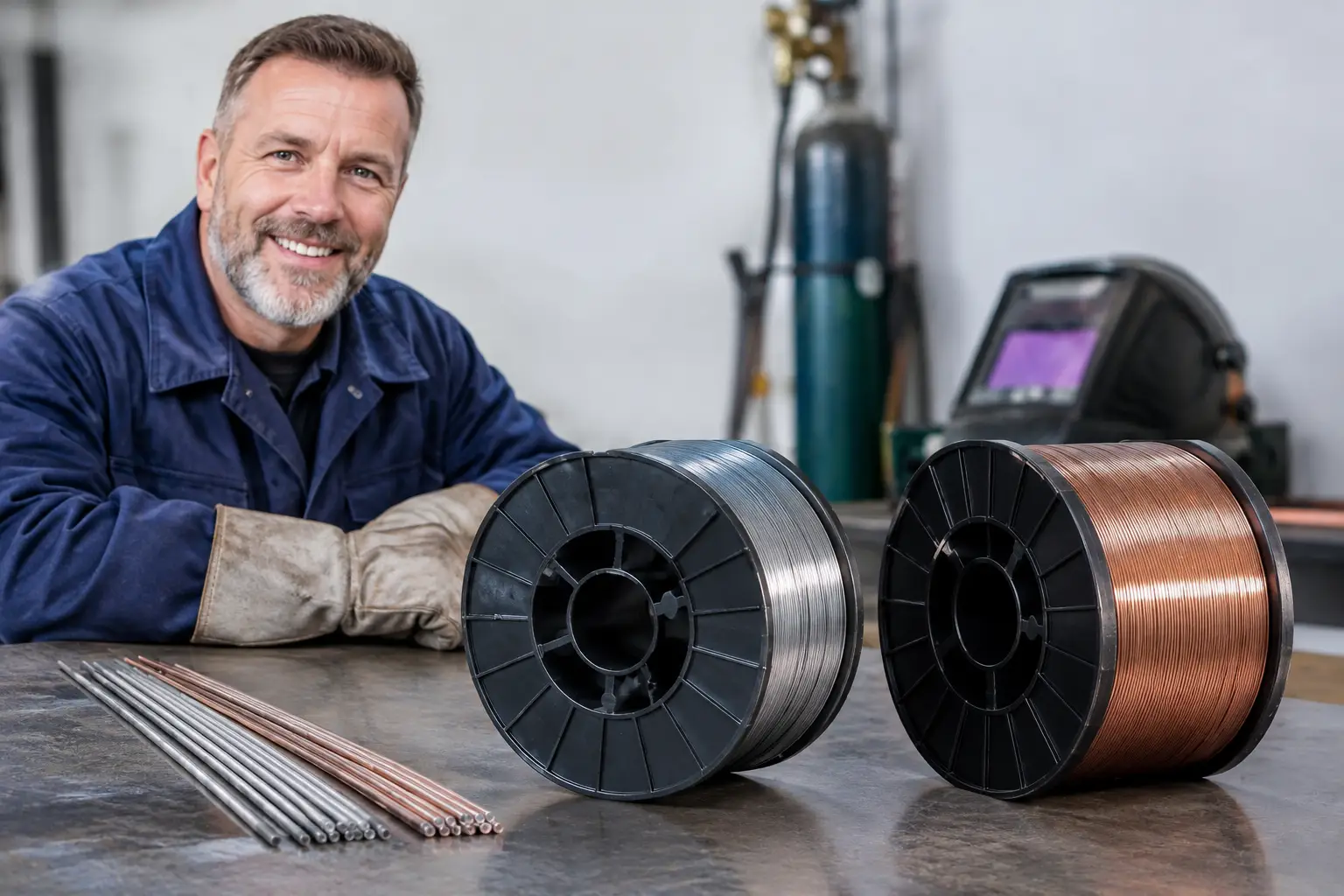
Flux cored versus solid wire is not a catalogue choice to make on price per reel alone. The wrong consumable can slow production, increase clean-up, create porosity or leave a weld procedure poorly suited to the conditions on site. For fabrication shops, maintenance teams and contractors, the correct choice depends on joint design, material thickness, welding position, environmental control and the standard required of the finished weld.
Solid wire and flux cored wire can both produce sound, productive welds when matched to the job and set correctly. They differ in how the weld pool is protected, how they handle contamination and wind, how quickly metal can be deposited, and how much post-weld cleaning is needed. Those differences matter on the workshop floor.
Flux Cored Versus Solid Wire: The Main Difference
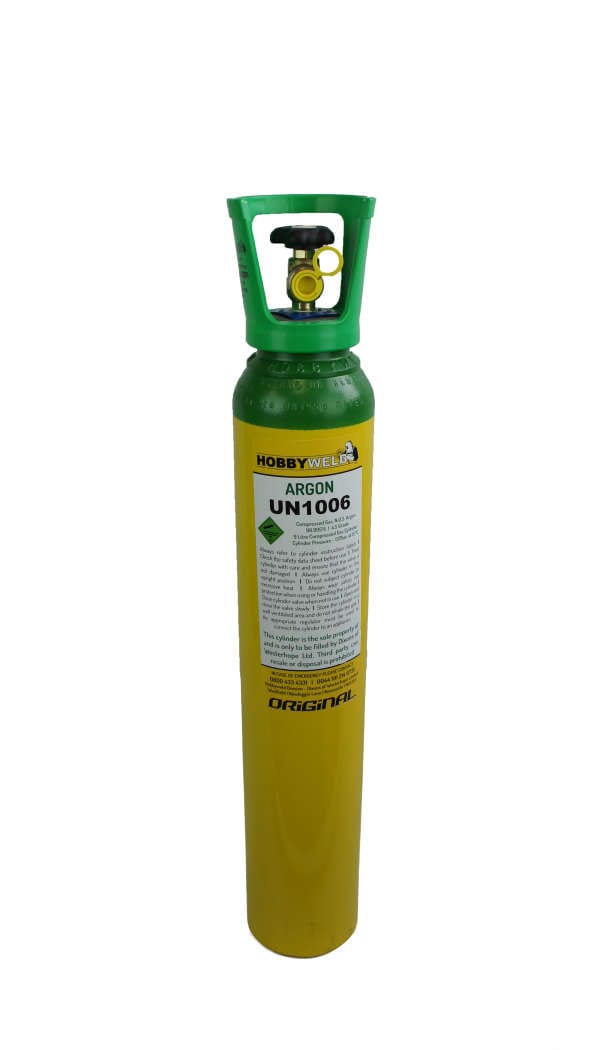
Solid MIG wire is used with an external shielding gas. The wire creates the filler metal, while the gas protects the molten weld pool from atmospheric contamination. For mild steel fabrication, this is commonly an argon and carbon dioxide mixture, selected to suit the transfer mode, material and finish required.
Flux cored wire has a tubular steel sheath filled with flux. During welding, the flux produces shielding gases and forms a slag covering over the weld. Some flux cored wires still require an external shielding gas – known as gas-shielded flux cored wire. Others are self-shielded and rely solely on the flux system.
This distinction is essential. Self-shielded flux cored wire is often chosen for outdoor work because it is less vulnerable to draughts than a gas-shielded process. Gas-shielded flux cored wire is generally used in controlled workshop conditions where high deposition rates and strong mechanical properties are required. It should not be treated as a direct substitute for self-shielded wire.
Where Solid Wire Is the Better Fit
Solid wire is usually the first choice for clean, controlled indoor fabrication. It produces a smooth bead profile with little or no slag, which reduces time spent chipping and brushing between passes. This is useful where weld appearance matters, where parts need painting promptly, or where a multi-pass joint must be completed efficiently.
It is particularly effective on clean mild steel in thinner sections. Automotive repair, light fabrication, sheet work, handrails and general workshop assemblies often benefit from the control available with solid wire. With the right machine settings and gas coverage, it gives predictable results and can be easier to manage on fine material than a flux cored alternative.
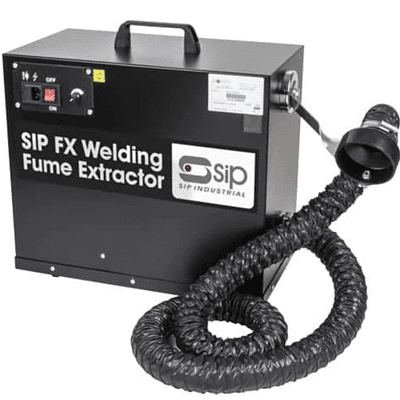
Solid wire also offers a cleaner working process. There is less visible fume than with many flux cored products, although extraction and suitable respiratory controls remain necessary. Less slag means fewer opportunities for slag inclusions in multi-run welds, provided the joint is properly prepared and the torch angle is maintained.
The limitation is environmental control. Shielding gas can be disturbed by open doors, extraction airflow or weather. A weld that appears acceptable at first may contain porosity if gas coverage has been compromised. Outdoor solid-wire work is possible only when the area can be screened effectively and gas flow, torch condition and consumable handling are under control.
When Flux Cored Wire Earns Its Place
Flux cored wire is often selected for heavier fabrication, structural work, repair and production welding where deposition rate matters. The flux system can support high weld-metal deposition and good penetration characteristics, making it well suited to thicker material and larger joints.
Gas-shielded flux cored wire performs strongly in fabrication bays where operators are making long fillet welds or filling prepared joints. It can provide a more forgiving weld pool than solid wire on material with light mill scale or surface contamination. That does not remove the need for preparation. Heavy rust, paint, moisture, oil and galvanising should still be removed because they can introduce defects, fumes and inconsistent weld quality.
Self-shielded flux cored wire is the practical option when welding must continue outside or in exposed conditions. It avoids the need to transport gas cylinders and is less likely to lose protection in a breeze. This makes it useful for site erection, farm repairs, field maintenance and structural installation work. However, it produces slag that must be removed thoroughly, and it usually creates more fume and spatter than solid wire.
Flux cored wire also demands attention to technique. Many products are designed for a drag or pull technique rather than pushing the torch. Using the wrong travel direction, excessive stick-out or incorrect polarity can quickly affect penetration, bead shape and slag removal. Always confirm the wire manufacturer’s data for polarity, gas requirement, voltage range and positional capability.
Productivity Is More Than Deposition Rate
It is tempting to assume that the wire depositing the most metal per hour is automatically the most economical. In practice, total job cost includes preparation, welding time, consumable changes, cleaning, rework and inspection.
Flux cored wire may complete a heavy weld faster, but each pass may require slag removal. Solid wire may run more cleanly, but it can be slower on large-volume welds and may require better surface preparation or more careful protection from airflow. The most productive option is the one that gets the joint completed to specification with the least avoidable handling.
Consider a batch of heavy brackets requiring long fillet welds. Gas-shielded flux cored wire may reduce arc time and improve throughput. For thin powder-coated frames that need a tidy finish after grinding local coating away, solid wire is likely to reduce cleaning and finishing work. The material, joint and production sequence should decide the process, not habit.
Welding Position and Joint Access
Position matters as much as thickness. Some flux cored wires are designed mainly for flat and horizontal welding, while others are formulated for all-position work. A wire that performs well in the flat position may be difficult to control overhead or vertically, particularly where the weld pool is large.
Solid wire can offer good control on thinner work and smaller fillets, especially where positional welding is required. Yet a suitable all-position flux cored wire may be more productive for vertical-up structural welds on thicker plate. The correct answer depends on the approved procedure and the properties required from the joint.
Joint access also affects the decision. Tight corners, poor fit-up and awkward repair locations may favour a process with a more manageable torch angle or better tolerance of minor surface condition. Neither wire type will compensate for a badly designed joint or poor fit-up, but the right consumable can reduce unnecessary difficulty.
Equipment and Consumable Setup
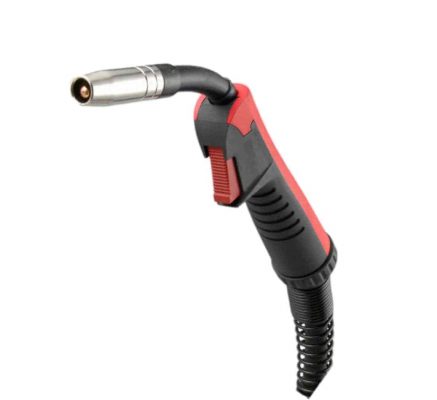
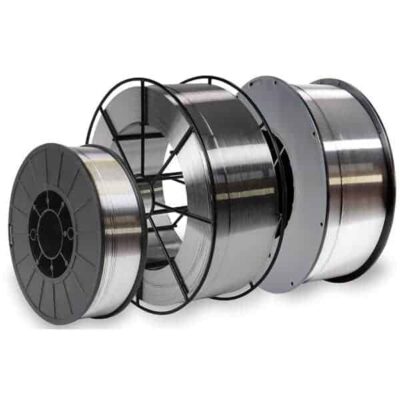
Changing wire type is not simply a matter of fitting a new reel. The feed system, torch liner, drive rolls, contact tip, polarity and gas setup must suit the wire being used. Flux cored wire is softer than solid wire and is more easily damaged by excessive drive-roll pressure. Knurled drive rolls are commonly used to grip cored wire without slipping, but they still need correct adjustment to avoid crushing it.
For solid wire, smooth V-groove drive rolls are normally appropriate. Keep liners clean and use contact tips matched to the wire diameter. Poor wire feeding causes an unstable arc, burn-back and inconsistent deposition, which can be mistaken for a problem with the wire itself.
Store all welding wire dry and clean. Condensation, damaged packaging and workshop contamination can introduce moisture and feeding issues. For coded work, retain batch identification and ensure the wire classification matches the welding procedure specification rather than selecting solely by diameter or price.
Choosing for Quality, Not Just Convenience
The required weld properties should lead the decision. If the job has specified impact performance, low-temperature toughness, hydrogen control, strength level or positional approval, use a wire with the relevant classification and supporting documentation. This is especially important for structural fabrication, lifting equipment, pressure-related work and repairs where failure carries a serious consequence.
For general fabrication, assess the actual conditions before loading the machine: is the steel clean, is the work indoors, what thickness is being welded, how much weld metal is required, and what finish is expected? Those answers normally point clearly towards solid wire, gas-shielded flux cored wire or self-shielded flux cored wire.
ProWeld customers working across fabrication and site maintenance benefit from treating wire as part of the complete welding setup, alongside the correct gas, torch consumables, preparation tools and safety controls. A good reel cannot overcome poor setup, but the right system can make a difficult job repeatable.
Before ordering, look at the joint rather than the label on the previous reel. Select the wire that suits the environment and required weld properties, then set the equipment to support it. That is how consumables contribute to cleaner work, dependable quality and fewer repairs.