













Blog
Can Weldable Hinges Carry Gates Reliably?

A gate can look straightforward on the bench and still become a problem once it is hung. The question, can weldable hinges carry gates, has no useful yes-or-no answer without looking at gate mass, hinge construction, fixing position and service conditions. Correctly specified weld-on hinges carry fabricated gates every day. Undersized or poorly fitted hinges cause sagging, seized pins, cracked welds and difficult operation.
For fabrication work, the hinge is not simply a pivot. It is a load-bearing component that transfers the full weight of the gate and the forces created when it is opened, stopped, slammed or exposed to wind. Selecting it needs the same care as selecting the frame section, latch arrangement and posts.
Can weldable hinges carry gates in demanding service?
Yes, provided the hinge type and installation are matched to the job. Weldable hinges are widely used on pedestrian gates, field gates, security gates, compound entrances, equipment guards and fabricated access panels. Their strength comes from the hinge body, pin diameter, bearing area, weld area and the steelwork to which they are attached.
The limiting factor is often not the nominal gate weight. A long gate creates leverage at the hinge line. A wide leaf held open in a gust can place far higher loads on the top hinge and post than its static weight suggests. A gate that is regularly dropped against a stop also introduces shock loading that a simple weight calculation will not show.
A weldable hinge can therefore be suitable for a heavy gate, but only where its stated capacity, material and design support the actual duty. Treat catalogue load ratings as a starting point, not a guarantee for every orientation or application. Check whether the rating applies to a pair of hinges, a single hinge, a particular spacing, or a vertical static load under controlled conditions.
Start with the gate, not the hinge
Calculate or estimate the completed weight of the gate leaf, including cladding, mesh, infill, locks, drop bolts, automation brackets and any decorative steelwork. It is common to assess the frame alone and overlook the weight added later.
Next, consider the leaf width and centre of gravity. A narrow, compact 120 kg gate imposes a different load from a 120 kg leaf extending several metres from the hinge line. The further the mass sits from the hinges, the greater the turning force acting on the hinge assembly and support post.
Hinge spacing matters as well. Positioning the top and bottom hinges as far apart as the frame design allows helps distribute the load and reduces the tendency for the leaf to rack. On taller or heavier gates, a third hinge may improve stability and reduce load per hinge, but it must be aligned accurately. A third hinge fitted out of line can bind the gate rather than improve it.
For a useful site assessment, establish these points before ordering:
- total finished gate weight
- leaf width, height and centre of gravity
- number of leaves and opening direction
- hinge centres and available mounting area
- post size, wall condition or supporting structure
- likely wind exposure, frequency of use and risk of impact
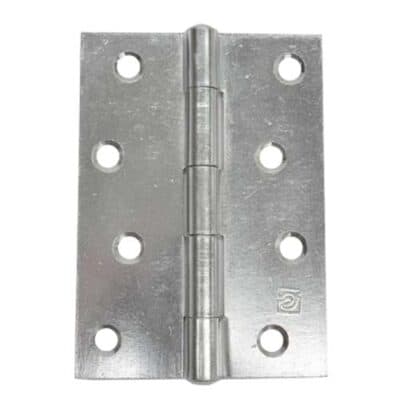
These details determine whether a compact weld-on butt hinge, a heavy-duty barrel hinge, an adjustable gate hinge or a different engineered arrangement is appropriate.
Hinge load rating is only one part of capacity
When comparing weldable hinges, look beyond a broad description such as “heavy duty”. The pin diameter affects resistance to bending and wear. The barrel diameter and length influence bearing area. A hinge with a substantial pin but limited bearing length may still wear quickly on a frequently used gate.
Material also matters. Mild steel hinges are commonly selected for fabricated steel gates because they can be welded directly to compatible steelwork. If the gate is galvanised after fabrication, the hinge and pin arrangement must suit that process and allow for finishing. Stainless steel, aluminium and dissimilar-metal assemblies need more consideration around compatibility, welding process and corrosion protection.
Greaseable hinges are often worthwhile on larger gates or installations with frequent movement. Lubrication reduces friction and slows wear at the pin and bearing surfaces. That advantage only remains if grease nipples are accessible after the gate is fitted and the maintenance regime is realistic. A lubricated hinge placed where nobody can reach it is not a maintenance solution.
Also check whether the pin is removable, captive or secured. Security gates may need non-lift-off arrangements, while removable pins can be useful where a leaf must be taken down for repair. The best choice depends on access requirements and security risk, not weight alone.
Weld quality and mounting steel decide the result
A correctly rated hinge cannot compensate for a weak gate stile, light post or poor weld preparation. The hinge transfers force into the surrounding steelwork, so the mounting zone needs adequate section thickness and reinforcement where required.
Weld the hinge to clean, properly prepared material. Remove paint, mill scale, oil and galvanising from the weld area. Where galvanised steel is involved, use suitable controls for zinc fumes and restore corrosion protection after welding. Do not weld through contaminated surfaces and expect a sound joint.
Fit-up is equally important. Tack both hinge halves in position, support the gate leaf at the correct clearance and check plumb, level and swing before completing the welds. A gate can be square on the workshop floor yet misalign when mounted to a post that is out of plumb.
Use a weld size and length appropriate to the hinge manufacturer’s guidance and the steel thickness. Excessive weld metal is not automatically stronger. Oversized welds add heat, distortion and unnecessary stress, particularly around thin wall box section. Inadequate weld length, poor fusion or undercut at a highly stressed hinge connection is more serious than an untidy appearance – it can become the failure point.
Control heat input when welding hinge components. Too much heat close to the pin and barrel may distort the assembly, damage internal lubrication or create a tight spot. Many fabricators tack, test movement, then weld in short balanced runs while allowing the work to cool as needed.
Alignment prevents premature hinge failure
A gate that needs force to move is not operating normally, even if it remains closed. Binding puts extra load into pins, bearings, welds, latches and automation equipment. It also accelerates wear.
The hinge pin centres must be on the same vertical axis. On a pair of weldable hinges, even a small offset can make the leaf stiff or impossible to swing freely once both welds are completed. Use a straight edge, alignment bar, laser or other reliable method to establish the pivot line before final welding.
Allow clearance for paint, galvanising, thermal movement and minor settlement. The gate should not scrape the ground or force against the receiving post as it moves. Leave practical room around latches and drop bolts, especially where the gate frame may deflect slightly under its own weight.
After welding, test the full opening arc. Check for pinching at the hinge side, contact with stops, uneven gaps and any tendency for the gate to self-open or self-close. These signs may point to post alignment, slope or hinge-line issues rather than a defective hinge.
Account for wind, abuse and automation
Wind loading is frequently underestimated on sheeted, boarded or closely meshed gates. A solid leaf behaves like a sail. In exposed yards, agricultural sites and coastal locations, wind can create severe loads on hinges and posts even where the gate itself is not particularly heavy.
For these applications, assess the complete structure. A heavier hinge alone will not solve a flexible post, inadequate foundations or an unsupported long leaf. Consider gate stops that take impact away from the hinges, suitable hold-open devices and a frame design that resists racking.
Automated gates need particular care. Operators can apply repeated force through the leaf and hinge line, while poorly adjusted limits can drive the gate into stops. Choose hinges with adequate duty capacity, maintain precise alignment and ensure the gate moves freely by hand before commissioning any operator. Automation must not be used to overcome mechanical resistance.
Corrosion is another capacity issue over time. Water entering a hinge barrel, neglected lubrication and damaged coatings can lead to seizure and wear. Specify finishes suited to the environment and inspect hinges as part of routine site maintenance.
Make the specification fit the job
For light pedestrian gates, a correctly aligned pair of quality weldable hinges on sound steelwork is usually sufficient. As weight, width, wind exposure and operating cycles increase, the specification should move towards larger pins, greater bearing area, stronger support steelwork, appropriate lubrication and, where necessary, a third hinge or a purpose-designed gate system.
Do not choose solely by the appearance of the hinge or the thickness of its weld-on tabs. Obtain the supplier’s technical rating, understand the conditions behind it, and apply a sensible margin for real site use. The cost difference between an adequate hinge and an underspecified one is usually small beside the cost of cutting out failed welds, rehanging a gate or repairing damaged posts.
Before final welding, hang the leaf, check the clearances and make sure it swings freely under its own weight. That short check is often what separates a gate that works for years from one that starts causing trouble on its first week in service.