









Blog
Adaptive Welding for Controlled Production
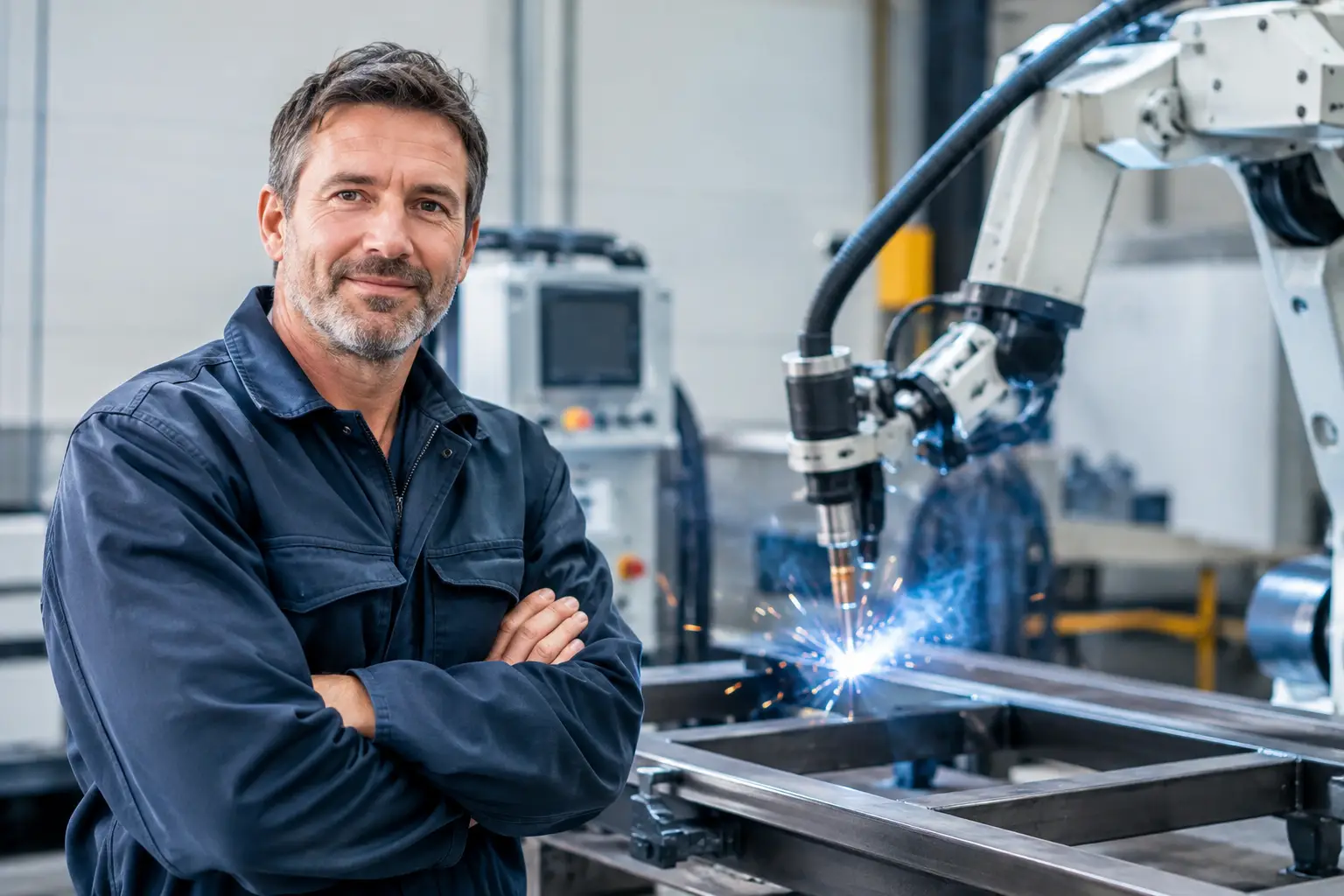
A weld procedure can be sound on paper and still drift on the shop floor. Plate temperature changes, joint fit-up varies, wire condition deteriorates, a torch position moves slightly, or an operator has to work around inconsistent preparation. Adaptive welding is intended to reduce the effect of those variations by using process feedback to adjust welding parameters while the weld is being made.
For fabrication businesses, the attraction is not automation for its own sake. It is greater control over weld quality, less rework, better repeatability and more useful production data. Those benefits are real in the right application, but adaptive systems do not compensate for poor joint design, contaminated material or unsuitable consumables. They work best when they are part of a controlled production method.
What adaptive welding actually means
Adaptive welding is not one single welding process or machine feature. It is a broad term for systems that monitor conditions during welding and respond to a measured change. Depending on the equipment and application, the system may adjust voltage, wire feed speed, travel speed, arc length, current, waveform characteristics, torch position or oscillation.
The feedback source matters. Some systems monitor electrical signals from the arc, such as current and voltage. Others use vision, laser or contact sensing to identify joint position, gap size or seam profile. More advanced cells can combine several inputs and use programmed limits to keep the process within an acceptable operating window.
That distinction is important when specifying equipment. Arc-based feedback may be highly effective for maintaining a stable deposition process, but it cannot necessarily identify a joint that has been assembled in the wrong location. A seam-tracking system may follow a joint accurately, yet still require a suitable power source, wire feed arrangement and procedure to achieve the required weld profile.
Where adaptive welding earns its place
Adaptive welding is most valuable where variation is present but reasonably predictable. Repetitive fabricated assemblies, long fillet welds, structural components, tanks, frames, heavy brackets and production repair work can all be suitable applications. It is particularly relevant when a small change in fit-up can create undercut, lack of fusion, excess reinforcement or inconsistent leg length.
Consider a production line welding fabricated box sections. If the gap between components changes from batch to batch, a fixed setting may produce an acceptable result on one assembly and a cold-looking, underfilled weld on the next. An adaptive process can react within defined limits, maintaining arc behaviour and deposition more consistently than a fixed programme alone.
The case is less clear for short-run workshop work with widely varying materials and joint types. A skilled welder with properly selected equipment may be quicker and more economical than setting up a sensing system for a small quantity of bespoke parts. The return depends on volume, consequence of defects, required traceability and the cost of downtime.
Adaptive welding is not a substitute for preparation
There is a tendency to expect intelligent equipment to correct every upstream problem. It will not. If parts are heavily contaminated, edges are poorly prepared, joints are beyond the sensing range or fixtures allow excessive movement, the process is being asked to manage a production issue rather than a normal variation.
Good adaptive welding starts with the same fundamentals as any reliable weld operation: correct material identification, appropriate bevel or edge preparation, clean surfaces, stable fixturing, correct shielding gas, compatible filler metal and a qualified procedure. The system then has a sensible baseline from which to make controlled corrections.
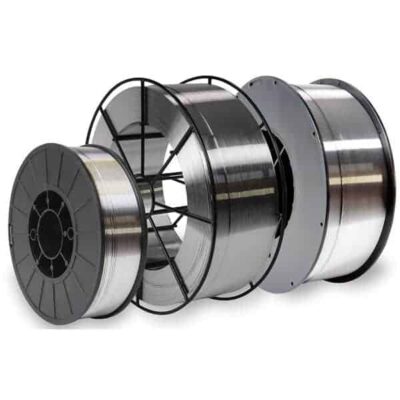
Consumable condition remains especially important. Wire that is rusty, damaged or contaminated can destabilise feeding and arc performance. Worn contact tips, incorrect liner selection, poor earth connections and restricted gas flow can create faults that software cannot diagnose reliably. The practical approach is to maintain the torch, wire feed path and return lead as part of the process-control plan.
The limits must be defined
An adaptive system needs boundaries. It should not keep increasing heat input indefinitely in an attempt to fill a large gap, nor should it continue welding through a joint condition that falls outside the approved procedure. Set limits determine when the system can correct, when it should alert the operator and when it must stop.
This is where welding engineering judgement is required. A permitted parameter adjustment must remain consistent with the approved welding procedure specification and the material requirements. On regulated or safety-critical work, the use of adaptive control may require procedure qualification, documented validation and evidence that the finished weld meets the relevant acceptance criteria.
Choosing the right level of control
Not every fabrication operation needs full seam tracking or closed-loop robotic control. The appropriate level of adaptive welding should reflect the problem being solved.
For a manually guided process, adaptive power-source functions may improve arc stability and help maintain consistent results as stick-out or travel conditions vary. For mechanised welding, travel-speed control and joint sensing may be the next practical step. For high-volume assemblies, a robot cell with integrated seam finding, tracking and process monitoring can reduce dependency on perfect part-to-part consistency.
The decision should begin with production evidence. Review reject rates, rework causes, cycle times, fit-up variation and the number of operator interventions needed per shift. If most defects trace back to inconsistent joint location, investing in better fixtures may produce a stronger result than investing first in sensing technology. If fit-up is controlled but heat input varies during long welds, adaptive process control may be the more direct answer.
Specification points that affect performance
When assessing an adaptive welding setup, buyers should look beyond the phrase itself. Ask which variables are measured, which parameters can be adjusted and how quickly the equipment responds. A system that monitors arc voltage is different from one that measures weld-pool geometry or joint position.
Integration also needs attention. The torch, wire feeder, power source, positioner, extraction arrangement and fixture should work as a production system. Cable routing must permit movement without damaging leads or affecting wire feed. On automated work, the fixture must locate components consistently enough for the sensor to find the joint within its operating range.
Data handling is another practical consideration. Production teams may need records of actual welding parameters, alarms, stops and deviations for quality assurance or customer documentation. However, more data is only useful if someone owns the review process. A simple alarm history that supervisors can act on may be more valuable than a large dataset that is never checked.
The operator still matters
Adaptive equipment changes the operator’s role, but does not remove it. Welders and cell operators need to recognise poor fit-up, damaged consumables, sensor contamination, gas faults and conditions outside the process limits. They also need clear instruction on when to stop the cycle rather than repeatedly overriding an alarm.
Training should cover the reason for the control strategy, not only the screen commands. When operators understand that a parameter correction is intended to manage a narrow variation, they are less likely to treat the system as permission to weld unacceptable joints. This protects quality and prevents equipment settings from being altered to hide a recurring fabrication fault.
Maintenance teams should be included from the start. Sensors, lenses, protective covers, torch consumables and mechanical axes all need inspection intervals. A reliable adaptive cell is usually the result of disciplined preventative maintenance rather than a complicated technology choice.
Building a workable case for adaptive welding
The strongest business case is normally based on a defined bottleneck: repeated repairs on a specific assembly, unstable quality across shifts, excessive manual correction, or lost output from stopping to reposition parts. Measure that issue before making changes, then trial adaptive control on one weld family where outcomes can be compared.
Track repair hours, consumable use, deposition rate, rejection causes and cycle time alongside weld inspection results. A faster cycle is not a gain if it increases grinding, repair welding or inspection failures. Equally, a modest improvement in first-pass quality can justify the investment where labour, material or delivery penalties are high.
For many workshops, the right first move is modest: improve fixture accuracy, standardise joint preparation, use dependable wire and torch consumables, then add control where variation remains. ProWeld can support that practical approach with trade-grade welding and fabrication supplies selected for demanding workshop use.
Adaptive welding delivers its best results when it is used to control a known variation, not to disguise an uncontrolled process. Start with the joint, prove the baseline procedure, and let the technology make consistent work more repeatable.