




Blog
Top Welding Fume Extractors for Trade Workshops
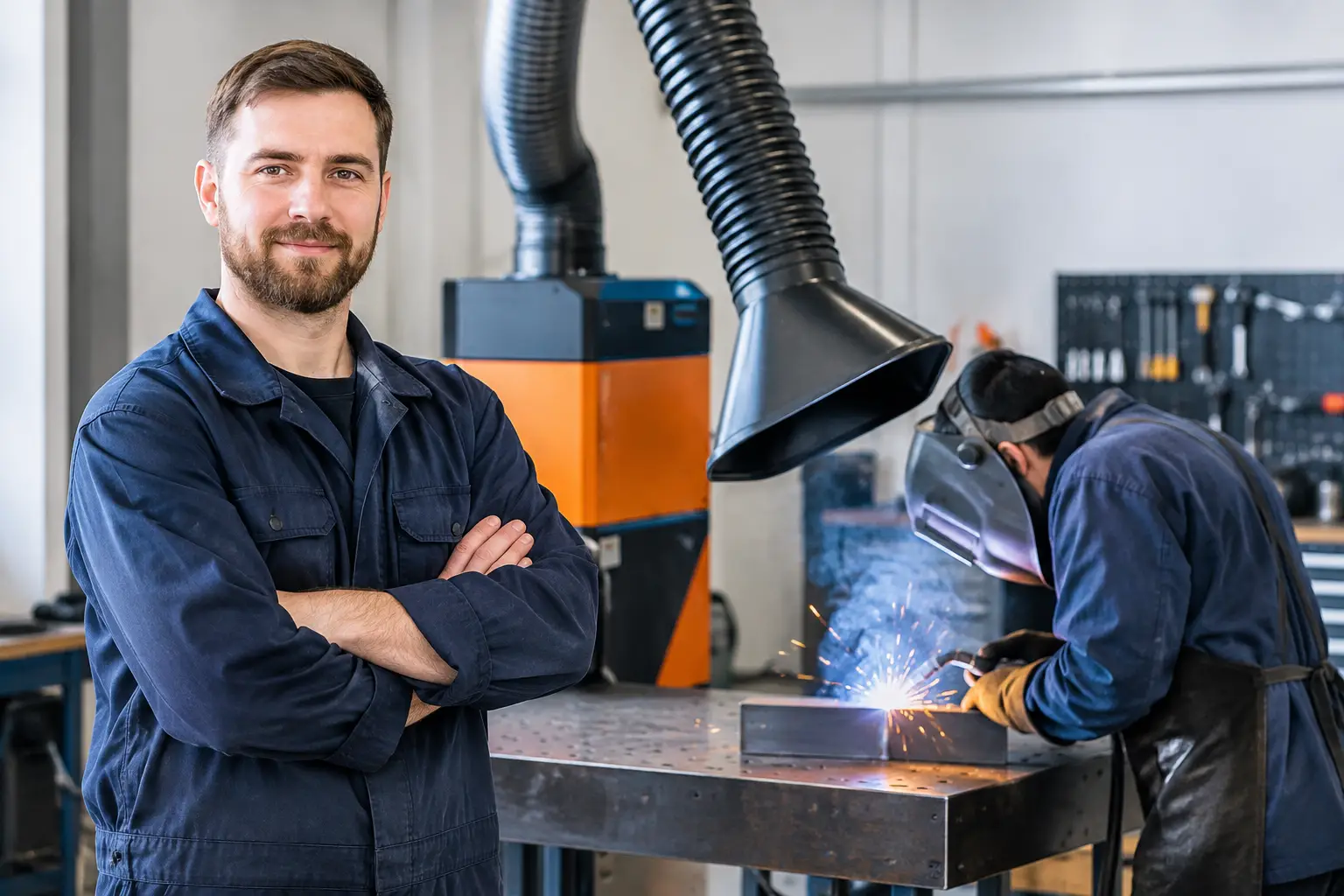
A fume extractor that looks adequate on paper can fail at the point that matters: the welder’s breathing zone. The top welding fume extractors are not simply the units with the largest fan or the finest filter. They are the systems that capture fume consistently at source, suit the welding process, and remain practical enough for the team to use on every job.
For fabrication shops, maintenance bays and site-based welding work, selection starts with the job rather than the catalogue. A bench where small steel components are welded all day needs a different arrangement from a fabrication floor handling structural assemblies, stainless repairs or intermittent mobile work. Get that distinction right and local exhaust ventilation becomes a working production control, not equipment left switched off in the corner.
What separates the top welding fume extractors
Welding fume is a mixture of very fine particulate and gases produced by the arc, consumables and base material. Fume from stainless steel and other alloyed materials can create additional exposure concerns, while coatings, oils and surface contamination can make the hazard less predictable. General workshop ventilation may improve the room, but it does not replace extraction close to the arc.
The first measure of an effective unit is capture, not filtration alone. A high-grade filter only helps after contaminated air reaches the hood, nozzle or extraction torch. If the extraction point is too far from the plume, poorly positioned, or easily moved aside, fume will pass through the welder’s work area before the system has a chance to remove it.
The second is suitability for the duty. A compact portable extractor may be ideal for short repair welds or confined bays. It is unlikely to be the right answer for several welders working continuously on large fabrications. Likewise, a fixed hood may provide excellent coverage at a repetitive workstation but become restrictive where assemblies vary in size and access.
Finally, look at serviceability. Filters, spark protection, hose condition, arm joints and airflow indicators all require routine attention. A system that cannot be checked and maintained without disrupting the workshop will gradually lose performance.
Choose extraction by welding application
Portable fume extractors for mobile and repair work
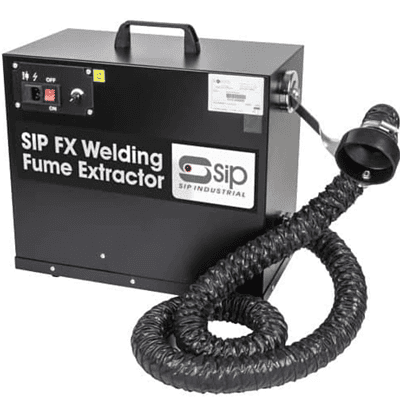
Portable units are useful where welding moves between bays, on-site locations or large assemblies. They normally combine a fan, pre-filter arrangement, main filter and flexible extraction hose or arm in a wheeled housing. Their value is flexibility, but that depends on the hose reaching the weld without becoming a trip hazard or obstructing access.
They are generally best for low to medium duty work by one operator at a time. Check the stated airflow at the working end of the hose, not just the fan’s free-air figure. Hose length, bends, nozzle type and filter loading all affect the air volume actually available for capture.
Extraction arms for fixed welding stations
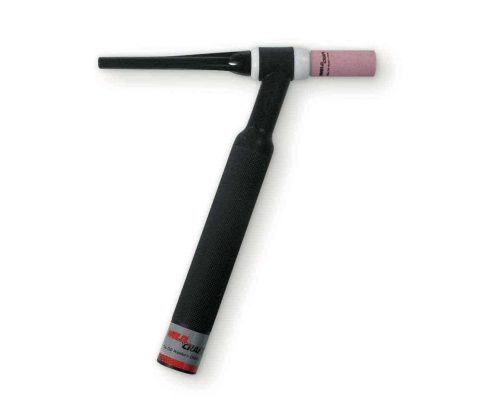
A self-supporting extraction arm is often the most practical option for a dedicated MIG, MAG or TIG station. The arm can be positioned close to the plume, then moved with the job. For typical open fabrication, it should be placed to draw fume away from the welder without pulling shielding gas from the weld area.
Arm diameter, reach and joint quality deserve close attention. A long arm with insufficient support can drift out of position. A short arm may force operatives to work with the hood too far away. Where frequent work takes place at a bench, a correctly sized arm connected to a central system or standalone unit gives a repeatable control method.
Downdraught benches for small components
Downdraught benches draw contaminated air down through the work surface, making them well suited to smaller parts, repeat work and weldments that can sit flat on a table. They can also assist with grinding and cleaning operations where the dust is suitable for the unit and its filtration arrangement.
Their limitation is obvious: they only capture effectively when the work remains within the table’s extraction zone. Tall frames, awkward assemblies and welding performed above the bench surface may require supplementary local extraction. Do not assume a downdraught bench controls fume generated outside its working envelope.
On-torch extraction for repetitive production welding
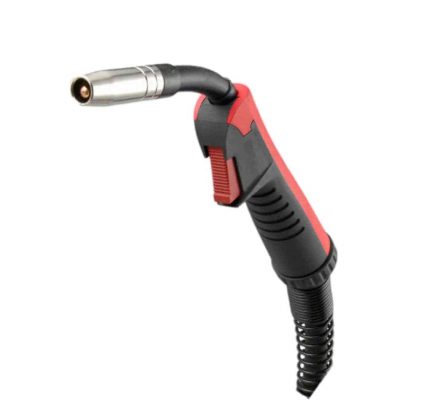
Extraction torches remove fume close to the arc and can be highly effective where welds are repetitive and the torch is in use for a large proportion of the shift. The trade-off is extra hose weight, altered handling and the need to set extraction correctly. Excessive extraction can interfere with shielding gas coverage, particularly on sensitive welds.
This approach is usually worth evaluating for production cells and high-duty manual welding, provided weld quality and operator acceptance are checked in real working conditions. A system that improves measured capture but causes poor torch control will not hold up on the shop floor.
Centralised systems for multi-bay workshops
A central extraction system can serve several welding bays, extraction arms, benches or automated cells. It may reduce duplicated equipment and make servicing more organised, but it needs proper design. Simultaneous use, duct sizing, pressure losses, damper arrangements and future expansion all affect performance.
This is not an area for choosing capacity based on the number of connection points alone. A central system must be sized for the extraction points likely to operate together, with enough pressure available at the furthest point. It also needs a clear plan for segregating processes where dust, sparks or contaminants demand different controls.
Filtration, sparks and clean-air return
Most welding fume extraction systems use staged filtration. A spark arrestor or pre-separator protects downstream media from hot particles and heavier debris. The main cartridge or high-efficiency filter then captures fine particulate. Some applications may require additional treatment for gases or odours, but particulate filtration does not automatically remove every gaseous contaminant.
Filter quality matters, but so does filter loading. As a filter collects dust, resistance rises and airflow can fall unless the unit has an effective cleaning system and is maintained correctly. Automatic pulse cleaning can help sustain performance on higher-duty applications, though it is not a substitute for inspection, cleaning and timely filter replacement.
Be cautious with recirculating filtered air back into the workshop. Whether this is acceptable depends on the materials welded, the contaminants produced, the filtration system, local risk assessment and applicable guidance. Welding on coated, painted, galvanised or contaminated material requires particular care. In some cases, discharge to a safe external point may be the more suitable approach.
Specification checks that prevent poor purchases
When comparing top welding fume extractors, ask for the figures that affect the installation rather than relying on a headline airflow number. Confirm the extraction point type and diameter, hose or arm length, air volume at the hood, available pressure, noise level, filter class, cleaning method, duty rating and electrical supply requirements.
Also consider the physical workshop. Can the extractor be positioned so the operator can reach the job? Is there room to move a portable unit around fixtures and stock? Will a fixed arm conflict with cranes, doors or handling routes? Is the extracted air path likely to pull fume across another worker before capture? These practical details often decide whether equipment is used properly.
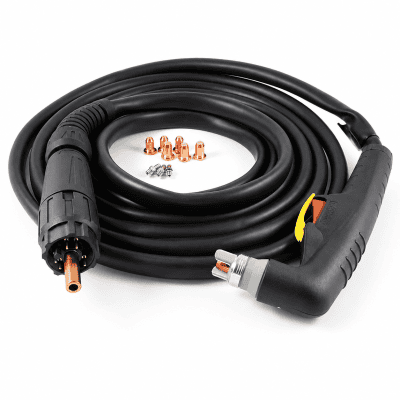
For multi-process shops, separate the assessment by task. MIG and MAG welding on mild steel, TIG work on stainless components, gouging, plasma cutting and grinding do not create identical extraction demands. One system may cover several activities only if its capture arrangement, airflow and filtration are suitable for all of them.
Installation and daily use matter as much as the machine
An extractor should be commissioned as a control measure, not treated as a plug-in accessory. Position the hood or nozzle before welding begins, keeping it close enough to capture the rising plume while avoiding interference with the work. The operative should not be positioned between the plume and the extraction point.
Supervisors should make checks part of normal workshop routine: is airflow present, is the arm holding position, are warning lights clear, and is the hood actually where the fume is generated? Managers should also arrange thorough examination and testing of LEV at the required intervals, with records that show the system is still performing as intended.
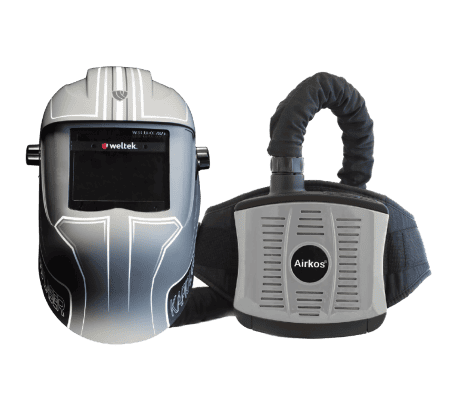
PPE remains relevant, particularly for tasks where source capture cannot fully control exposure, but it should not be used to excuse weak extraction. The better approach is to control fume at source, keep the workplace organised, and provide respiratory protection selected for the residual risk.
A well-specified fume extractor protects more than compliance paperwork. It helps keep welders productive, improves visibility around the joint and supports a cleaner workshop. ProWeld can help trade buyers match extraction equipment to the process, layout and duty their operation actually demands.