










Blog
Key Clamps for Strong, Fast Tube Builds
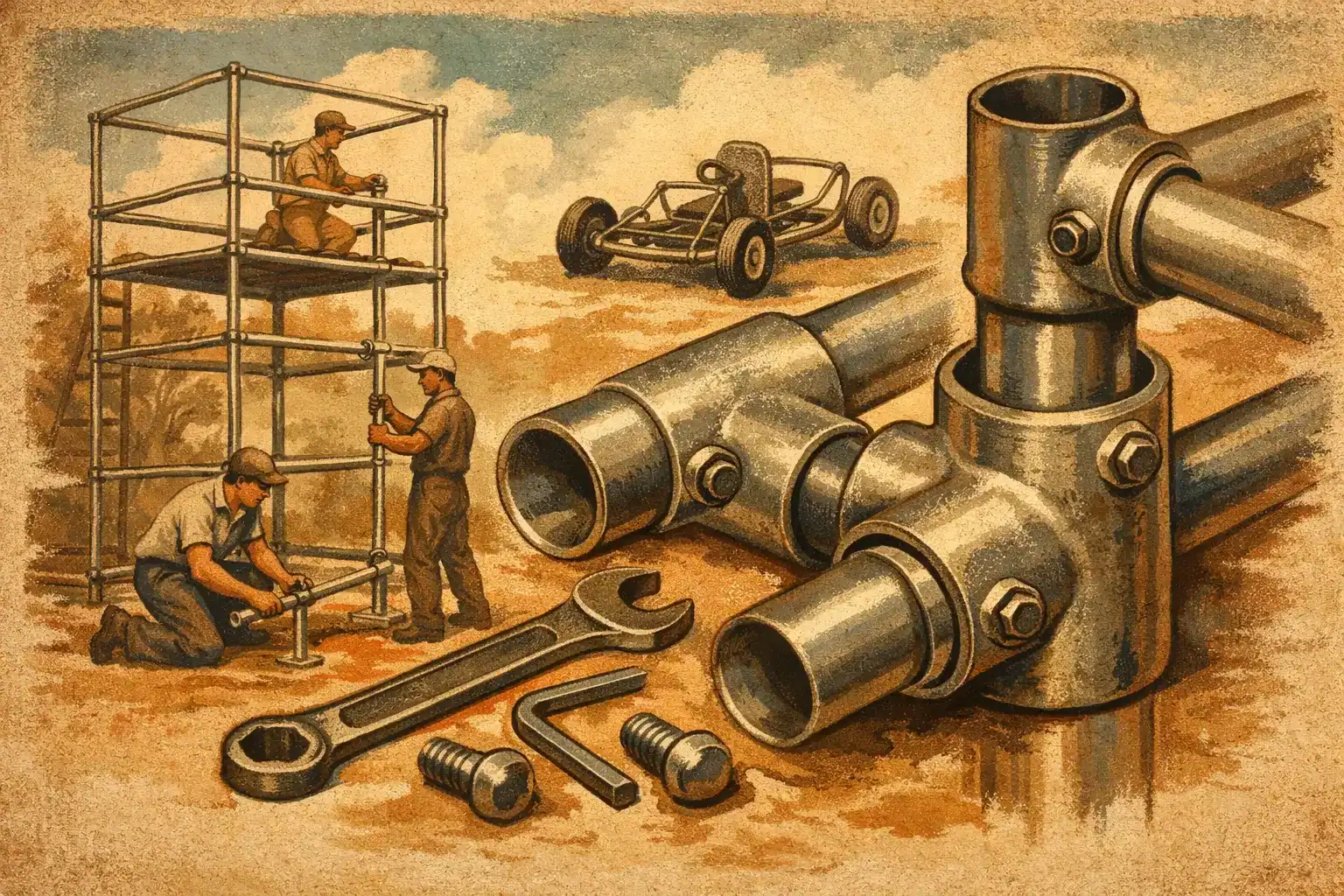
A handrail that needs to go in this week, a barrier that may need moving next quarter, a workshop frame where hot work is best avoided – this is where key clamps earn their place. For fabricators, maintenance teams and site contractors, they offer a practical way to assemble tube structures quickly without welding, while still delivering the rigidity and service life needed for commercial use.
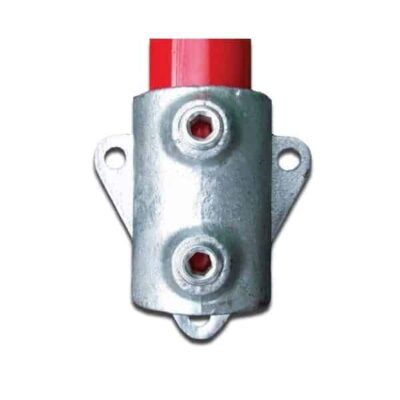
Key clamps are mechanical fittings designed to join tubular sections, usually steel tube, with a socket grub screw or set screw arrangement. The fitting provides the geometry, the tube provides the span, and the completed assembly can be built, altered or repaired with basic tools. That sounds straightforward, but the right result depends on selecting the correct fitting type, the correct tube outside diameter and the correct finish for the environment.
What key clamps are used for
In trade use, key clamps are less about novelty and more about saving labour where welding is unnecessary or unsuitable. They are commonly specified for handrails, guardrails, safety barriers, pedestrian rails, storage racks, trolleys, framework, access structures and workstations. They also suit temporary or semi-permanent installations where future modification is likely.
That flexibility is the main reason buyers choose them. A welded frame is excellent when the design is fixed and workshop time is available. A key clamp system makes more sense when the job needs quick assembly on site, when galvanised finishes must remain intact, or when the structure may need extending later.
There is a trade-off. Welded fabrication gives complete freedom on geometry and can be more compact at the joint. Key clamps work within a defined range of fitting shapes and tube sizes, so they reward standardised layouts. If the project involves unusual angles, tight clearances or heavily loaded bespoke structural elements, a fabricated solution may still be the better route.
Why key clamps suit industrial environments
The appeal in industrial settings is practical rather than cosmetic. Installation is fast, no hot permits are needed for the jointing method itself, and individual sections can be replaced without cutting out a welded frame. That matters in plants, warehouses, service yards and maintenance areas where downtime costs more than the fittings.
They also simplify site work. A team can cut tube to length, position fittings, align the assembly and tighten the fixing screws with standard tools. There is no need to bring welding equipment into every location, no repainting of burnt coating at each joint and no waiting for follow-on finishing work just to make the structure serviceable.
For maintenance departments, that adjustability is a real advantage. If a barrier needs shifting to suit a new machine footprint, or a rail needs extending after a layout change, the original materials often remain usable. That reduces waste and shortens the job.
Choosing the right key clamps
The first check is tube size. This is not a detail to guess at. Key clamps are matched to a specific outside diameter, and the fitting must suit the tube exactly if you want proper grip and alignment. Nominal bore and outside diameter are often confused, especially when tube is sourced separately, so confirming the actual OD before ordering is essential.
The next consideration is fitting type. Straight couplings, 90 degree elbows, tees, crosses, base flanges, swivel fittings and variable angle joints all do different jobs. The simplest way to specify is to work backwards from the finished structure. Identify every corner, intersection, termination and fixing point, then match each location to the fitting geometry required. That avoids overbuying and cuts down installation delays.
Finish matters as well. Many key clamps are supplied galvanised, which makes sense for outdoor use and for areas exposed to moisture or general industrial wear. Indoors, the same finish still offers long service life, but if appearance is part of the requirement, the tube finish and fitting finish should be considered together so the completed installation looks consistent.
Load is the point that deserves the most caution. Key clamps are strong, but they are not a substitute for structural design where people’s safety or heavy impact loading is involved. Handrails, edge protection and barriers all need to be assessed against the duty they will see in service. In some jobs the fitting is more than adequate. In others, tube wall thickness, fixing method to the substrate and the layout of the whole system will determine whether the assembly performs properly.
Key clamps vs welded fabrication
For many buyers, the real question is not whether key clamps work, but when they make better commercial sense than welding. If speed, adjustability and reduced site disruption are the priority, they are often the stronger option. A fabricated and welded assembly usually demands workshop preparation, transport of complete sections and less tolerance for late design changes.
Welding still has clear advantages where maximum rigidity, compact bespoke joints or fully custom geometry is required. It can also be more cost-effective in repeat production where jigs are already in place and labour is controlled. But once a project moves on site and starts changing, welded assemblies become slower and more expensive to alter.
That is why key clamps are common in safety and access applications. They allow a contractor to install from stock components, adjust during fit-up and finish the job without secondary coating repairs at every connection. In a working industrial environment, those saved hours matter.
Installation points that affect performance
A key clamp system is simple to assemble, but poor installation will still cause trouble. Tube should be cut cleanly and consistently, as irregular ends can throw out alignment across a full rail run or frame. Before tightening, the whole assembly should be set square and level. Once the grub screws are locked down, any twist left in the build tends to stay there.
The substrate fixing is equally important. A base flange is only as reliable as the anchor and the concrete or steel beneath it. If a barrier is expected to take knocks from pallet movement or regular pedestrian loading, the base detail should be treated with the same care as the tube layout.
Installers should also follow the recommended tightening method rather than guessing by feel. Under-tightening reduces grip. Over-tightening can damage the screw, the fitting thread or the tube surface. Where the installation is safety-related, a final inspection and periodic retightening check are sensible practice, particularly in high-use areas.
Common applications in fabrication and maintenance
In workshops and plant environments, key clamps are often chosen for jobs that need to be durable but not over-engineered. Machine guarding rails, internal walkways, demarcation barriers, support frames and material handling aids all fit that category. They are especially useful where the layout may evolve and the original build needs to be adapted rather than scrapped.
On construction and external works, they are regularly used for pedestrian handrails, edge protection systems, queue barriers and simple framework. Because the system is modular, procurement is easier than commissioning one-off fabricated items for every small project. That standardisation can help stores management as much as it helps the installer.
They are also useful where welding access is poor. In confined areas, finished buildings or sensitive maintenance zones, reducing hot work can simplify both the risk assessment and the programme. That does not remove the need for proper design or competent installation, but it does remove a layer of complexity from the job.
Buying key clamps with fewer mistakes
Most ordering problems come back to three issues: wrong tube size, wrong fitting type and unclear duty requirement. A buyer who has the tube OD, a simple sketch and a realistic view of the loading is already most of the way there. Without those basics, even a familiar product line can turn into site delays and returns.
It also pays to think about the full assembly rather than the fitting in isolation. If the structure is outdoors, the tube specification, corrosion resistance, base fixings and maintenance expectation should all line up. If the project is indoors but high traffic, impact resistance and replaceability may matter more than appearance.
For trade buyers, the value of a specialist supplier is not just stock availability. It is getting a technically sensible combination of parts, finish and specification for the job at hand. That is where a focused industrial range from a supplier such as ProWeld tends to make more sense than trying to piece together a system from general retail stock.
Key clamps are not a shortcut in the negative sense. They are a deliberate choice for jobs where speed, adaptability and reliable tube construction matter more than fabricated complexity. Used properly, they save time, keep options open and give you a structure that can be changed as the site changes – which is often what practical engineering work demands.