










Blog
Laser Welding Machine Review for Fabricators
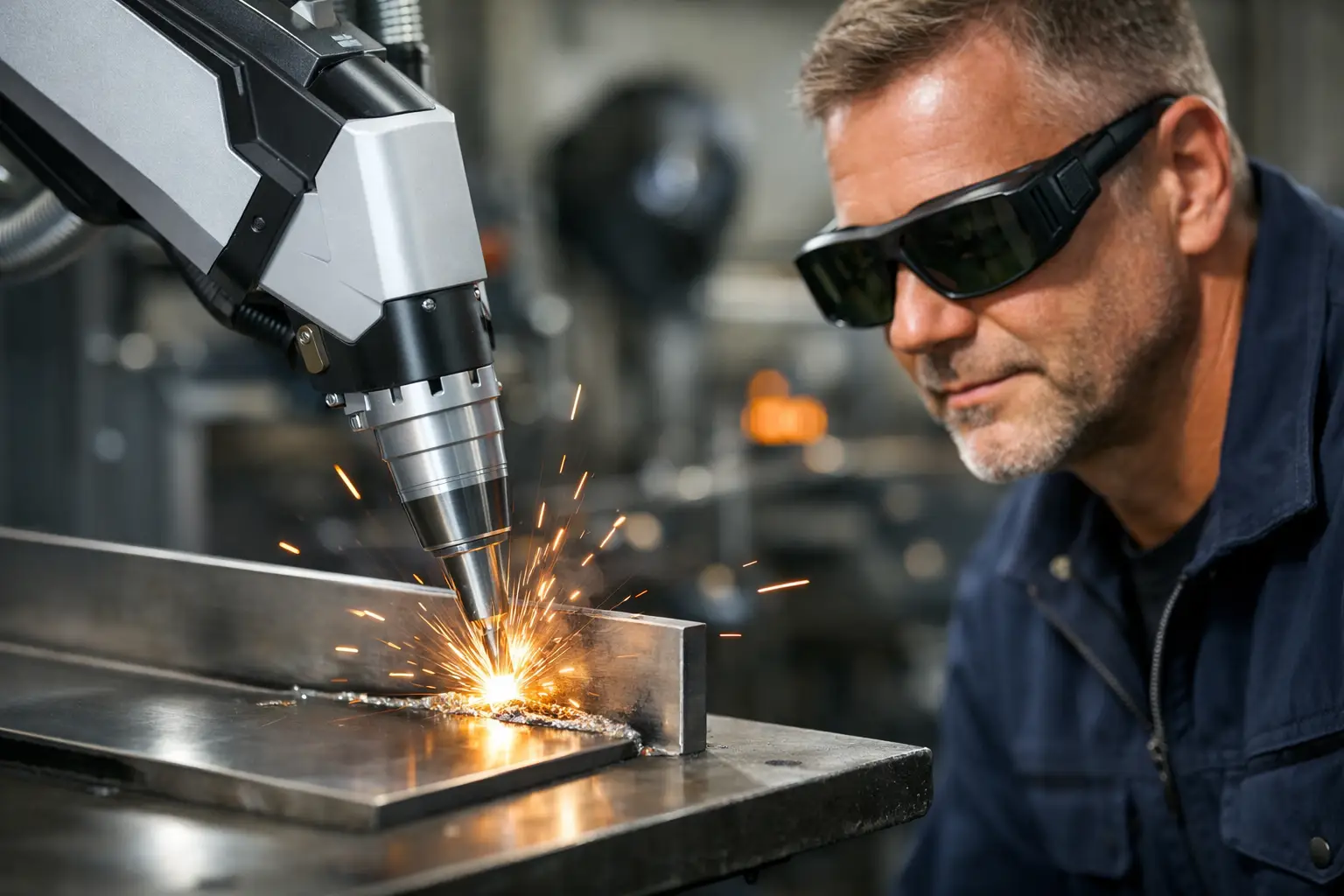
A laser welding machine can turn a repetitive thin-section fabrication job from a slow, heat-heavy process into a fast, clean operation. That does not make it the right answer for every workshop. This laser welding machine review looks at what professional buyers should assess before committing capital: actual joint performance, duty cycle, operator control, safety provision and the work that will still be better suited to conventional welding.
What a laser welder changes on the workshop floor
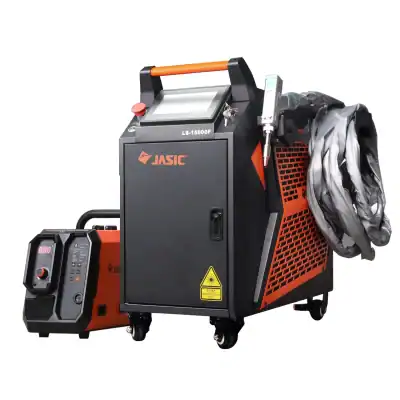
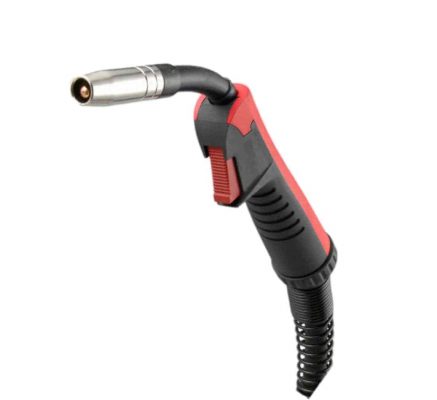
Most hand-held laser welding systems use a fibre laser delivered through a hand-held torch. The concentrated beam produces a narrow fusion zone, allowing fast travel speeds with relatively low overall heat input. On suitable material and joint preparation, that can mean less distortion, reduced grinding and a cleaner finished appearance.
The gain is most noticeable on repeated work in stainless steel, mild steel and aluminium, particularly on sheet, box section, cabinets, guards, frames and light fabrications. A well-set machine can produce a consistent seam quickly, including on corner and lap joints that would otherwise demand careful torch control and considerable finishing.
However, speed figures alone can mislead. A weld is only productive if the parts fit, the joint is accessible and the operator can maintain correct stand-off and travel. Laser welding does not compensate for poor cutting, excessive gaps, contaminated surfaces or a fixture that allows parts to move. In fact, its narrow beam can make weak preparation more obvious.
Laser welding machine review: the specifications that matter
A serious assessment starts with the source power, but should not end there. Hand-held machines are commonly offered around 1 kW to 3 kW. Higher power generally provides greater penetration potential and faster welding on thicker sections, but it also increases the need for disciplined parameter control. Buying the largest output available is not automatically the sensible choice for a workshop focused on light-gauge fabricated products.
For many general fabrication applications, the useful question is: what thickness, material and joint type make up most of the weekly workload? A machine that performs accurately and repeatably on those jobs is more valuable than one selected for an occasional maximum-thickness task.
Beam control and weld appearance
The torch should provide adjustable wobble or scan patterns, with controls for width, frequency and amplitude. These settings influence bead width, edge wetting and tolerance of small fit-up variations. A narrow, concentrated setting is useful for speed and penetration. A wider pattern can assist where a broader bead profile is required or a small gap must be bridged.
Controls should be accessible without forcing an operator to work through unclear menus. Saved programmes are valuable where the workshop runs recurring products, but only if staff can identify the correct programme and understand when it is not suitable. Clear parameter naming, sensible limits and reliable recall matter more than a long list of presets.
Duty cycle, cooling and real output
Check the stated duty cycle at the intended power level and consider the cooling arrangement as part of the system, not an afterthought. Continuous production welding creates demands on the laser source, chiller and surrounding environment. A unit working in a warm, dusty fabrication bay needs adequate airflow, maintained filters and enough space around the equipment for service access.
Ask how the machine behaves when coolant temperature rises, a fault is detected or the torch protection window becomes contaminated. Controlled shutdown and clear fault reporting reduce the risk of expensive damage and shorten downtime. A low purchase price has little value if consumables, service parts and competent technical support are difficult to obtain.
Material range and joint limitations
Laser welding is particularly attractive where distortion control and cosmetic finish matter. Stainless steel can be welded with a narrow, clean bead that often needs minimal dressing. Mild steel responds well when surfaces are clean and the fit-up is controlled. Aluminium can also be highly productive, but demands careful cleaning, appropriate shielding gas and a proper understanding of reflectivity and heat conduction.
Material thickness claims should be treated as a starting point rather than a purchasing decision. Penetration depends on alloy, joint design, gap, welding position, focus, travel speed and wire use. Butt welds, fillets, lap joints and outside corners do not place the same demand on the machine.
Wire-fed laser welding can improve gap tolerance and add material where required, but introduces another variable to manage. It may be worthwhile for structural or inconsistent fit-up work, while autogenous welding can be faster and cleaner on accurately prepared sheet-metal assemblies. Neither approach removes the need to qualify the procedure for the work being produced.
A laser welder is not a replacement for every MIG, TIG or MMA set in the shop. Heavy sections, outdoor repairs, difficult access, poor fit-up and certain site conditions can still favour conventional processes. The best workshops add laser capability where it improves a defined production stream, rather than expecting one machine to cover every repair and fabrication task.
Safety is a purchasing requirement, not an accessory
Hand-held laser welding requires a controlled laser work area. The reflected beam hazard is significant, especially around reflective metals, bright surfaces and poorly considered work positions. Treating the equipment like an ordinary welding power source is unacceptable.
The installation should include an appropriate enclosed or controlled area, interlocked access where required, laser-rated protective screens, suitable eyewear specified for the laser wavelength, warning systems and a clearly defined operating procedure. The beam must be managed at the end of every weld and during any test firing. Workpieces, jigs and the surrounding area need to be arranged to prevent unwanted reflections.
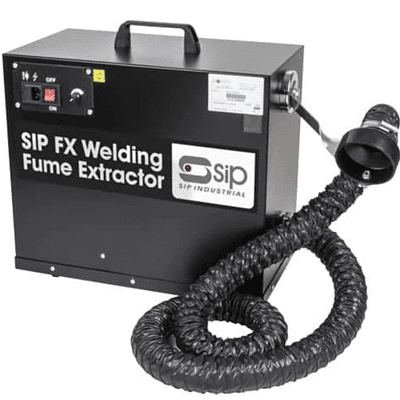
Fume extraction remains essential. A smaller heat-affected zone does not mean no fume, particularly when welding coated, oily or contaminated material. Coatings should be removed where necessary, and extraction should capture fume close to the source without disrupting shielding gas coverage.
Before purchase, confirm who will commission the installation, train operators, establish operating controls and support ongoing safety checks. A supplier that can only discuss watts and travel speed is not providing the full answer.
Operator skill and production consistency
Laser welding can shorten the learning curve for producing an acceptable-looking bead, but it does not eliminate operator skill. The operator still needs to understand joint fit-up, focus position, travel speed, torch angle, shielding gas coverage, material cleanliness and the signs of incomplete fusion or excessive heat input.
The practical advantage is repeatability. Once a procedure is proven and fixtures hold parts consistently, a trained operator can reproduce a quality result with less variation than many manual processes. This is particularly valuable where finishing labour is high or cosmetic inconsistency leads to rework.
Training should include destructive testing of sample joints, not just visual inspection. Sectioned samples, bend tests where suitable and production-representative trials provide evidence that the weld has the required fusion and strength. A neat bead is not proof of a sound joint.
Running costs beyond the machine price
The financial case normally rests on labour saved in welding and finishing, lower distortion-related rework, and improved throughput. It should also include shielding gas, protection windows, nozzles, wire where used, electricity, extraction, servicing and operator training.
Protection windows deserve particular attention. They are consumable items designed to protect the optics, and their life depends heavily on process discipline and cleanliness. Frequent contamination can indicate incorrect settings, poor gas coverage, unsuitable torch position or inadequate maintenance. Budget for them, but investigate excessive consumption rather than accepting it as normal.
Compare machines on supported uptime, not just the invoice total. Availability of spares, response time for technical faults, warranty terms and local service capability can have a greater effect on cost than a modest difference in purchase price. For fabrication businesses, a stopped production cell is usually more expensive than the component that caused it.
Questions to answer before ordering
A proper demonstration should use your own material, realistic joint preparations and parts close to your normal production work. Generic showroom coupons rarely expose the issues that matter in a working shop.
Confirm these points before placing an order:
- Can the machine produce acceptable welds on your common materials, thicknesses and joint types?
- Is the proposed power level matched to regular work rather than occasional maximum capacity?
- What controlled-area measures, extraction and training are required for compliant operation?
- Are service, consumables and repair support available within a practical timescale?
- Can the expected labour and finishing savings be demonstrated on a representative job?
A laser welding machine earns its place when it reduces a known production bottleneck without creating a new safety or support problem. For the right repeat work, it can be a highly effective fabrication tool. For variable repair work or poorly controlled fit-up, improving preparation and retaining conventional welding capacity may deliver the better result.