














Blog
How to Size Key Clamps Correctly
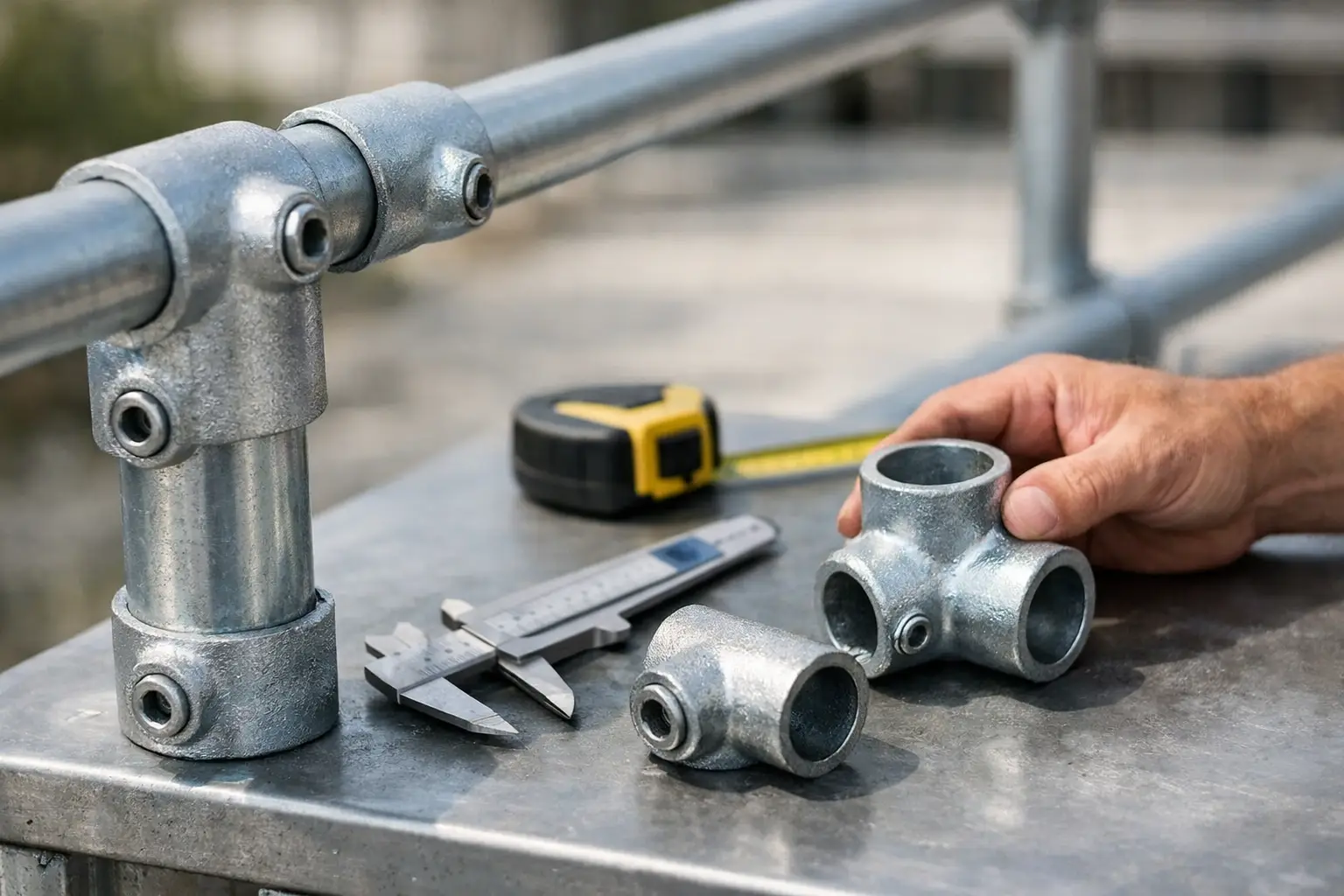
Getting key clamp sizing wrong usually shows up late – during assembly, on site, or worse, after a handrail or barrier has already been put into service. If you need to know how to size key clamps properly, the starting point is simple: size the fitting to the outside diameter of the tube, not to a rough nominal guess and not to the bolt size on the clamp.
That sounds straightforward, but this is where many ordering mistakes happen. Tube is often described by nominal bore, by imperial reference, or by metric outside diameter depending on the job, the supplier, and the age of the existing installation. If those measurements are mixed up, the clamp may look close enough on paper but still fail to seat correctly in practice.
How to size key clamps for tube diameter
Key clamps are designed to grip tube mechanically with a socket set screw. The fitting size is determined by the tube outside diameter, because that is the actual surface the clamp bears against. For most applications, that is the only measurement that matters first.
For example, if the tube outside diameter is 33.7 mm, you need the clamp size intended for 33.7 mm tube. If the tube outside diameter is 42.4 mm, you move to the matching clamp size for 42.4 mm tube. The same principle applies whether you are building handrails, safety barriers, racks, trolleys or support frames.
The key point is that nominal pipe size and actual outside diameter are not the same thing. A buyer might assume a 1 inch pipe takes a 25 mm clamp, but in many common tube systems the actual outside diameter is significantly different. That small assumption is enough to create play in the joint or stop the fitting from assembling at all.
Measure the tube, not the old paperwork
On new fabrication work, the best approach is to measure the tube directly with vernier callipers. A tape measure can help for a quick site check, but it is less reliable when you are trying to distinguish between close sizes. If the project is a repair or extension to an existing structure, direct measurement matters even more because older installations are not always consistent.
Galvanised tube, painted tube and previously used material can all make visual estimation less reliable. Coatings add very little to the diameter in most cases, but heavy paint build-up, corrosion or damage can mislead anyone trying to identify size by eye. Measuring a clean section of tube gives you a much better basis for ordering.
If callipers are not available, you can measure the circumference and divide by 3.142 to get the outside diameter. It is not as quick or as precise as using callipers, but it is better than relying on guesswork when the fitting needs to clamp securely.
Common confusion between nominal and actual sizes
This is the issue that causes most key clamp returns. Tube may be sold or recorded as 3/4 inch, 1 inch, 1 1/4 inch or similar, yet the actual outside diameter follows a standard that does not match that nominal figure exactly. Metric tube creates fewer problems when specified correctly, but mixed projects still catch people out.
If you are working from an old bill of materials or extending a handrail installed years ago, do not assume the terminology used then matches the stock being sourced now. Check the outside diameter and match the fitting accordingly.
Consider the application before finalising the size
Knowing how to size key clamps is not only about diameter. In many jobs, the correct tube size is also influenced by load, span, traffic level and the purpose of the structure. A light pedestrian guide rail, for instance, does not place the same demands on the assembly as a heavy-duty pallet stop or an impact-prone barrier in a warehouse.
The clamp has to fit the tube, but the tube itself has to be appropriate for the job. If the tube is undersized for the expected loading, a correctly sized clamp will not solve the wider structural issue. In practical terms, that means sizing decisions should be made with both fit and duty in mind.
For a standard handrail or guardrail, common tube sizes are widely used because they balance grip area, stiffness and availability of matching fittings. For framework or bespoke fabrication, there may be more flexibility, but every change in tube diameter affects fitting compatibility across the whole build.
Wall thickness matters, but differently
Wall thickness does not usually determine the key clamp fitting size because the clamp grips the tube externally. However, it still matters for strength, deflection and set screw performance. A thin-wall tube may technically accept the correct clamp, but under load or repeated use it may deform more easily than a heavier section.
That becomes more relevant in public-facing barriers, access systems, industrial guarding and mobile fabrications. If the application involves vibration, repeated impact or regular disassembly, tube specification deserves as much attention as clamp size.
Matching fittings across a full assembly
A single clamp ordered in the right size is only part of the job. On most fabricated systems, every elbow, tee, crossover, base flange and swivel component has to match the same tube diameter unless the design specifically steps between sizes. One mismatch can stop progress across an entire install.
This is particularly important when buyers are replacing only part of an existing system. A 42.4 mm handrail line cannot simply accept a 48.3 mm corner fitting because it was the nearest stock on the shelf. The visual difference may seem minor, but the mechanical fit will be wrong and the assembly will be compromised.
Where a project includes several fitting types, it helps to lock in the tube size first and then build the fitting list around that single specification. That reduces ordering errors and avoids site improvisation.
Tolerances, coatings and real-world fit
In a workshop environment, material is not always perfect. Tube can vary slightly, particularly across mixed sources or older stock. Galvanising, powder coating and site wear can also affect how easily a fitting slides into place before tightening.
A proper key clamp should still be selected by the intended outside diameter, but fit in the real world is not always identical from one length to another. If you are assembling into coated tube, damaged ends or rough-cut sections, prepare the material properly before assuming the fitting is at fault. Deburring, cleaning and checking for distortion can save a lot of wasted time.
If a clamp feels excessively loose before tightening, or it will not seat over a clean correctly measured tube, stop there and verify the size code. Forcing the issue usually ends with marked fittings, damaged screws or a partial grip that is not acceptable on a finished installation.
When existing structures create sizing problems
Alteration work is where sizing gets awkward. A rail installed years ago may use imperial tube, non-standard substitutions or a mix of replacements added over time. In those cases, one section may not tell the whole story.
Measure several points along the installation, especially if the structure has been repaired before. Check verticals and horizontals separately. It is not uncommon to find a previous repair carried out with whatever tube was available at the time. If that has happened, you may need to split the order or rework part of the frame rather than assume one clamp size will suit everything.
For maintenance teams, this is usually where proper identification up front saves the most labour. A short verification step in the depot is cheaper than finding out on site that the fittings do not match the rail.
A practical way to avoid ordering the wrong size
For trade buyers, the simplest process is to work in this order: identify the application, confirm the required tube outside diameter, check that the tube specification suits the load, and then select all key clamps to that same diameter. If the job is an extension to existing work, physically measure the installed tube before placing the order.
That process is not complicated, but skipping one step is where costs creep in. The labour tied up in wrong parts, site delays and part returns usually outweighs the few minutes needed to confirm the size properly. Suppliers such as ProWeld deal with this issue regularly because the problem is rarely product quality – it is usually misidentification of the tube standard.
Final checks before you buy
Before committing to quantity, confirm three things. First, the outside diameter of the tube. Second, that every fitting on the bill matches that diameter. Third, that the tube itself is suitable for the duty of the finished assembly.
That is the practical answer to how to size key clamps. Get the outside diameter right, keep the specification consistent, and treat the tube and fitting as one system rather than separate items. A few careful measurements at the start will usually save a lot more than they cost by the time the job reaches site.