



















Blog
Choosing Metal Bandsaws for Fabrication
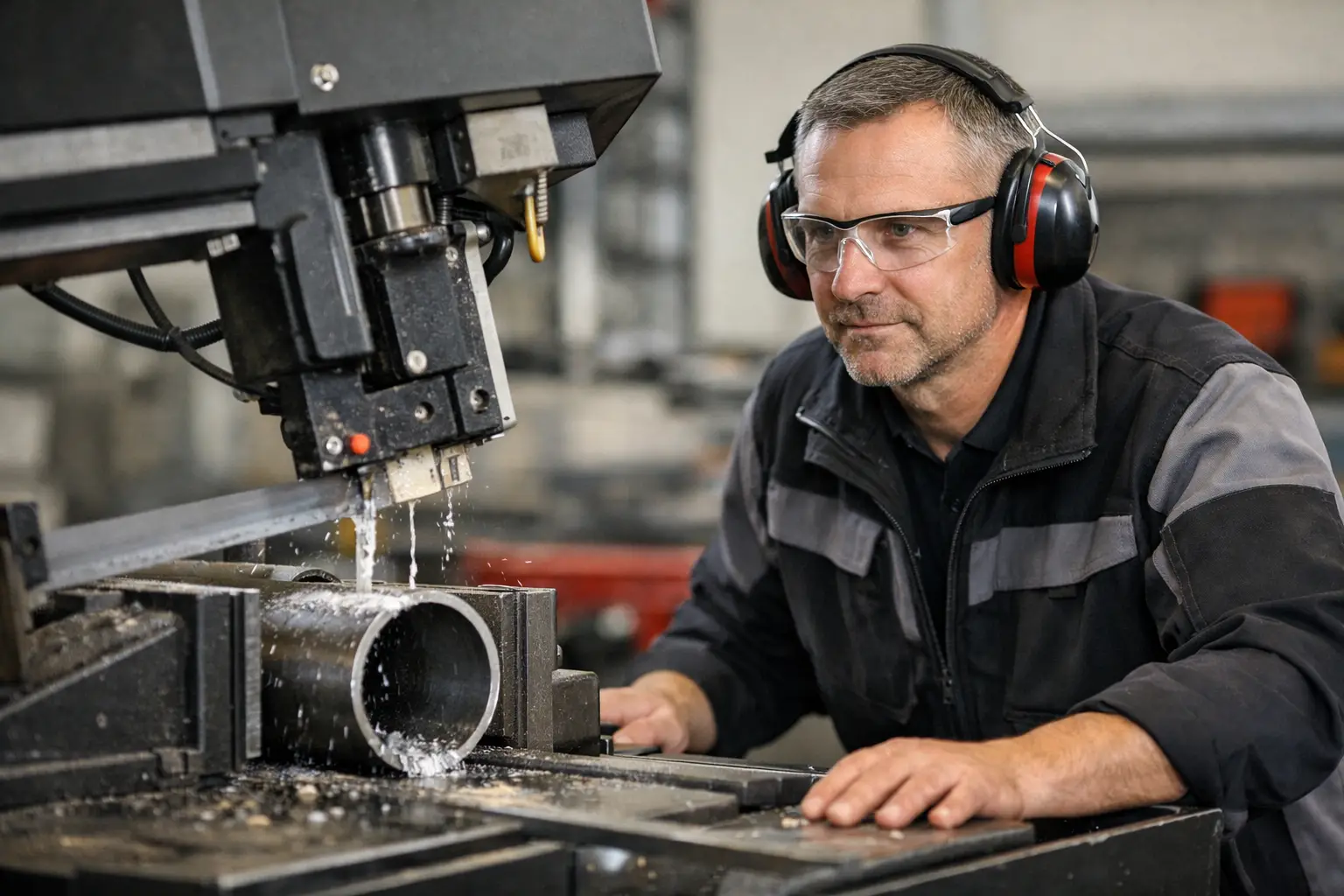
A bandsaw that cuts square in the morning but wanders off line by lunch will cost more than it saves. In fabrication, metal bandsaws are judged on cut quality, repeatability, blade life and how well they cope with the section sizes you actually process – not the figures printed on a brochure.
For most workshops, the right machine is not the biggest machine. It is the one that matches your material mix, your daily cut volume and the level of accuracy your downstream work demands. If you are coping, mitring, welding or machining after the cut, poor saw selection shows up quickly in wasted time, poor fit-up and excessive finishing.
What metal bandsaws are designed to do
Metal bandsaws are built to cut ferrous and non-ferrous stock with controlled blade speed, steady feed and better material support than an abrasive saw. That matters in fabrication because the quality of the first cut affects every operation that follows. A clean, consistent cut reduces dressing time, improves joint preparation and helps maintain dimensional control on assemblies.
They also offer a practical balance between productivity and versatility. One machine may be expected to cut box section, solid round, flat bar, angle and stainless tube in the same shift. That flexibility is why bandsaws remain standard equipment in fabrication shops, maintenance departments and general engineering environments.
The trade-off is that saw performance depends heavily on setup and machine suitability. Blade choice, vice alignment, coolant delivery and feed control all matter. A capable machine with the wrong blade or poor settings will still produce poor work.
Choosing metal bandsaws by workload
The first question is not whether you want a horizontal or vertical saw. It is how the saw will be used over a normal week. A workshop cutting occasional stock lengths for repair work has very different requirements from a fabrication business producing repeated cuts all day.
For lighter workshop use, a compact horizontal bandsaw may be enough. These machines suit lower volumes, general maintenance work and varied one-off cutting where budget and floor space are factors. They can be a sound option where precision matters, but throughput does not justify a larger automatic machine.
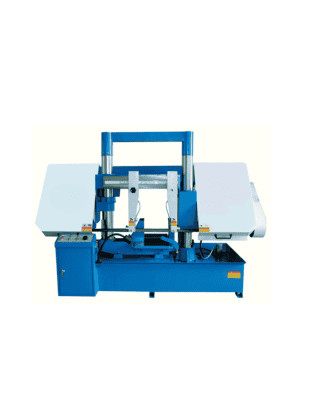
For regular fabrication work, a heavier horizontal bandsaw with hydraulic downfeed, better vice control and more rigid construction is usually the better investment. Machine stiffness, blade tension consistency and feed control become more important as section size increases and production loads rise. The machine needs to maintain accuracy over a full shift, not just on the first few cuts.
For higher output environments, semi-automatic and automatic machines start to make sense. If operators are repeatedly cutting the same lengths, automation reduces handling time and improves consistency. The benefit is not only labour saving. It is often better repeatability and less variation between operators.
Horizontal or vertical bandsaw
Horizontal machines are generally the first choice for cutting stock to length. They are designed for straight production cutting, mitres and bundle cutting, with the work clamped and the saw head feeding through the material. In most fabrication shops, this is the more practical format for everyday use.
Vertical bandsaws suit contour work, notch cutting and more manual shaping operations. They are useful where the operator needs to guide the material through the blade rather than bring the blade down onto a fixed job. That makes them more common in toolrooms, plate work and specialist fabrication tasks rather than routine stock processing.
If your work is mainly preparing bar, tube, channel and box section for welding or machining, a horizontal machine is usually the right starting point. If you regularly cut irregular profiles or need greater freedom for shaped work, a vertical bandsaw may be justified alongside it.
Capacity matters, but so does real-world material
Cutting capacity is often read too simply. A quoted round capacity or rectangular capacity only tells part of the story. The actual job depends on wall thickness, material grade, bundle condition and whether you are cutting at 90 degrees or on a mitre.
A saw that handles light hollow section comfortably may struggle when asked to process large solid bar all week. Likewise, stainless and high-strength materials place greater demand on blade selection, coolant and feed control than mild steel of the same size. Buyers should consider not only maximum capacity, but what the machine can cut reliably as routine work.
It is also worth checking vice design and bed support. Long stock and awkward sections need stable support before and after the cut. If the material moves, twists or lifts during cutting, accuracy suffers and blade life follows.
Blade speed, feed and blade selection
Good cutting starts with the relationship between blade speed and feed pressure. Different metals require different cutting speeds. Too fast and the blade overheats or strips teeth. Too slow and productivity drops without necessarily improving finish.
Variable blade speed is a real advantage in mixed-material environments. It gives the operator the ability to adapt for aluminium, mild steel, stainless and tougher alloys instead of forcing one compromise setting across everything. In a workshop that only cuts one material type, this may be less critical. In general fabrication, it matters.
Blade selection is just as important as the machine. Tooth pitch must suit the section being cut. Fine pitch on heavy solid stock can load up and cut slowly. Coarse pitch on thin wall tube can snag teeth and damage the blade. Variable pitch blades are often the practical choice for workshops processing mixed sections, but they are not a cure for poor setup.
Blade quality affects both finish and operating cost. A cheaper blade may look attractive on purchase price, but if it drifts, wears quickly or fails under steady use, the machine becomes less productive. On a trade shop floor, blade life and consistent performance generally matter more than the lowest initial spend.
Accuracy, mitring and repeat work
If the saw is part of a fabrication process, cut accuracy is not optional. Poorly cut material creates extra fettling, poor fit-up and avoidable welding correction. On repetitive jobs, even a small error compounds quickly.
Look closely at vice rigidity, head pivot quality and scale readability on mitre-capable machines. Some saws are acceptable for occasional angle cuts but become less convincing when frequent mitring is required. If your work includes frames, supports, handrails or repeated structural brackets, mitre setup and repeatability deserve proper attention.
A length stop is another small feature with a large effect. For batch work, it improves consistency and reduces measurement time at the saw. On higher volume jobs, that can make a noticeable difference to throughput and scrap reduction.
Coolant, chip control and daily maintenance
Coolant is not just about keeping the blade wet. Proper coolant delivery helps reduce heat, improve finish and clear chips from the cut. That is especially relevant when cutting stainless, solids or heavier sections where heat build-up is more severe.
Chip brush condition and chip clearance should not be overlooked either. Packed swarf damages blades, affects tracking and shortens service life. A machine that is easy to clean and maintain usually stays in better working order because operators are more likely to look after it properly.
Routine checks should cover blade tension, guide condition, vice alignment, coolant concentration and drive condition. None of this is complicated, but neglect is expensive. Bandsaws reward steady maintenance far more than emergency attention after the cut quality has already deteriorated.
What buyers should check before purchase
A sensible purchase decision comes down to matching the saw to the job. Floor space, power supply and budget all matter, but they should sit behind the operational requirement. A smaller, well-specified machine that suits your daily work is often more useful than an oversized unit chosen for occasional maximum capacity.
Before buying, it helps to define the largest and most common material you cut, the proportion of solids to hollow section, how often you mitre, whether you need coolant as standard and how many cuts the machine is expected to make in a shift. Those answers will narrow the field quickly.
Support and parts availability also deserve attention. In a professional environment, downtime affects production schedules and labour costs. A saw is not just a capital item. It is a working asset that needs blades, consumables, adjustment and occasional replacement parts throughout its service life.
Where the right saw pays for itself
The return on a good bandsaw is usually seen in labour time, blade life and reduced finishing rather than in headline cutting speed alone. A machine that cuts consistently, holds angles and keeps stock prep moving will improve workflow across the workshop. Material arrives at the welding bench cleaner, closer to size and easier to fit.
That is particularly true in fabrication businesses where cutting is continuous and every downstream delay has a knock-on effect. ProWeld works with trade buyers who know that the best equipment choice is rarely the most complicated one. It is the machine that fits the work, runs reliably and delivers predictable results shift after shift.
If you are reviewing metal bandsaws for a workshop, start with the material, the cut volume and the standard of finish your jobs demand. Get those right first, and the rest of the specification becomes much easier to judge.