







Blog
Best Workshop Grinding Discs for Trade Work
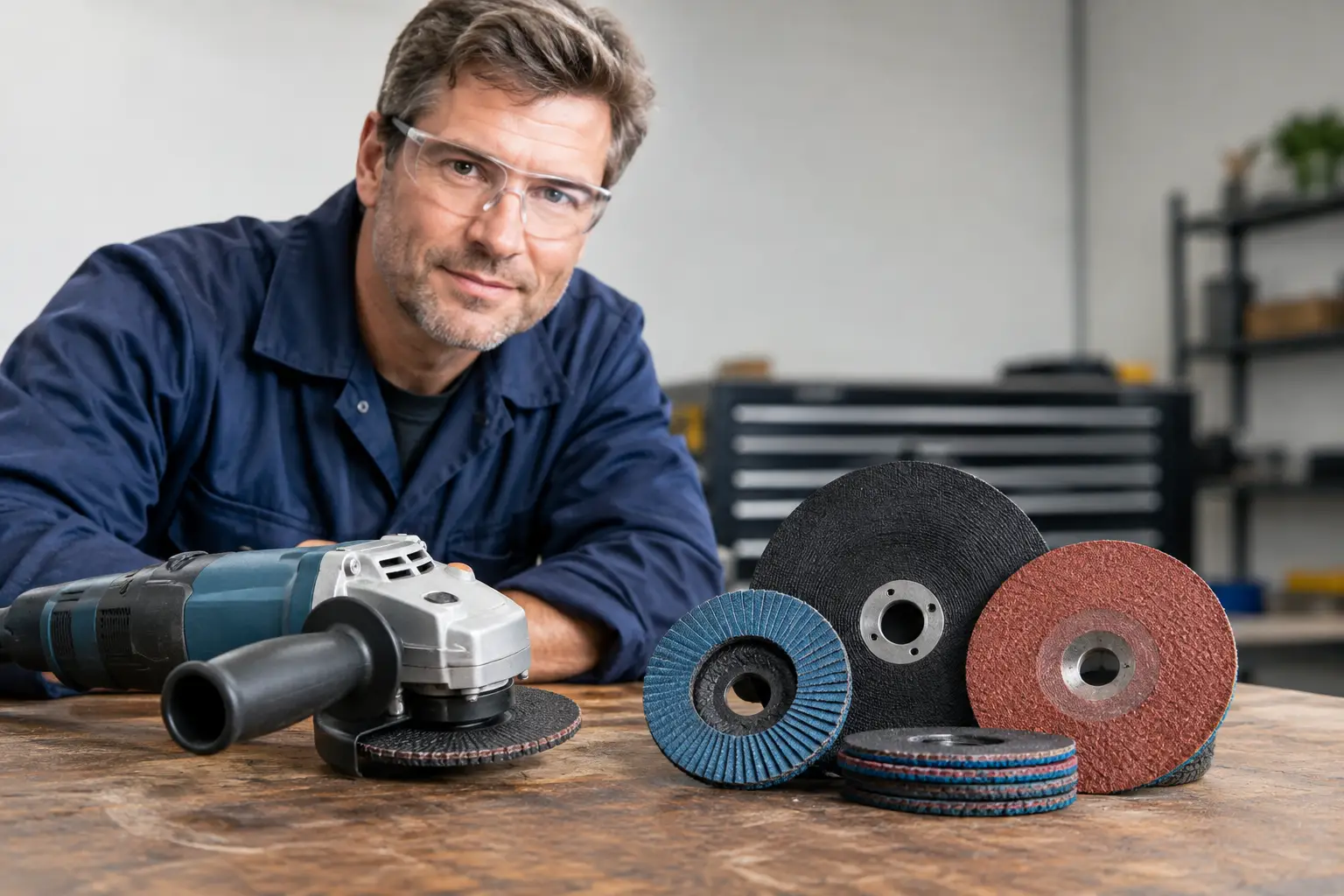
A grinder can remove a weld cap, dress a corner or prepare a repair in minutes – but only if the wheel suits the material and the work. The best workshop grinding discs are not simply the hardest or cheapest discs on the shelf. They are the discs that remove metal at a controlled rate, hold their shape, fit the grinder correctly and leave a finish appropriate for the next operation.
For fabrication teams, maintenance engineers and site welders, disc selection affects more than consumable spend. A poor choice can slow weld preparation, overheat stainless steel, load up on soft material or force an operator to apply excess pressure. That costs time and raises the risk of wheel damage.
What makes a grinding disc suitable for workshop use?
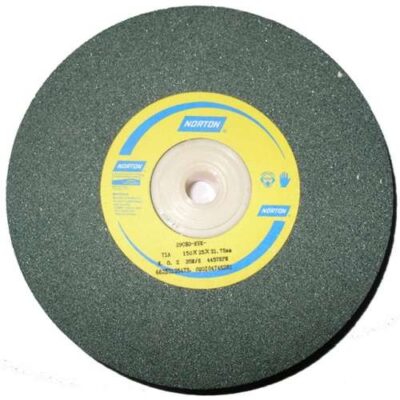
A proper depressed-centre grinding disc is designed for material removal rather than thin cutting. Its thicker profile gives it the strength to handle face grinding, weld blending, edge dressing and localised stock removal. Common thicknesses are 6 mm and 7 mm, although the available range varies by diameter and product line.
For general carbon-steel fabrication, aluminium oxide is the standard abrasive. It cuts effectively, represents good value and suits routine work on mild steel, structural sections, brackets and fabricated assemblies. A quality aluminium oxide disc should cut freely without glazing over early, while the bonded structure should wear at a predictable rate.
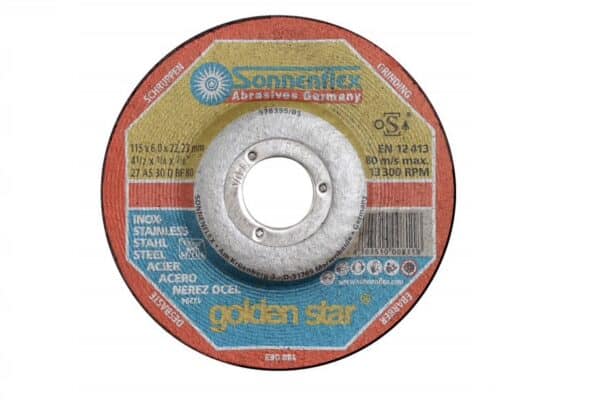
Stainless steel needs more care. Use an iron-, sulphur- and chlorine-free INOX-rated disc where contamination and corrosion resistance matter. The disc must remove material without introducing particles that can later contribute to staining or corrosion. This is particularly relevant on handrails, food-grade fabrication, tanks, architectural metalwork and visible stainless repairs.
Harder alloys and demanding production work can justify zirconia or ceramic abrasives, depending on the disc type and application. These abrasives can offer faster cutting and longer working life, especially under sustained load. They cost more per disc, however, so they make most sense where labour time, not purchase price, is the main cost.
Best workshop grinding discs by application
There is no single wheel that is best across every bay in a fabrication shop. Select by the work being done, the base material and the finish required after grinding.
Heavy weld removal and structural steel
For heavy fillet welds, excess weld reinforcement and rough edges on carbon steel, a 6 mm or 7 mm depressed-centre aluminium oxide disc is the usual starting point. On a 115 mm or 125 mm angle grinder, this provides enough body for controlled grinding without being unnecessarily cumbersome. Larger 180 mm and 230 mm grinders suit heavier sections and extended runs, but they demand more operator control and a suitable working area.
A coarse grit is normally the right choice for rapid removal. Do not expect it to leave a paint-ready surface. Its purpose is to take down material efficiently before a flap disc, fibre disc or finishing wheel handles the next stage.
Weld dressing where finish matters
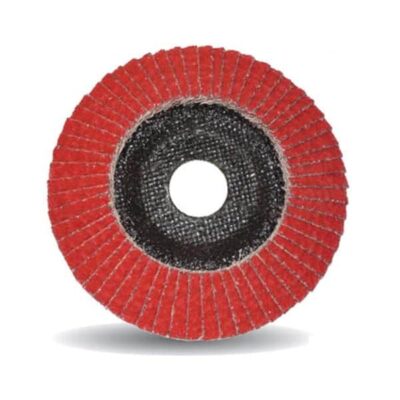
When a weld must blend into surrounding material, a conventional grinding disc may be too aggressive for the final passes. Start with the grinding disc only where material needs removing, then change to a flap disc for refinement. This avoids deep gouges and reduces the time spent correcting an overly rough finish.
For visible stainless work, use dedicated INOX consumables from start to finish where possible. Keeping carbon-steel and stainless abrasives separate is a sensible workshop control. A disc used on mild steel should not later be used on stainless simply because it still has life left in it.
Edge preparation and bevels
Grinding discs are effective for preparing bevels before welding, particularly on thicker plate, pipe or structural members. Their rigid edge gives the operator control when forming a consistent land and bevel angle. The trade-off is heat. Stay moving, use moderate pressure and inspect the preparation rather than relying on a single heavy pass.
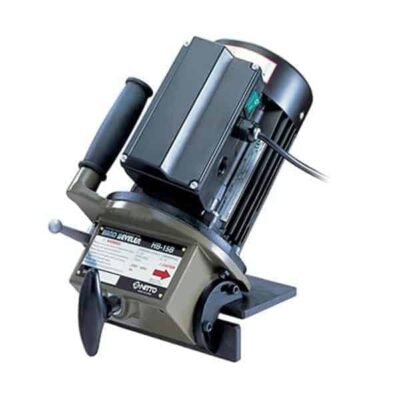
Where repeatable bevel geometry is critical, a purpose-built bevelling machine may be the better production solution. An angle grinder remains useful for repairs, access-limited work and one-off fabrication, but it is not a substitute for controlled machining on high-volume preparation work.
Maintenance, repair and confined access
Maintenance work often involves awkward positions, mixed materials and limited access around plant. A 115 mm or 125 mm grinder with a good general-purpose grinding disc is usually more practical than a larger machine. The smaller format is easier to control and less likely to remove excessive material from worn components or thin brackets.
For repairs near bearings, seals, painted surfaces or installed equipment, consider whether sparks and abrasive debris are acceptable before starting. The right disc does not remove the need to protect surrounding components.
How to choose the right disc specification
The label on a grinding disc carries the information that matters. Treat it as a working specification, not packaging.
Check these points before fitting a wheel:
- Diameter and bore: The disc must match the grinder guard, flange arrangement and spindle size. Never force a bore or use improvised bushes.
- Maximum operating speed: The disc’s stated RPM must be equal to or above the grinder’s no-load speed. This is non-negotiable.
- Material suitability: Choose steel, INOX or alloy-specific products according to the job. Do not assume a general metal disc is suitable for every grade.
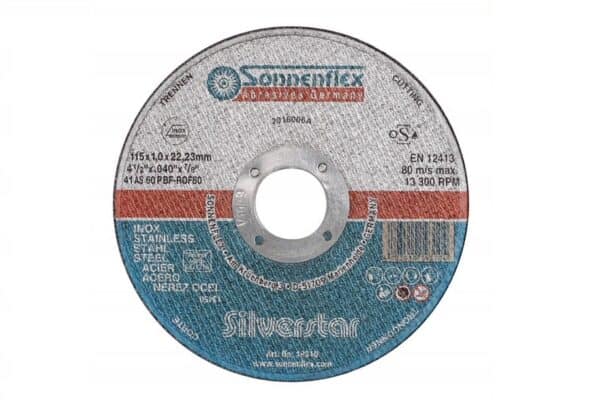
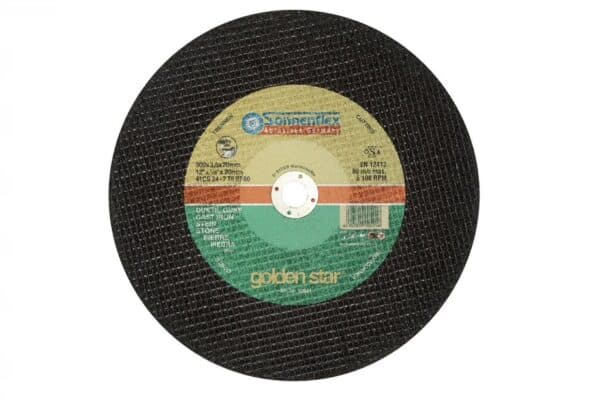
- Thickness and wheel type: Thicker grinding wheels suit stock removal; thinner discs are generally intended for cutting, not face grinding.
- Manufacturing standard and date: Use wheels marked to the appropriate safety standard, such as EN 12413 where applicable, and do not use damaged or expired stock.
A disc should also be compatible with the grinder’s guard and side-handle arrangement. Removing the guard to gain access is not a workaround. It exposes the operator to a wheel failure, sparks and fragments at the point where protection matters most.
Disc life is about cutting action, not millimetres left
A disc that looks barely used can still be finished if it has glazed, loaded up or been damaged. Glazing occurs when the abrasive grains dull and stop fracturing away to expose fresh cutting edges. The operator then presses harder, heat rises and removal rates fall further.
Loading is common when grinding softer metals, coatings or contaminated surfaces. Material builds between abrasive grains and prevents the disc from cutting cleanly. Using the wrong wheel on aluminium, galvanised coatings or sealants can make a new disc ineffective surprisingly quickly.
A productive disc feels as though it is cutting under controlled pressure. Excessive vibration, bouncing, discolouration of the workpiece, a sudden change in noise or a visible crack are reasons to stop. Do not try to use a damaged wheel down to the last millimetre.
Storage has a direct effect on performance. Keep discs dry, protected from impact and away from damp floors or uncontrolled site containers. Bonded abrasive wheels can be affected by poor storage conditions, while damaged edges may not be obvious until the wheel is running at speed.
Safe use in a working fabrication shop
Before fitting a disc, isolate the grinder from its power source and inspect the wheel for chips, cracks, moisture damage or label damage. Fit it with the correct flanges, tighten it as specified by the tool manufacturer and run it briefly in a safe direction before applying it to the job. Stand clear of the wheel’s plane during this check.
Use the face of a grinding disc for face grinding, not the edge, unless the manufacturer specifically states otherwise. Side loading a standard bonded grinding wheel can cause failure. Keep the work supported, hold the grinder with both hands where the tool design permits, and let the abrasive do the work rather than forcing it through the metal.
Appropriate eye and face protection, gloves, hearing protection, flame-resistant workwear and suitable respiratory controls should be routine. Grinding dust may contain metal, coatings and contaminants from the workpiece, so extraction and task-specific respiratory protection are not optional details in a busy workshop.
Buy for the job, then standardise what works
The most efficient stores policy is rarely to hold every abrasive variation available. Most workshops can cover their routine work with a well-chosen range of general steel grinding discs, dedicated INOX discs, matching cutting discs and flap discs for finishing. Keep specialist ceramic or alloy-focused products for tasks where their higher performance has a clear payback.
ProWeld customers should assess disc consumption alongside the job result: removal rate, operator time, finish quality and rejected work all matter. A lower unit price is poor value if the wheel burns the material, wears unevenly or needs replacing halfway through a simple repair.
Choose the disc that leaves the next operation easier. That may mean a fast, coarse wheel for a heavy structural weld, or a cleaner INOX-rated abrasive where finish and corrosion performance are part of the specification.