




Blog
Which Bolts Suit Steel Fabrication Jobs?
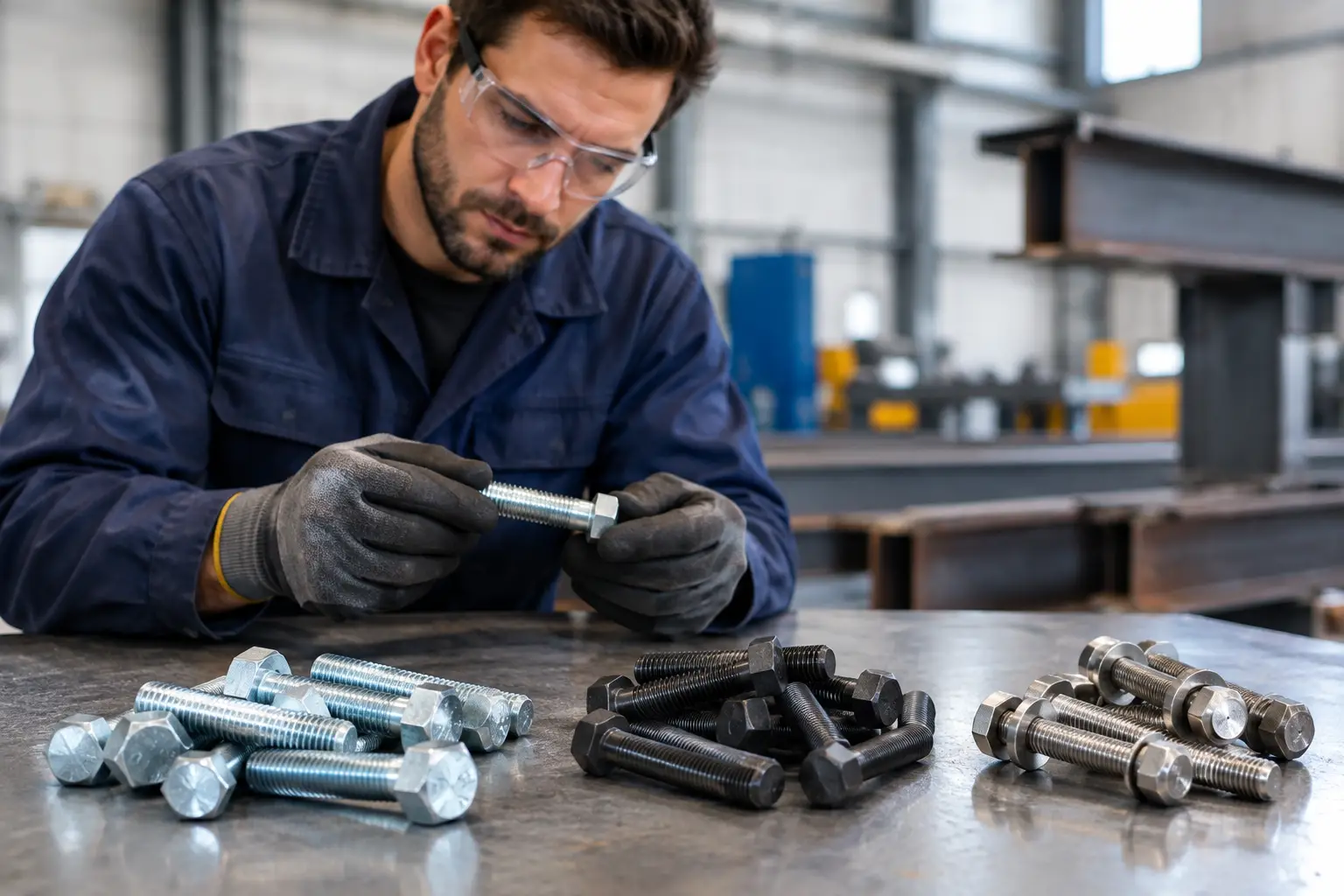
A bolt that fits the hole is not necessarily suitable for the joint. In steel fabrication, the correct fastener has to carry the intended load, suit the steel and environment, and allow the assembly to be made and inspected properly. The answer to which bolts suit steel fabrication starts with the joint itself, not the contents of a fastener bin.
A handrail bracket, a machine guard, a portal-frame connection and a galvanised external platform may all use M12 fasteners, but they do not necessarily require the same bolt, nut, washer or tightening method. Selecting by diameter alone is how joints become difficult to assemble, corrode prematurely or fail to achieve their design capacity.
Start with the joint requirement
First establish whether the connection is structural, general-purpose, moving, pressure-bearing or part of plant equipment. The load may be predominantly tensile, shear, vibration, fatigue or a combination of these. It also matters whether the joint is designed as a bearing connection, where the bolt bears against the side of the hole, or as a slip-resistant connection, where bolt preload clamps the plates together.
For fabricated steelwork, the engineer’s drawings and connection details take priority. They should state the bolt diameter, property class, bolt assembly standard, hole type, washers, tightening requirements and any corrosion-protection specification. Do not substitute a higher-strength bolt simply because it appears to be an upgrade. A different bolt class can require a different nut, installation method or coating, and may not be approved for the specified assembly.
Where a fabricator is producing structural work, the relevant execution and bolting requirements must be followed. Traceability, declared performance and controlled installation are particularly significant on safety-critical connections.
Bolt strength classes for fabrication work
Carbon and alloy steel bolts are commonly identified by a property class such as 4.6, 8.8, 10.9 or 12.9. The marking on the bolt head is not decoration. It indicates the mechanical properties the fastener is manufactured to meet.
Class 4.6 and 5.8
Lower-strength fasteners are suitable for light-duty brackets, guards, fixtures and non-critical workshop assemblies where loads are modest. They are not a sensible default for structural connections simply because they are economical. Their lower tensile capacity can also make them more prone to stretching if the joint is overloaded or repeatedly vibrated.
Class 8.8
Class 8.8 is widely used across general engineering, plant maintenance and many steel fabrication applications. It provides a useful balance of strength, availability and practicality. For ordinary bolted connections, 8.8 bolts with compatible nuts and suitable washers are often the correct choice where the design calls for them.
Structural bolt assemblies are not defined by strength class alone. A marked 8.8 bolt purchased as a general engineering fastener is not automatically an acceptable replacement for a specified structural bolt assembly.
Class 10.9 and 12.9
Higher-strength bolts are used in machinery, heavily loaded connections and applications where the design specifically requires them. Class 10.9 fasteners are frequently associated with preloaded bolted assemblies, but they must be installed as the specified system.
Class 12.9 offers higher strength again, but it is not an all-purpose fabrication bolt. It has less tolerance for poor installation and can be unsuitable in certain corrosive or plated conditions. Higher strength can increase susceptibility to hydrogen embrittlement, especially where electroplated finishes are involved. If the specification does not call for 12.9, there is rarely a practical reason to select it.
Structural bolts need the right assembly standard
For structural steelwork, bolts are often supplied as matched assemblies comprising bolt, nut and washer. This matters because the performance of the connection relies on the interaction of all components, not just the bolt.
Non-preloaded structural bolting assemblies are generally selected for bearing-type connections. Preloaded assemblies are used where slip resistance, fatigue performance or controlled clamp force is required. The relevant standards commonly referenced are BS EN 15048 for non-preloaded structural bolting assemblies and BS EN 14399 for preloaded structural bolting assemblies.
A preloaded connection needs a defined installation procedure. That may involve torque control, part-turn tightening, direct tension indicators or another approved method. Tightening by feel is not a controlled process. Surface condition, lubrication and coating all affect the relationship between applied torque and actual bolt tension.
For this reason, do not mix bolt, nut and washer components from unrelated packs in a specified structural assembly. Use the complete approved system and retain the documentation required by the job.
Choose the correct bolt form and thread length
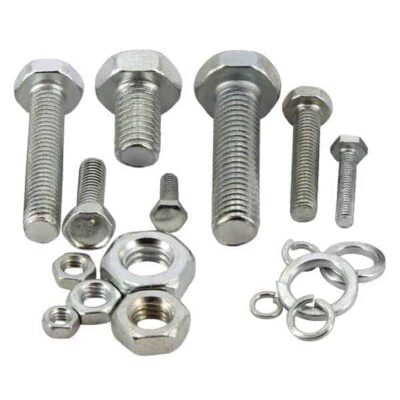
A standard hexagon bolt has an unthreaded shank, while a setscrew is threaded for its full length. Both have a place in fabrication.
Where shear passes through the joint, a plain shank through the shear plane is often preferred because it gives better bearing performance than threads bearing directly on the plate. This is particularly relevant in heavier steel connections and moving equipment. A fully threaded setscrew is useful where grip lengths vary, where adjustment is needed or where the thread must engage a tapped component.
Bolt length must suit the total grip: the combined thickness of connected material, washers and any packing plates. The bolt should project far enough to achieve full nut engagement, normally with a small amount of thread visible beyond the nut, but excessive projection serves no purpose and can create access or snagging issues.
Avoid placing the thread run-out within the shear plane where the connection design expects a plain shank. Also check whether standard clearance holes, oversized holes or slotted holes are specified. Slotted holes may require particular washer arrangements and should never be improvised on site.
Coatings and materials must match the environment
Bare or self-colour high-tensile bolts are appropriate for dry internal settings where corrosion is not expected. For external fabrications, agricultural environments, washdown areas and coastal locations, corrosion protection becomes part of the joint design.
Zinc-plated fasteners provide limited protection for indoor and lightly exposed work, but they are not the same as hot-dip galvanised fasteners. Hot-dip galvanised bolts, nuts and washers are commonly selected for galvanised structural steel and outdoor fabrications. The nut thread is usually tapped oversize to accommodate the bolt coating, so the components should be supplied as compatible galvanised assemblies.
Stainless steel fasteners are useful where atmospheric corrosion resistance is required, such as food-processing areas, marine-adjacent installations and architectural metalwork. A2 is common for general external use; A4 provides improved resistance in more aggressive environments. However, stainless fasteners have different strength characteristics from 8.8 or 10.9 carbon steel bolts. They can also gall during tightening, particularly on dry stainless threads. Correct lubrication, controlled tightening and compatible materials are essential.
Where stainless is fixed to carbon steel, consider galvanic corrosion and water traps. Isolation washers or sleeves may be required depending on the exposure and design. No coating compensates for a joint that holds standing water.
Washers, nuts and locking methods are part of the selection
Washers spread bearing load, protect the surface and can be required to suit hole size or bolt assembly rules. Use hardened washers where specified, particularly with high-strength bolts or larger clearance holes. Thin penny washers may be useful for light fabrications, but they are not a substitute for structural washers in a loaded connection.
The nut must be compatible with the bolt property class and coating. Mixing an unknown nut with a high-tensile bolt is poor practice, even if the thread fits. For vibration-prone equipment, the solution may be a prevailing-torque nut, all-metal locknut, approved threadlocking compound, double-nutting or a joint designed with sufficient preload. The right method depends on service temperature, maintenance access and whether the assembly will need to be removed.
Do not rely on spring washers as a universal vibration cure. In many loaded engineering joints, correct clamp load and a properly designed connection are more effective than adding a washer without understanding its function.
A practical selection process for steel fabrication bolts
Before ordering, work through the connection in this order:
- Confirm the drawing, load case and whether the joint is structural or general engineering.
- Select the specified diameter, property class, bolt form and required grip length.
- Match the nut and washers to the bolt system, hole type and tightening method.
- Choose a coating or stainless grade suited to the service environment and adjacent materials.
- Check certification, markings and traceability where the work is controlled or safety-critical.
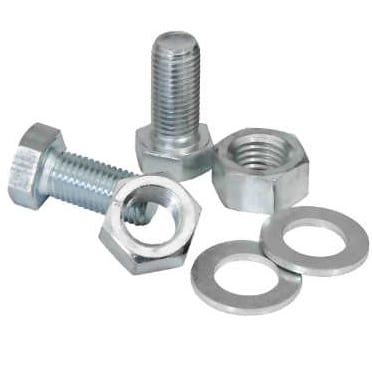
For general fabrication work, a correctly sized class 8.8 hex bolt, compatible nut and suitable washer may be the practical answer. For galvanised steelwork, use a compatible galvanised assembly. For specified structural connections, use the stated structural bolt system and installation method. For stainless fabrications, select the appropriate stainless grade while checking strength and galling risk.
The best fastener choice is usually the least complicated one that fully meets the drawing, load, environment and inspection requirements. That approach keeps fabrication moving without building avoidable risk into the finished steelwork.