




Blog
Best Workshop Extraction Systems for Fabricators
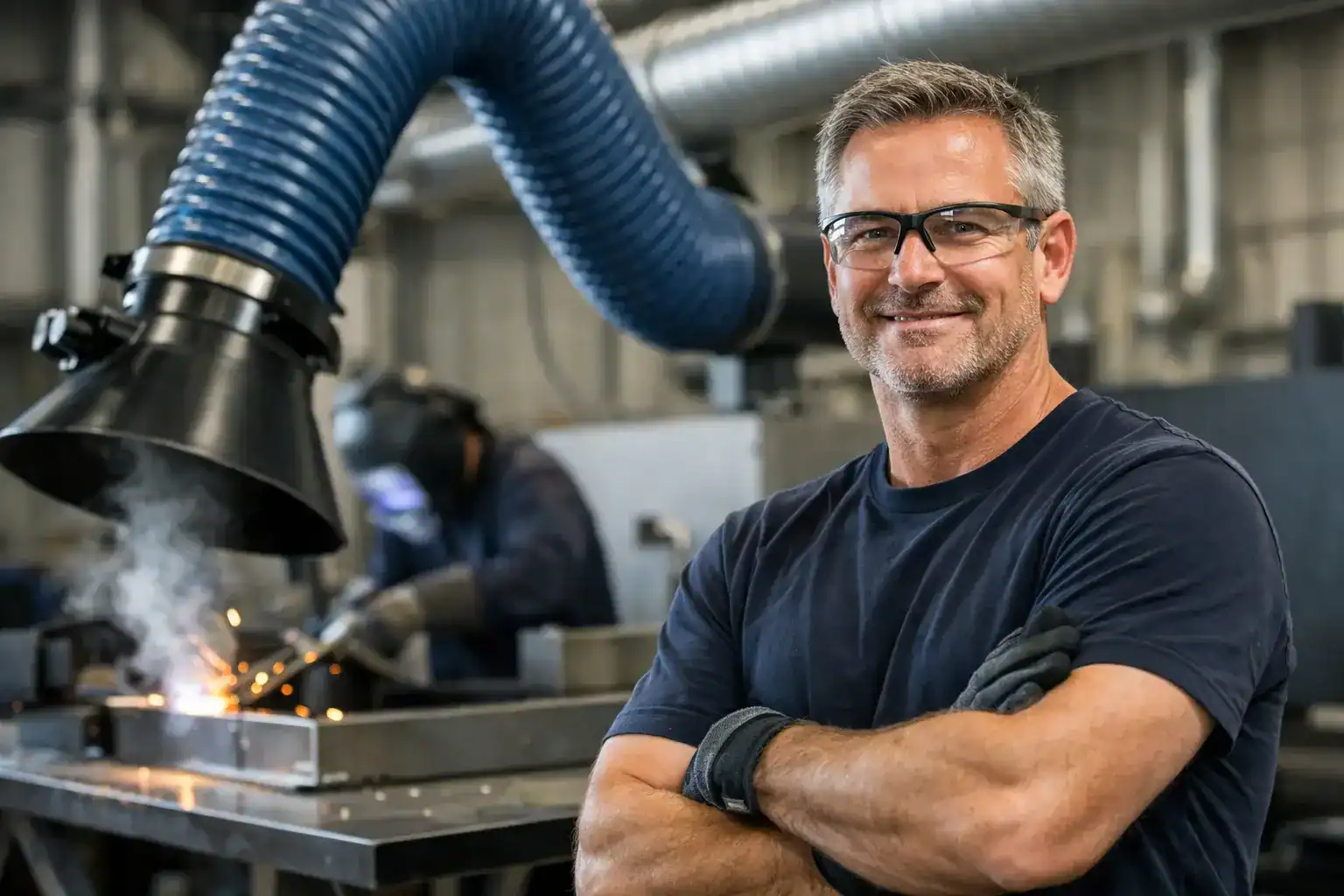
Welding fume is not a general housekeeping issue. It is a process hazard that needs to be captured close to the arc, before it reaches the welder’s breathing zone or spreads through the workshop. The best workshop extraction systems are therefore not simply the units with the highest stated airflow. They are the systems that suit the welding process, working area, duty cycle and contaminant being produced.
For a fabrication business, the right choice affects more than compliance. Effective extraction improves visibility at the weld, reduces dust settling on machinery and stock, protects staff, and keeps the working environment more productive. A poorly selected system can be noisy, difficult to position and costly to run, while still failing to control fume where it matters.
What Makes the Best Workshop Extraction Systems?
Extraction performance begins at the point of capture. A high-capacity fan will not compensate for a hood positioned too far from the weld. Equally, a well-designed extraction arm will struggle if it is connected to undersized ducting, restrictive filters or a unit not intended for continuous production work.
The best system is usually the one matched to the operation rather than a one-size-fits-all purchase. A single welder carrying out intermittent bench work has different requirements from a multi-bay fabrication shop running MIG welding for most of the shift. Plasma cutting, grinding and stainless-steel welding also create different contaminants and demand different approaches.
When assessing equipment, look beyond headline airflow. Useful specifications include airflow at the hood, fan pressure, filtration efficiency, filter area, duty rating, noise level, hose or arm diameter, and the expected maintenance interval. These figures show whether a system can keep working under real workshop conditions.
Local Extraction Arms for Fixed Welding Bays
For most fixed welding stations, a local extraction arm is the practical starting point. The arm is positioned beside or above the workpiece, with the hood angled to draw fume away from the welder. It gives direct source capture without placing a large enclosure around the job.
This arrangement works well for MIG, TIG and light-to-medium manual welding where the operator remains at a bench, jig or dedicated bay. The arm must be long enough to reach the full work envelope but not so long that it becomes difficult to support or loses useful capture velocity at the hood. In practice, correct positioning matters as much as arm length.
A useful rule is to keep the hood close to the fume source while avoiding interference with access, welding leads and lifting equipment. The hood should draw fumes across the work, not pull them through the operator’s breathing zone. Operators need training on this point, because an extraction arm left folded against the wall provides no protection at all.
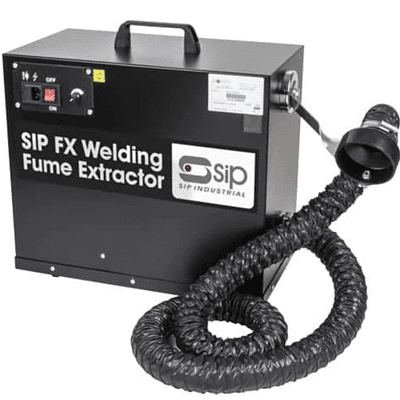
Standalone mobile units with articulated arms suit workshops where the layout changes regularly or where installing ductwork is not justified. They are also useful for occasional repair work, site maintenance areas and smaller fabrication operations. The compromise is that each unit serves a limited number of users, requires floor space and needs to be moved whenever the work moves.
Centralised Extraction for Multiple Workstations
A central system becomes more attractive when several fixed bays operate frequently. Ductwork connects individual extraction arms, hoods or downdraught benches to a shared fan and filtration plant. This reduces the number of separate machines on the workshop floor and can make maintenance more controlled.
For a busy fabrication environment, centralised extraction can offer lower noise at individual workstations, better use of floor space and a cleaner installation. It can also be designed around phased expansion, allowing further welding bays to be connected later if the fan and filter capacity have been allowed for from the start.
The trade-off is upfront design. Duct routes, branch sizes, blast gates, fan capacity and simultaneous use all need to be calculated properly. A system designed on the assumption that two arms will operate at once may underperform if six welders use it during a production peak. Conversely, an oversized fan without proper control can waste energy and create excessive noise.
Automatic or manually operated shut-off dampers can help maintain airflow at active stations. Variable-speed fan control may also reduce running costs where demand changes through the day. These options are worth considering for larger installations, but they must be set up and commissioned correctly rather than treated as a substitute for adequate system capacity.
Downdraught Benches and Extraction Tables
A downdraught bench pulls fume and dust down through a perforated work surface. It is particularly effective for smaller components, repetitive bench welding, dressing and light grinding. Because the capture point is built into the work surface, it avoids the repeated repositioning required with an extraction arm.
The limitation is size. Large fabrications, awkward frames and long structural sections may not fit the bench or may obstruct airflow across the surface. Hot slag, sparks and heavy debris also require a suitable pre-separation arrangement and regular cleaning. For the right work, however, an extraction bench provides consistent capture with minimal operator adjustment.
Extraction Hoods and Enclosures
Canopy hoods, side-draught hoods and partial enclosures can be effective where the work is repeatable and the component position is known. A welding turntable, robotic cell or dedicated jig can often be enclosed more effectively than a general welding bay.
Overhead canopies should be treated with caution for manual welding. Rising fume may be drawn upwards, but the welder can still stand beneath the contaminated air before it reaches the hood. They are better used as part of an engineered enclosure or as supplementary ventilation, not as the only control for a welder working at bench level.
Filtration Depends on the Process
The filter arrangement must suit the particles and gases generated. Welding fume contains very fine particulate matter, so a proper cartridge or high-efficiency filter system is normally required. Pre-filters, spark arrestors and baffles help protect the main filter where sparks and hot particles are present.
Mild-steel MIG work, stainless welding, galvanised materials, aluminium, grinding and thermal cutting should not be treated as identical jobs. Stainless steel welding can produce hazardous chromium and nickel compounds. Galvanised coatings produce zinc oxide fume. Thermal cutting may generate substantial volumes of dust and smoke, often requiring a purpose-designed cutting table or enclosure rather than a standard extraction arm.
Where filtered air is returned to the workshop, the filtration standard, maintenance regime and nature of the contaminant need particular attention. In some cases, discharging filtered air outside is the more appropriate arrangement. The correct decision depends on the process, building layout, local requirements and the equipment specification.
Sizing a System Properly
Airflow in cubic metres per hour is useful, but it is not enough on its own. The system must generate sufficient capture velocity at the hood while overcoming pressure losses through arms, ductwork, bends, filters and discharge arrangements. As filters load with dust, resistance increases, so the fan must maintain suitable performance over the service interval.
A practical assessment should consider the number of stations, welding processes, hours of use, dimensions of the work, location of doors and air movement from fans or vehicle traffic. A large roller shutter open beside a welding bay can disrupt the extraction pattern significantly. General workshop ventilation may improve overall air quality, but it cannot replace local exhaust ventilation at the weld.
For central systems, establish how many points will run at the same time, not how many are installed. This is the diversity factor. Be realistic: if all bays are used on a morning shift, design around that condition. Leaving capacity for growth is usually cheaper at installation stage than replacing fans, ducting and filter units later.
Installation and Maintenance Are Part of Performance
A correctly specified extraction system can still fail through poor installation or neglect. Ductwork should be sealed, supported and routed with as few sharp bends as practical. Flexible hose is useful at the point of use, but long runs of flexible duct create resistance and collect debris. Filter units need safe access for inspection and replacement, not a position that makes routine maintenance inconvenient.
Maintenance should include checking airflow, inspecting arms and hoses for damage, emptying dust collection containers, monitoring filter condition and confirming that automatic cleaning systems are operating. A differential pressure indicator is valuable because it shows when filter resistance is rising. Do not wait until fume becomes visibly noticeable before servicing equipment.
Extraction is also an operator issue. A short briefing on hood position, filter warnings and the limits of the system is often the difference between an effective installation and an expensive unit that sits unused.
Choosing the Right Route for Your Workshop
For one or two variable welding locations, a mobile filtered extractor with a properly sized arm is often the sensible option. For fixed bays with regular welding, wall-mounted or pedestal extraction arms give better day-to-day usability. Where several stations run throughout the shift, a central ducted plant can provide the cleaner, more scalable solution. Repetitive small-part work may be better served by a downdraught bench, while cutting operations usually need a dedicated extraction arrangement.
Specify the system around the work actually being done, not the workbench you happen to have. A supplier who understands welding and fabrication can help match extraction capacity, filtration and capture equipment to the hazards on your floor, leaving your team to focus on producing sound work in a cleaner workshop.