








Blog
Crane Rail Repair That Prevents Costly Downtime
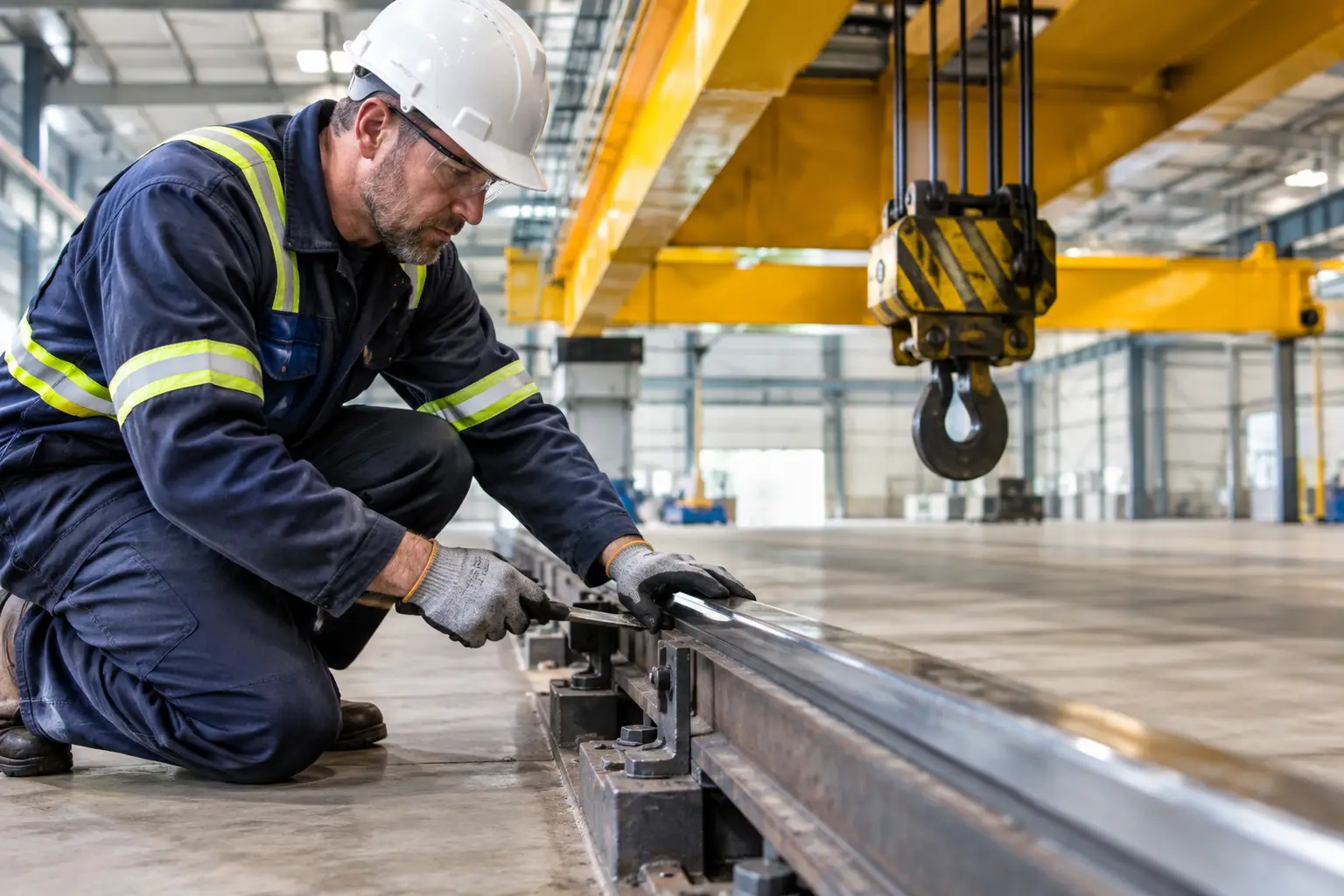
A crane runway can appear serviceable while its rail condition is already driving wheel wear, poor tracking and repeated breakdowns. Effective crane rail repair is not simply a welding task. It is an engineering maintenance activity that must restore the rail, its support arrangement and the crane’s running geometry as a complete system.
For fabrication shops, steel stockholders, plants and maintenance teams, the cost of leaving a damaged rail alone is rarely limited to the rail itself. A local low spot or loose clip can transfer shock through wheels, bearings, end carriages and structural connections. The result is reduced availability, higher component consumption and an increasing safety risk around lifting operations.
What causes crane rail damage?
Crane rails work under concentrated, repeated wheel loads. Even a correctly specified rail will deteriorate if alignment, support conditions or crane travel are not controlled. The most common faults are wear at the rail head, cracking at welded joints, side wear from flange contact, settlement of runway beams and failure of clips, pads or holding-down arrangements.
Rail head damage is often associated with wheel load, wheel condition and poor contact geometry. A flat-spotted or worn wheel can hammer the rail at every pass. If the rail is out of level or the gauge has moved, wheel flanges may rub the rail sides rather than allowing the tread to carry the load correctly.
Welded joints are another regular problem area. Poor joint preparation, unsuitable welding procedure, inadequate preheat or uncontrolled cooling can leave residual stress and create a crack initiation point. A weld may look sound on the surface yet still introduce hard, brittle zones or a misaligned running face that accelerates wear.
The supporting structure matters just as much. A rail fixed to corroded steelwork, deteriorated grout or uneven bearing pads cannot remain aligned for long. Repairing only the visible crack without correcting the underlying movement usually leads to repeat failure.
Signs that crane rail repair is required
Operators are often the first people to identify rail problems. A change in travel noise, vibration through the cab or pendant, rough movement at one point on the runway, or a crane that repeatedly requires wheel attention should trigger an inspection.
Maintenance teams should also look for polished marks on rail sides, chipped rail heads, cracking around joints, loose fasteners, displaced clips and signs that the rail has moved relative to its support. Rust staining around a joint or clip can indicate movement even before a measurable fault becomes obvious.
Measurement is essential. Visual checks identify where to investigate, but they do not establish whether the runway is within the crane manufacturer’s tolerances. A proper survey normally considers rail straightness, span, gauge, level, elevation difference between rails and local changes at joints. Measurements should be assessed against the applicable crane, rail and site design requirements rather than a generic rule of thumb.
Crane rail repair starts with diagnosis
The right repair method depends on the failure mechanism. This is where rushed outage work becomes expensive. If a rail head is worn because wheels are misaligned, building up the head with weld metal may only buy a short period before the same damage returns.
Start by isolating the crane and making the work area safe under the site lifting and lock-off procedure. Inspect the rail, wheels, end carriages, fastenings and supporting steelwork together. Establish whether the defect is local or whether it forms part of a wider alignment issue.
Non-destructive testing may be needed where cracking is suspected, especially around welded joints and highly loaded sections. Magnetic particle inspection can reveal surface-breaking cracks in ferromagnetic materials, while ultrasonic testing may be appropriate for internal discontinuities where access and rail profile permit. The inspection method should suit the defect being investigated and be carried out by competent personnel.
Once the cause is understood, the repair can be specified. That may mean local grinding and profiling, replacement of a damaged rail length, renewal of clips and pads, correction of support levels, weld restoration or full runway realignment. There is no single fix for every crane rail fault.
Local wear and rail head defects
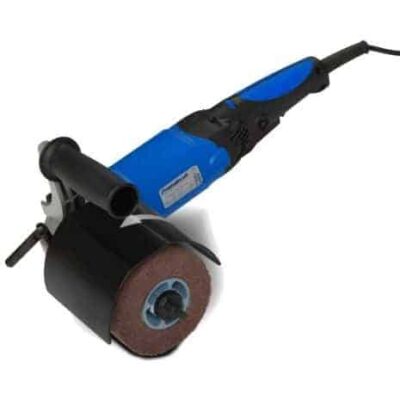
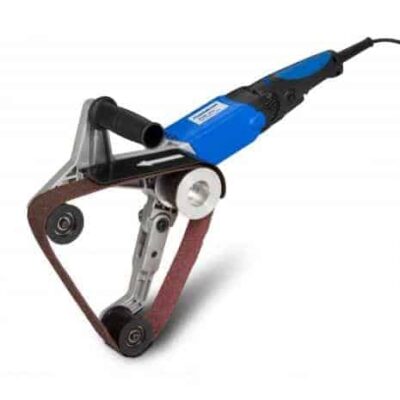
Minor surface damage can sometimes be removed by controlled grinding, provided sufficient rail section remains and the resulting profile supports correct wheel contact. Grinding must blend smoothly into the surrounding rail. Sharp transitions create impact points and can quickly damage both the rail and wheel tread.
More serious head wear, spalling or deformation may require a planned weld build-up and reprofiling operation, or replacement of the affected rail section. Weld restoration is only suitable where the rail grade, remaining section, loading and approved welding procedure support it. Rail material is not interchangeable with ordinary structural steel, and filler selection, heat input and preheat control must be considered carefully.
Where a section is beyond economical restoration, replacement is normally the more dependable route. The new section must match the rail profile and be installed with the correct joint detail, support and alignment. A sound new rail section installed out of line is still a defect.
Cracked joints and failed welds
A cracked joint should never be treated as a cosmetic repair. The crack must be fully assessed and removed to sound material before repair welding is considered. Simply welding over a crack can trap the original defect underneath and move the crack into the heat-affected zone.
Joint preparation needs to provide access for complete fusion while maintaining the correct rail profile. The repair sequence should control distortion, and the finished joint should be ground to restore an even running surface. Depending on the application, inspection after welding may be necessary before the crane is returned to service.
Mechanical joints can be used in some rail systems, particularly where future replacement or thermal movement needs to be accommodated. They bring their own maintenance requirements. Loose fishplates, worn bolts or unsupported joint ends can create impact loading that damages the rail head and wheels.
Loose fastenings and support movement
Rail clips, bolts, pads and soleplates are often treated as secondary items, but they control the position of the rail under load. If clips loosen, the rail can creep. If pads collapse or corrode, the rail may settle or tilt. The problem can then present as wheel flange wear or repeated damage at joints.
Repair work should therefore include checking fastener condition, bolt torque where specified, corrosion around mounting details and the integrity of welds attaching brackets or soleplates. Do not compensate for a poor support condition by pulling a rail into place with excessive fastening force. The bearing surface must be corrected so the rail is properly supported along its intended load path.
Welding controls that protect the repair
Rail welding demands a qualified welding procedure suited to the rail material, joint type and site conditions. The procedure should address preparation, consumables, preheat, interpass temperature, heat input, welding sequence and post-weld finishing. These details directly affect cracking risk, hardness and distortion.
Cleanliness is also non-negotiable. Oil, paint, moisture and embedded contamination can cause defects and compromise inspection. When working on an existing runway, access can be awkward and overhead work may be involved. This is not a reason to lower preparation standards. It is a reason to plan access, shielding and work positioning before the outage begins.
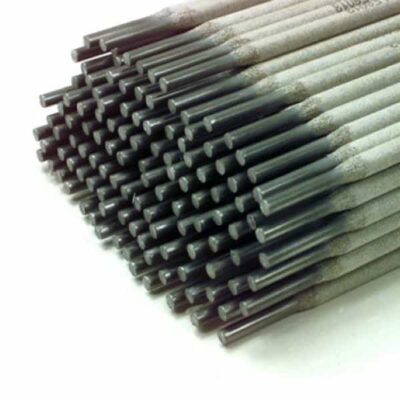
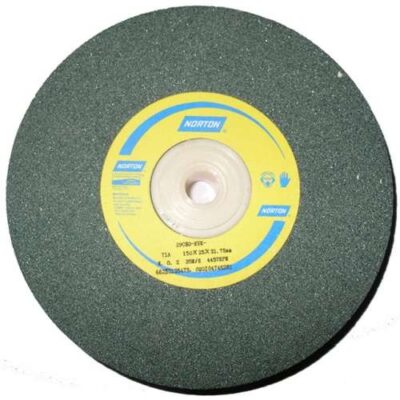
Consumables should be stored and handled to the manufacturer’s requirements. Low-hydrogen electrodes or wire products will only perform as intended if moisture control and correct parameters are maintained. For maintenance teams, having suitable grinding discs, cutting consumables, clamps, measuring equipment and replacement fixings available before shutdown avoids improvised decisions once the crane is out of service.
Returning the crane to service
A repair is not complete when the weld cools or the last bolt is tightened. The rail profile and alignment need to be checked, the work area cleared and any inspection requirements completed. The crane should then be recommissioned in line with the site procedure, including controlled travel checks before normal production loading resumes.
Observe the crane through the repaired area in both directions. Listen for impact, watch for abnormal wheel behaviour and confirm that travel remains consistent under appropriate test conditions. If the original issue involved tracking or wheel wear, inspect the wheel-to-rail contact again after a period of operation rather than assuming a single test run has proved the root cause resolved.
Plan repairs before failure dictates the schedule
The best time to address crane rail defects is during a planned maintenance window, not after a wheel derails or a crack closes a production line. Keep records of runway surveys, rail repairs, wheel replacements and recurring travel issues. Patterns in those records often reveal whether the problem is local wear, a structural movement issue or a crane geometry fault.
For professional maintenance work, the useful question is not simply whether a rail can be welded. It is whether the proposed repair restores safe load transfer, correct travel and a service life that justifies the outage. Treat the rail, fixings, support structure and crane wheels as one working system, and the repair is far more likely to last.