











Blog
How to Select Welding Electrodes for the Job
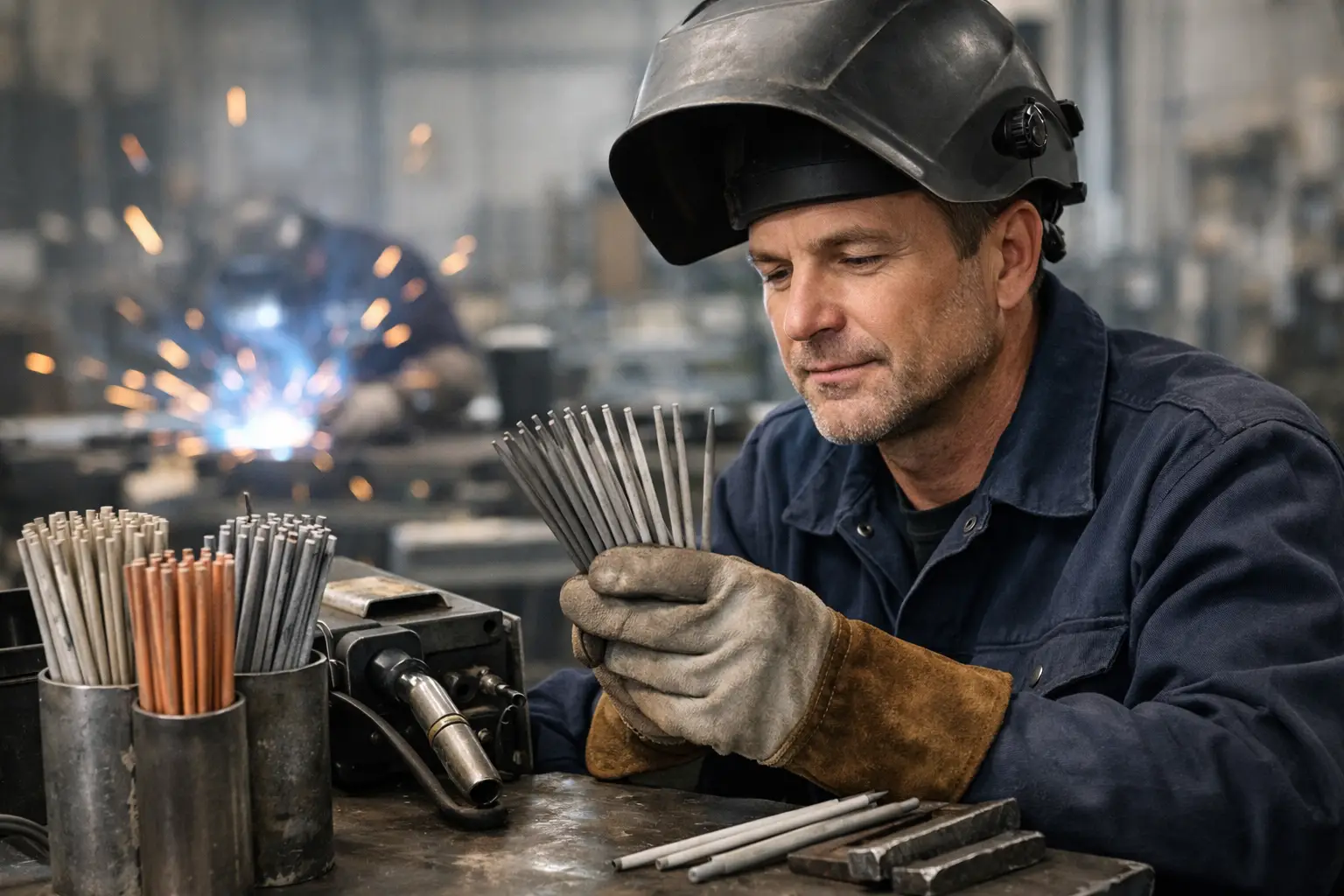
A failed weld is rarely caused by one factor alone. Poor joint preparation, unsuitable parameters and contamination all play a part, but the wrong consumable can make a sound result difficult from the first pass. Knowing how to select welding electrodes means matching the electrode to the parent material, joint design, welding position, site conditions and required weld properties – not simply choosing the rod already open in the workshop.
For fabrication, repair and maintenance work, electrode selection affects deposition rate, arc behaviour, slag removal, hydrogen control and the mechanical performance of the completed joint. A practical selection process reduces rework and helps ensure the weld procedure can be repeated across the job.
Start with the parent material
The parent metal is the first decision point. Identify the grade where possible, then consider its thickness, condition and intended service. Mild steel fabrication, structural steel, pressure work, stainless steel and hardfacing repairs each require different electrode characteristics.
For ordinary carbon and carbon-manganese steels, general-purpose rutile electrodes are often suitable for clean workshop fabrication, particularly where easy striking, smooth bead appearance and straightforward slag removal matter. They are commonly used for light to medium steelwork and positional welding where productivity is important.
Higher-strength structural steels require more care. The deposited weld metal must meet the strength and toughness requirements of the joint without creating an unnecessarily hard or brittle heat-affected zone. Select an electrode with compatible mechanical properties and follow the approved welding procedure specification where one applies. Matching strength alone is not always enough: low-temperature toughness, hydrogen level and heat input may be equally significant.
Stainless steel electrodes should be chosen to suit the stainless grade and service environment. Using a standard mild steel electrode on stainless may produce a weld that lacks corrosion resistance and can contaminate the workpiece. Dissimilar joints, such as stainless steel to carbon steel, also need a suitable buffer or dissimilar-metal electrode rather than a compromise made on site.
When repairing unknown steel, do not assume it is mild steel. Older plant components, wear parts and cast materials can have elevated carbon content, alloying elements or previous hardfacing. A test weld, preheat assessment and a more forgiving low-hydrogen consumable may be necessary before committing to the repair.
How to select welding electrodes by coating type
The coating determines much of an electrode’s operating behaviour. It controls arc stability, shielding, slag characteristics, penetration and the properties of the deposited metal. The two most common choices for routine steelwork are rutile and basic electrodes, but cellulose and specialist alloy electrodes have defined uses.
Rutile electrodes
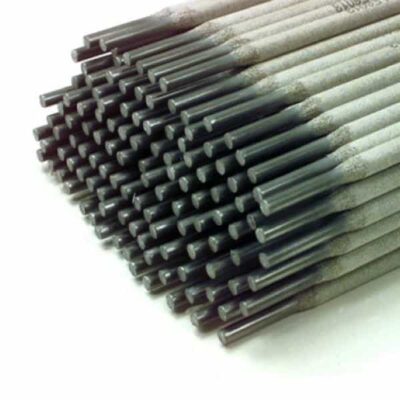
Rutile electrodes are widely used because they are easy to strike and restrike, run smoothly and generally give a neat weld profile. They are a practical option for clean mild steel, general fabrication, gates, brackets, handrails and light structural work. Many run well on AC or DC, subject to the manufacturer’s specification.
The trade-off is that a rutile electrode may not provide the low-hydrogen performance or toughness needed for critical structural joints, restrained assemblies or higher-strength steels. They are convenient, but convenience should not overrule the job specification.
Basic low-hydrogen electrodes
Basic electrodes are chosen where weld quality under demanding conditions is the priority. They are commonly specified for structural fabrication, thicker sections, high-strength steels and joints where restraint increases the risk of hydrogen cracking. Their weld metal generally offers good mechanical properties and low diffusible hydrogen when the electrodes are stored and handled correctly.
They need more discipline than general-purpose rods. Basic electrodes are sensitive to moisture pickup and may require storage in a heated quiver or electrode oven after opening, according to the consumable data sheet. Damp electrodes can introduce hydrogen into the weld and undermine the reason for choosing them in the first place.
Cellulosic and specialist electrodes
Cellulosic electrodes produce a forceful, deeply penetrating arc and are suited to certain root-pass and pipeline applications, often in vertical-down welding. They are not the default choice for workshop steelwork and should be selected only where the procedure, position and power source support their use.
Specialist electrodes include stainless, nickel-alloy, cast iron, aluminium and hardfacing types. These are application-specific consumables. Their selection should be based on the material grade, service temperature, corrosion exposure, machining requirements and the repair objective, rather than visual similarity to the parent metal.
Check the required welding position
An electrode that performs well on a bench may be unsuitable for overhead repair work or vertical welding on site. The classification and product data sheet will state approved positions, typically flat, horizontal, vertical-up, vertical-down and overhead.
For multi-position structural work, select an all-positional electrode where appropriate and use the correct polarity and current range. Vertical-up welding is commonly used where controlled penetration and weld-metal build-up are required. It is slower than vertical-down, but generally provides a more substantial weld profile for structural applications.
Electrode diameter also matters. Larger diameters increase deposition rate on accessible flat work, but they are harder to control in positional welding and narrow joints. A 2.5 mm electrode is often useful for lighter material and root work, while 3.2 mm and 4.0 mm electrodes suit many fabrication passes where access and power capacity permit. The right size depends on joint geometry, plate thickness, welding position and the available current – not just how quickly the operator wants to finish.
Match the electrode to the power source
Before ordering consumables, check whether the welding set provides AC, DC positive, DC negative or more than one output option. Electrodes are polarity-sensitive. Running a rod on the wrong current type or polarity can cause poor arc stability, excessive spatter, difficult slag removal, weak penetration or overheating of the electrode.
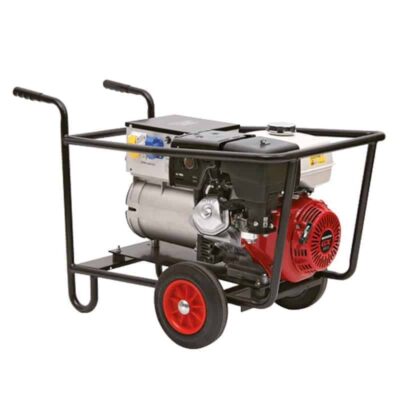
The electrode packet and technical data should identify the recommended current type, polarity, diameter-specific amperage range and operating positions. Use those figures as the starting point, then fine-tune within the range for the joint and technique. A long lead run, low incoming supply or an undersized site generator can affect arc performance, so power availability should be checked before welding begins.
Do not select a larger electrode simply because the machine has a high maximum output. The practical current available at the work, duty cycle and the demands of the job are what matter. For site repairs, portability and reliable operation may favour a smaller diameter and more controlled welding sequence.
Consider joint condition and service demand
Clean steel gives the widest choice of electrodes. Rust, paint, galvanising, oil and moisture narrow it considerably. Remove contaminants before welding whenever possible. No electrode is a substitute for preparation, and welding through coatings can create porosity, inclusions, fumes and inconsistent fusion.
Galvanised steel needs particular attention. Zinc coatings should be removed from the weld zone, with suitable fume control in place. The welding electrode must still be selected for the underlying steel and the joint requirements, while the finished area may need corrosion protection restored.
Then consider what the completed weld must withstand. A non-critical bracket in a dry workshop and a highly restrained connection exposed to weather, cyclic loading or low temperatures are not equivalent jobs. For critical work, follow the drawing, material specification and approved procedure. Electrode classification, batch traceability, storage records and consumable condition can all be relevant to quality control.
Read classifications and data sheets properly
Electrode classifications provide useful information, but they are not a replacement for a welding procedure. European classifications such as EN ISO 2560-A identify characteristics including weld-metal strength, impact properties, coating type, current type and positional capability. Product literature then provides the practical details: drying instructions, current range, recommended polarity, deposition data and approval information.
For routine work, the packet should still be checked before use. Confirm the classification, diameter, batch number, storage condition and expiry guidance where supplied. On larger fabrication contracts, keep consumables separated and labelled so that the electrode used can be traced to the work if required.
A sensible workshop approach is to standardise a small, appropriate range rather than stock multiple near-identical products. For example, one dependable general-purpose rutile electrode, one controlled low-hydrogen basic electrode and relevant specialist electrodes for regular stainless or repair work can simplify purchasing and reduce selection errors. The exact range depends on the materials and contracts the workshop handles.
Storage is part of electrode selection
An electrode can be correctly specified and still fail in service if it has been stored badly. Keep unopened packs dry and protected from cold, condensation and damage. Once opened, follow the manufacturer’s storage requirements, particularly for low-hydrogen basic electrodes.
Avoid leaving rods on a bench, in a van or beside an open fabrication bay where they can absorb moisture. If an electrode requires redrying, follow the stated temperature and time precisely. Guesswork can damage the coating or leave the consumable unsuitable for controlled work.
The best electrode is the one that matches the job, the procedure and the conditions in front of the welder. Make that decision before striking the arc, keep the consumable in the right condition, and the weld has a far better chance of meeting the standard expected of professional fabrication.