


















Blog
Manual Versus Hydraulic Rolls: Which Fits?

A plate rolling machine can be the difference between forming a clean cylinder in one controlled operation and spending valuable workshop time correcting joints at the welding bench. The choice between manual versus hydraulic rolls is not simply about buying the more powerful machine. It comes down to plate size, material grade, repeat work, forming tolerances and the volume of work moving through the shop.
For occasional light-gauge fabrication, a manual roll can be a sensible, durable and economical tool. For regular production work, thicker plate or larger diameters, hydraulic operation can quickly justify the higher initial outlay. The right decision starts with the workpiece, not the machine catalogue.
What a Manual Plate Roll Is Built For
Manual plate rolls use a hand crank, geared drive and manually adjusted rolls to form sheet and light plate. They are straightforward machines with few components, making them well suited to smaller fabrication shops, maintenance departments and vocational settings where work is varied but output is modest.
The operator feeds the sheet through the rolls and applies pressure by adjusting the pinch or bending rolls. Forming progresses in passes. This approach gives an experienced fabricator close control over the job, particularly when rolling thin mild steel, aluminium or stainless sheet into simple curves, cones and small cylinders.
Manual rolls work best where material is light enough to be handled safely by one or two people and where each piece does not need to be replicated at high speed. They are also useful when floor space and capital expenditure are tight. A compact manual machine can sit close to a press brake, guillotine or welding bay without demanding hydraulic power packs, electrical installation or a large operating area.
That simplicity has limits. Hand operation becomes slow and physically demanding as plate thickness, working width and batch size increase. Maintaining even pressure across several passes also relies heavily on operator consistency. A machine may be rated for a particular thickness, but that figure must always be considered alongside material width, yield strength and required rolling diameter.
When Hydraulic Rolls Make Commercial Sense
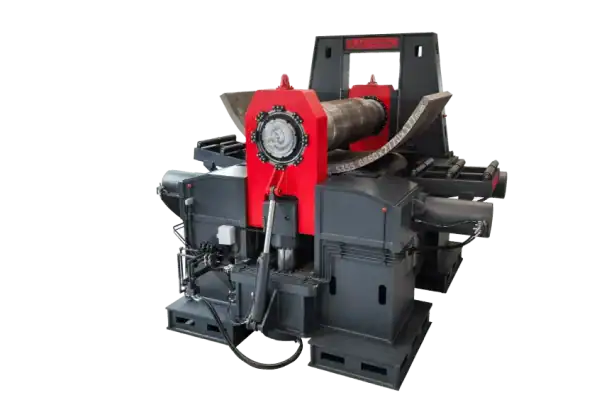
Hydraulic plate rolls use powered hydraulic cylinders to position and apply force through the bending rolls. Depending on the design, the machine may have powered rotation on one or more rolls, programmable movement and controls that support repeatable settings. These features are intended for production, not convenience alone.
Where a workshop regularly rolls medium or heavy plate, hydraulic operation reduces the effort and time required per part. It lets the operator make controlled adjustments under load and maintain more consistent pressure across the plate width. This is particularly valuable for vessels, ducting, guards, hoppers, pipe sections, structural components and repeated cylindrical fabrication.
Hydraulic machines also make handling safer on larger jobs. The plate still needs proper support, especially as its weight and rolled diameter increase, but the operator is not fighting a hand crank while trying to control a heavy workpiece. For larger installations, powered infeed and outfeed support may be needed to keep the work level and prevent distortion.
The trade-off is cost and complexity. Hydraulic rolls require a larger investment, a suitable electrical supply and planned maintenance of hoses, seals, oil and control components. A hydraulic machine that sits idle for most of the year is not necessarily a better purchase than a well-specified manual roll. It has to earn its place through throughput, capacity or repeatability.
Manual Versus Hydraulic Rolls: The Practical Differences
The most useful comparison is not manual against hydraulic in isolation. It is the machine’s capability against the parts your business produces.
| Factor | Manual rolls | Hydraulic rolls | |—|—|—| | Best suited to | Light sheet, short runs and repair work | Repeated jobs, wider plate and heavier fabrication | | Operator effort | High as thickness and width increase | Low, with controlled powered adjustment | | Setup and repeatability | Dependent on operator marking and adjustment | Better repeatability, particularly with measured settings | | Production speed | Suitable for occasional work | Better for regular and batch production | | Capital cost | Lower | Higher | | Maintenance | Minimal mechanical upkeep | Hydraulic and electrical servicing required | | Floor and power requirements | Compact, often no electrical supply needed | Greater space and electrical requirements likely |
A manual machine often has the advantage in small-job flexibility. An operator can set it up, roll a bracket shroud or small cover, and move on. In contrast, hydraulic rolls show their value when the same process is repeated throughout the week. Saving a few minutes per component is significant when dozens of components are being formed.
Capacity Figures Need Careful Reading
Plate roll specifications can look simple, but a thickness rating on its own is not enough to select a machine. The stated maximum is often based on mild steel of a defined tensile strength, rolled across a particular working length and to a diameter that may be much larger than the tight radius required for the job.
If you are rolling high-strength steel, stainless steel or aluminium, the result will differ. Higher-strength materials require more force. Aluminium may be softer, but it marks more easily and needs clean, well-maintained rolls. Plate width also matters: a machine that can roll a given thickness over 300 mm may not handle that same thickness across its full working width.
Ask four questions before comparing models: what is the maximum material thickness, what is the usual working width, what is the smallest finished diameter, and what material grades will be rolled? Use the normal workload as the buying basis, then leave a sensible margin rather than selecting a machine that only just meets the maximum job.
Do not overlook pre-bending. Flat ends left by basic rolling operations create a visible seam gap and add welding and dressing time. Machines with effective end pre-bend capability reduce this flat section, producing a cleaner cylinder and a better fit-up at the joint. For fabrication work that must be welded accurately, this is a practical consideration rather than an optional extra.
Roll Configuration Affects the Result
Manual and hydraulic machines are available in different roll arrangements. Three-roll pyramid machines are common and can be effective for general work, although they may require the plate to be removed and reversed for pre-bending. Initial pinch designs provide better plate control and are often useful where consistency matters. Four-roll hydraulic machines offer efficient clamping, pre-bending and repeat production, but represent a higher level of investment.
For a workshop making occasional cones, check whether the machine is designed for conical rolling or can be fitted with suitable tooling. Trying to force a cone on a standard arrangement can lead to poor geometry, surface damage and wasted material. Likewise, if finished parts are narrow rings, ensure the roll diameter and geometry can achieve the required minimum diameter without excessive springback.
Accuracy Depends on Process, Not Just Power
Hydraulic control does not automatically guarantee a perfect cylinder. Material variation, springback, plate squareness and poor alignment can all affect the finished shape. The advantage is that hydraulic adjustment makes it easier to repeat a proven process and make fine corrections without excessive manual effort.
Manual rolls demand more operator judgement, but a skilled fabricator can produce excellent work on a properly maintained machine. Marking reference lines, setting both sides evenly, making progressive passes and checking diameter regularly are essential habits. Rushing the last pass is a common cause of flats, taper and an out-of-round shell.
Whichever type is used, keep the rolls clean and free from weld spatter, grinding dust and sharp burrs. Protect finished material from scoring, and never exceed the rated capacity in the expectation that a short piece will be harmless. Overloading can damage roll shafts, gears, bearings and hydraulic components, while creating an avoidable safety risk.
Cost Should Be Measured Against Labour
The purchase price is visible. Labour, rework and production bottlenecks are less visible, but they often determine the real cost of a rolling machine. If two fabricators regularly spend time hand-cranking plate, correcting flat ends and reworking inconsistent cylinders, a hydraulic roll may provide a clear return through faster flow and improved fit-up.
On the other hand, a small engineering shop that rolls light material a few times each month may gain little from additional hydraulic capacity. A correctly sized manual roll will be easier to maintain, quicker to justify and entirely capable of producing quality parts within its operating range.
Consider the full job route. If rolled components feed directly into a welding fixture or assembly process, repeatability becomes more valuable. If every job is a one-off repair, flexibility and low ownership cost may carry more weight.
Selecting the Right Roll for Your Workshop
Start with actual job records rather than anticipated work. Review the plate widths, thicknesses, materials and finished diameters from the last six to twelve months. Then identify the jobs currently being subcontracted, delayed or formed with excessive manual handling. This provides a more reliable case for capacity than choosing a machine based on its headline specification.
Factor in operator access around the machine, plate support, lifting equipment and safe removal of finished sections. A plate roll needs clear working space at both sides, not just enough room for its footprint. Larger workpieces can become difficult to control quickly, particularly when they begin to curve and shift their centre of gravity.
Buy for the work that pays the bills, with enough margin for the work you are realistically moving towards. A manual roll remains a practical trade tool where light material and occasional forming are the priority. Where production, plate thickness and repeat accuracy are driving the workload, hydraulic rolls give the control needed to keep fabrication moving without turning every cylinder into a manual operation.