




Blog
Best Key Clamp Fittings for Fabrication Work
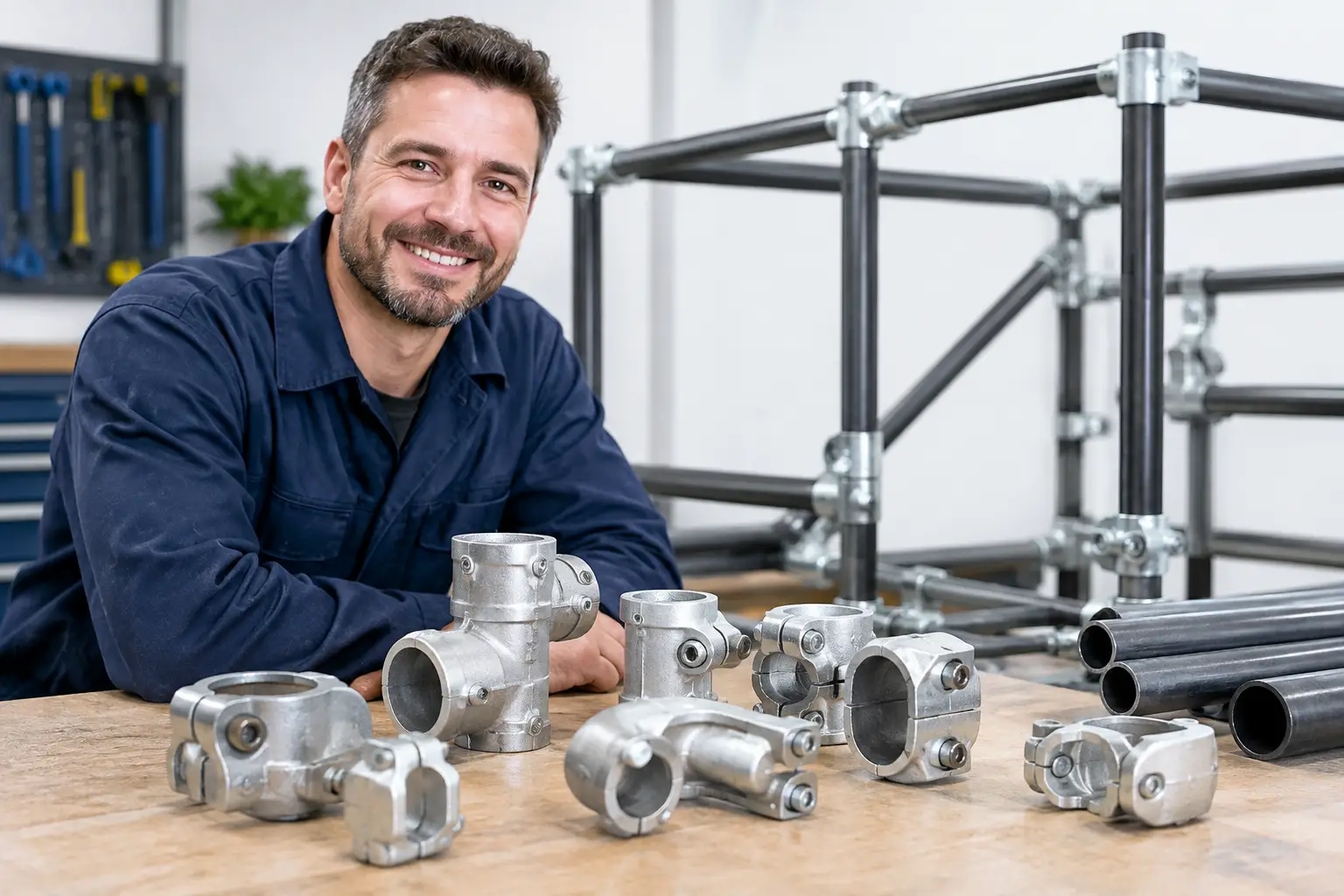
A handrail that looks square on the day it is fitted can become a maintenance issue quickly if the tube size, fitting pattern or base fixing has been guessed. The best key clamp fittings are not simply the heaviest items on the shelf. They are the fittings correctly matched to the tube outside diameter, the loading on the assembly, the installation environment and the method used to secure the finished structure.
For fabrication shops, maintenance teams and site contractors, key clamp systems offer a practical way to build guards, rails, access barriers, pedestrian segregation and light structural frames without welding every joint. They save hot-work time, allow modification on site and make replacement sections straightforward. Their limits still need to be understood. A clamp-built assembly is only as dependable as its tube, set screws, anchorage and layout.
What Makes a Key Clamp Fitting the Right Choice?
Key clamp fittings are generally designed to grip round steel tube with recessed grub screws. Common patterns are cast fittings with a galvanised finish, suitable for indoor industrial work and many external applications. The casting transfers load between tubes while the screw creates the clamping force that holds each member in position.
The right fitting must suit the duty, not just the geometry. A simple warehouse pedestrian rail has different requirements from a public-facing stair guard, a machinery enclosure or a barrier exposed to regular vehicle contact. Where a rail must meet a specified loading, building requirement or client drawing, the complete system must be assessed against that requirement. Do not treat a standard clamp fitting as a substitute for structural design.
Buying on price alone can be false economy. Poorly formed castings, inconsistent bore sizes, shallow screw engagement and weak corrosion protection can slow installation and lead to joints working loose. Trade-grade fittings should assemble cleanly, seat properly on the stated tube size and provide reliable thread engagement for the set screw.
Best Key Clamp Fittings Start With Tube OD
The most common ordering error is mixing nominal bore pipe terminology with actual tube outside diameter. Key clamp fittings are selected by the outside diameter of the tube they grip. A fitting for 48.3 mm tube will not correctly fit tube with a different outside diameter, even where both products are casually described by a similar nominal pipe size.
Measure the Tube, Not the Assumption
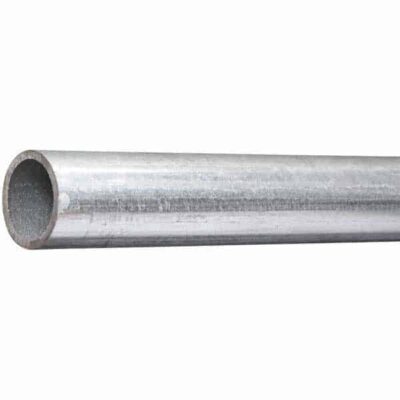
Before ordering, measure an existing tube with callipers where possible, or confirm the mill specification. Frequently used outside diameters include 33.7 mm, 42.4 mm, 48.3 mm and 60.3 mm, but the required size depends on the system and application. Verify both the main rail and any uprights, braces or infill members. It is common for a fabricated barrier to use a larger top rail or posts with smaller intermediate rails.
Tube wall thickness matters as well. The set screw must bite securely without crushing thin-wall tube or stripping out under repeated vibration. Standard handrail tube is suitable for many installations, but lightweight decorative tube may not be. If the assembly is likely to experience impact, movement or heavy use, specify tube and fittings as a complete system rather than mixing unknown stock.
Choose the Fitting Pattern Around the Load Path
A key clamp joint is strongest and most useful when the fitting layout follows the forces acting on the frame. A horizontal rail terminating into an upright needs a different arrangement from a diagonal brace, a corner return or a free-standing post fixed to concrete.
The core fitting patterns cover most workshop and site work:
- Short tees and long tees connect a horizontal member to an upright. The chosen style depends on whether the through tube must remain continuous and where the joint sits in the rail.
- Single-socket and double-socket elbows form 90-degree changes of direction at top rails, returns and frame corners.
- Cross fittings join intersecting rails where a continuous post or horizontal rail passes through the connection.
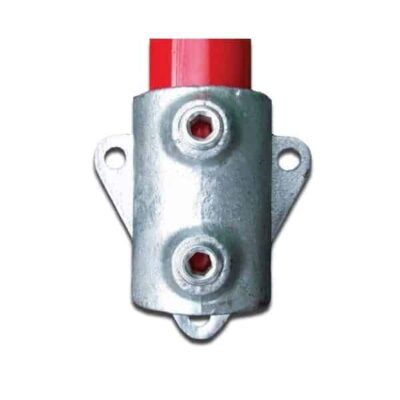
- Base flanges anchor vertical posts to concrete, steelwork or timber, subject to the correct fixing design and substrate condition.
- Adjustable angle fittings allow braces, ramps and non-standard frame angles to be built without cutting and welding bespoke junctions.
Use a continuous tube through a fitting where the design permits it, particularly at long horizontal runs. It generally gives a cleaner load path and reduces the number of cut ends to prepare. At corners and returns, check that the selected fitting does not create an awkward set-screw position against a wall, floor or adjacent rail.
Material and Finish Depend on the Environment
Galvanised malleable iron fittings are a standard choice for industrial railings and general fabrication. They offer good mechanical strength and tolerate routine workshop, warehouse and external use when installed and maintained correctly. However, galvanising is not a universal answer to corrosion.
For exposed coastal locations, chemical processing areas, food environments or sites subject to frequent washdown, corrosion risk needs closer attention. Trapped moisture around fittings, cut tube ends and damaged coatings can all become starting points for corrosion. In some cases, a stainless system or a different design approach is more appropriate. In others, galvanised fittings with suitable tube preparation, sealed ends and planned inspection are sufficient. The correct answer depends on the atmosphere, cleaning regime and expected service life.
Avoid combining dissimilar metals without considering galvanic corrosion, especially where moisture is regularly present. If aluminium, stainless steel and carbon steel components are brought together, isolate or specify them properly rather than assuming a surface coating will solve every problem.
Set Screws and Base Fixings Need Equal Attention
The set screw is a functional part of the joint, not an afterthought. Tube should be clean around the contact point, with scale, heavy paint, oil and burrs removed. Tighten screws evenly to the fitting manufacturer’s stated torque where this is available. Excessive force can damage threads or distort lighter tube; insufficient force can allow rotation and movement.
For critical installations, mark completed screws during inspection so that every joint can be checked before handover. On vibrating equipment guards or mobile plant structures, include periodic checks in the maintenance schedule. A clamp joint can perform well for years, but it should not be treated as maintenance-free in a high-vibration environment.
Base flanges deserve the same scrutiny. Their holding capacity is governed by the substrate and anchors as much as the fitting itself. Concrete strength, edge distance, embedment depth, reinforcement position and anchor type all affect the result. A substantial-looking flange fixed with unsuitable anchors into poor concrete remains a weak point. Where the barrier has a safety function, use an appropriate fixing specification and confirm it on site.
A Practical Method for Selecting Fittings
Start by sketching the assembly with every post, rail, return, brace and fixing point shown. Mark tube outside diameters and note whether each member must pass through a fitting or terminate within one. This prevents the common problem of ordering a collection of tees and elbows that cannot physically be assembled in the intended sequence.
Next, classify the duty. Is the structure a visual guide rail, a pedestrian barrier, an access handrail, a machine guard frame or a protective barrier likely to take impact? Identify any required height, spacing, loading or compliance criteria before choosing tube sections and fittings.
Then consider installation conditions. Measure the floor and wall surfaces, note uneven concrete, check access for drilling and allow for the clearance needed to tighten screws. For outdoor work, plan how cut ends will be protected and how water will drain rather than collecting inside open tube.
Finally, allow sensible spares. A small number of extra set screws, caps and common tees can prevent a site delay if a fitting is damaged, a dimension changes or a section is added during installation. For repeat fabrication work, standardising on selected tube sizes and fitting patterns also reduces stock complexity and avoids ordering errors.
When Key Clamp Is Not the Best Solution
Key clamp fittings are efficient where speed, adjustability and a weld-free installation matter. They are less suitable where the finished item requires a smooth fully welded appearance, very high structural capacity, certified impact performance beyond the system data, or a completely flush hygienic finish. A welded fabricated rail may be the better option for permanent architectural work or heavily loaded steel structures.
The same applies where the design calls for thin tube, unusual profiles or tight visual tolerances. Trying to force a clamp system into an unsuitable application usually creates extra labour and a compromised result. Select the joining method around the actual duty rather than making the drawing fit available stock.
For most industrial rail and barrier work, a correctly specified clamp system remains a highly effective fabrication solution. ProWeld customers should treat fitting selection as part of the build, alongside tube grade, anchor choice and installation method. Measure the tube, map the joint layout and specify for the real operating environment – that is what keeps a straightforward handrail from becoming a return visit.