




Blog
Welding Helmet Review for Professional Buyers
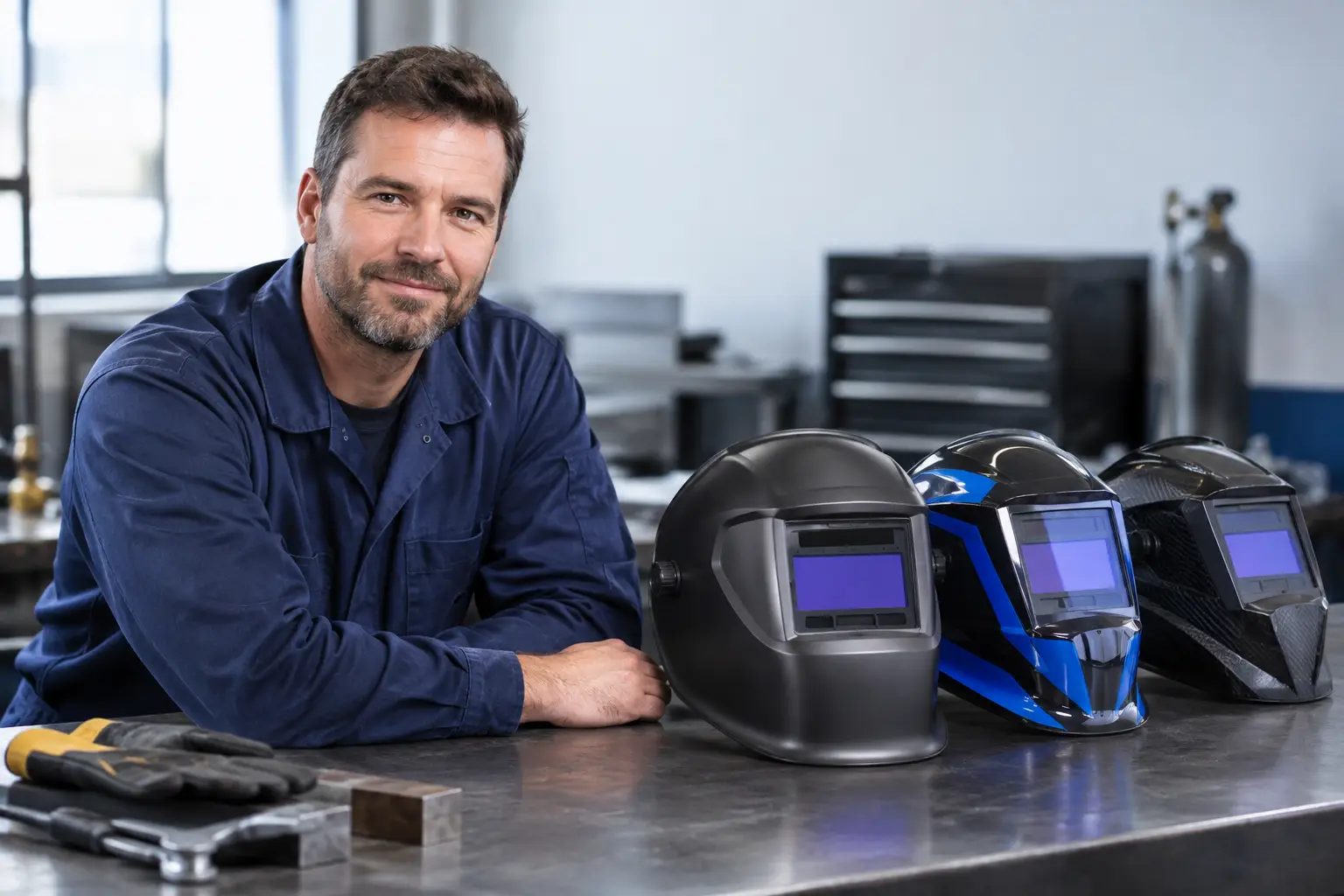
A welding helmet review should start with the work, not the price tag. A helmet used for occasional repair welding has different demands from one worn through a fabrication shift, moving between benches, jigs, site repairs and overhead work. For professional users, lens performance, dependable switching, comfort and service life all affect weld quality, safety and productive hours.
The right helmet is not necessarily the one with the longest specification sheet. It is the one that gives the welder a clear view of the joint, responds consistently to the arc, stays comfortable through the shift and stands up to workshop conditions. That means looking beyond a single headline feature and assessing the complete working package.
Welding helmet review: the specifications that matter
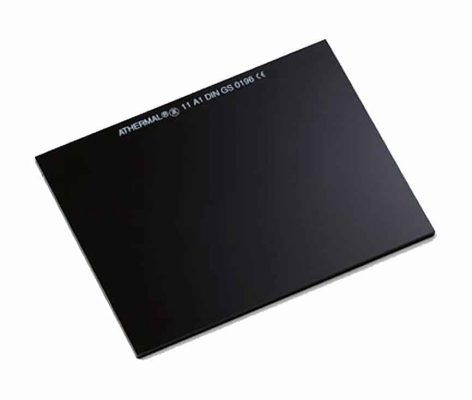
Most professional welding helmets use an auto-darkening filter, often referred to as an ADF. This filter allows the welder to see the workpiece in its light state, then darkens automatically when the arc starts. It improves set-up accuracy and reduces the repeated lifting and lowering associated with passive helmets.
The key question is how well the filter performs in the processes and positions your team actually uses. MIG welding on production work, TIG welding on thin stainless, stick welding outdoors and plasma cutting can all place different demands on sensors, shade range and response settings.
Optical clarity is more than a large viewing area
A large viewing window is useful, particularly when following long seams, working around fixtures or keeping an eye on the puddle in awkward positions. However, window size alone does not determine how clearly a welder sees the job.
Look closely at the optical classification of the cartridge. Better optical performance means less distortion, more even shading across the lens and a clearer view of the weld pool. For fine TIG work, root runs and detailed fabrication, that visibility can make a material difference to control. A slightly smaller but clearer lens can be the better choice over a poorly performing wide-view design.
Light-state shade also matters. A bright, neutral view makes joint preparation, tack placement and inspection easier without repeatedly removing the helmet. This is particularly useful in busy workshops where welders alternate between fitting and welding throughout the day.
Shade range and adjustment for the process
A professional helmet should offer a shade range appropriate to the welding current and process in use. Lower-amperage TIG often requires reliable detection at a low arc intensity, while higher-output MIG, stick welding and cutting may need darker settings.
External controls are valuable when the work changes frequently. They allow shade adjustment without removing gloves or lifting the helmet, which is practical for shared bays and mixed fabrication. Internal controls are less exposed to accidental knocks, but can be slower to access. Neither layout is automatically better. The correct choice depends on whether the helmet is assigned to one welder and process or used across varied jobs.
Sensitivity and delay controls are equally relevant. Sensitivity helps prevent the filter triggering unnecessarily from nearby arcs while still responding to low-amperage work. Delay determines how long the lens remains dark after the arc stops. A suitable delay setting can reduce eye strain where the weld pool or surrounding metal remains bright after welding.
Sensors and switching reliability
Sensor count is not simply a marketing number. More sensors can improve arc detection where the helmet is partially obstructed by the workpiece, a torch, a pipe or the welder’s own position. This is most relevant for positional work, pipe fabrication and constrained assemblies.
That said, sensor placement and filter quality matter as much as the total number. A helmet should switch consistently when welding in the positions required on site or in the workshop. Before committing to a fleet purchase, test a sample under realistic conditions, including low-amperage TIG if that is part of the workload.
Switching speed is also worth checking, although very fast figures should not distract from overall performance. In real use, the practical priority is a filter that responds reliably, maintains a stable dark state and gives a clear, usable view rather than one that only looks impressive on a specification sheet.
Headgear determines whether the helmet gets worn properly
A high-quality filter is of limited value if the headgear causes pressure points, slips when the welder looks down or will not hold its position. Comfort is a safety and productivity issue. A poorly fitting helmet is more likely to be lifted unnecessarily, adjusted mid-task or replaced before its useful life is over.
Assess the adjustment range, crown support, rear retention system and the balance of the shell. The helmet should sit securely without excessive pressure on the forehead. It should also remain stable when lowered, especially when a respirator, safety glasses or hearing protection is being worn.
Weight needs context. A lighter helmet can reduce fatigue over long shifts, but an extremely light shell may involve compromises in durability, lens size or headgear quality. Conversely, a heavier helmet with good balance can feel less tiring than a poorly balanced lightweight model. Try the helmet with the PPE normally used for the job, not in isolation at a counter.
Shell design, consumables and workshop durability
The shell has to cope with sparks, spatter, heat and the everyday knocks of fabrication work. A compact shell is useful in confined spaces and around structural steel, while a wider design may offer better coverage and accommodate a larger filter. For overhead welding or work with substantial spatter, coverage around the neck and sides of the face deserves particular attention.
Consumables should be easy to obtain and straightforward to replace. Outer cover lenses take regular abuse and should be treated as routine maintenance items, not an afterthought. A scratched cover lens reduces visibility long before the auto-darkening filter itself needs attention. Inner cover lenses, sweatbands, headgear parts and battery covers should also be available for the expected service life of the helmet.
For a workshop purchasing several helmets, standardising on a model with readily available spares can reduce downtime and simplify stockholding. It is often more cost-effective than buying cheaper units that become unusable when a simple wear part fails.
Battery, solar assistance and day-to-day checks
Many auto-darkening helmets combine solar assistance with a replaceable or rechargeable battery. Solar support helps extend battery life, but it should not be treated as a substitute for routine checks. A helmet left in a dark locker for extended periods, or used intermittently, may still need battery attention.
Before a shift, inspect the outer lens for damage and contamination, check the shell and headgear for cracks or loose parts, and test the filter using the manufacturer-approved method. If the helmet behaves inconsistently, flashes, fails to darken or remains dark without cause, remove it from service until the fault is identified.
Cleaning also matters. Use suitable materials for the cover lens and avoid solvents that can damage plastics or coatings. Spatter buildup around controls, sensors and lens seals can create avoidable problems over time.
Choosing the right helmet for the job
For general MIG fabrication, prioritise a clear filter, dependable arc detection, comfortable headgear and readily available cover lenses. This is where a durable, practical helmet earns its keep shift after shift.
For TIG and precision work, optical quality, low-amperage sensitivity and a bright light state move higher up the list. Fine work depends on seeing the joint and weld pool properly, so this is not an area to compromise for a marginal saving.
For site maintenance and mixed-process work, consider shell coverage, sensor performance in difficult positions, external adjustment and compatibility with other PPE. A helmet that works well at a bench may be less suitable when access is restricted or conditions are less controlled.
For fabrication managers, the best buying decision usually comes from involving the people who will wear the equipment. Trial units across common processes, ask welders about visibility and fit after a full shift, and compare the availability of replacement parts before standardising. ProWeld customers should expect the same practical approach applied to every piece of workshop equipment: choose on specification, suitability and serviceability rather than headline price.
A welding helmet is worn at the point where skill, safety and workmanship meet. Select one that lets the welder see clearly, work comfortably and keep the arc under control, then maintain it as carefully as any other essential item of welding equipment.