

















Blog
Best Metal Cutting Bandsaw Blades for Trade Use
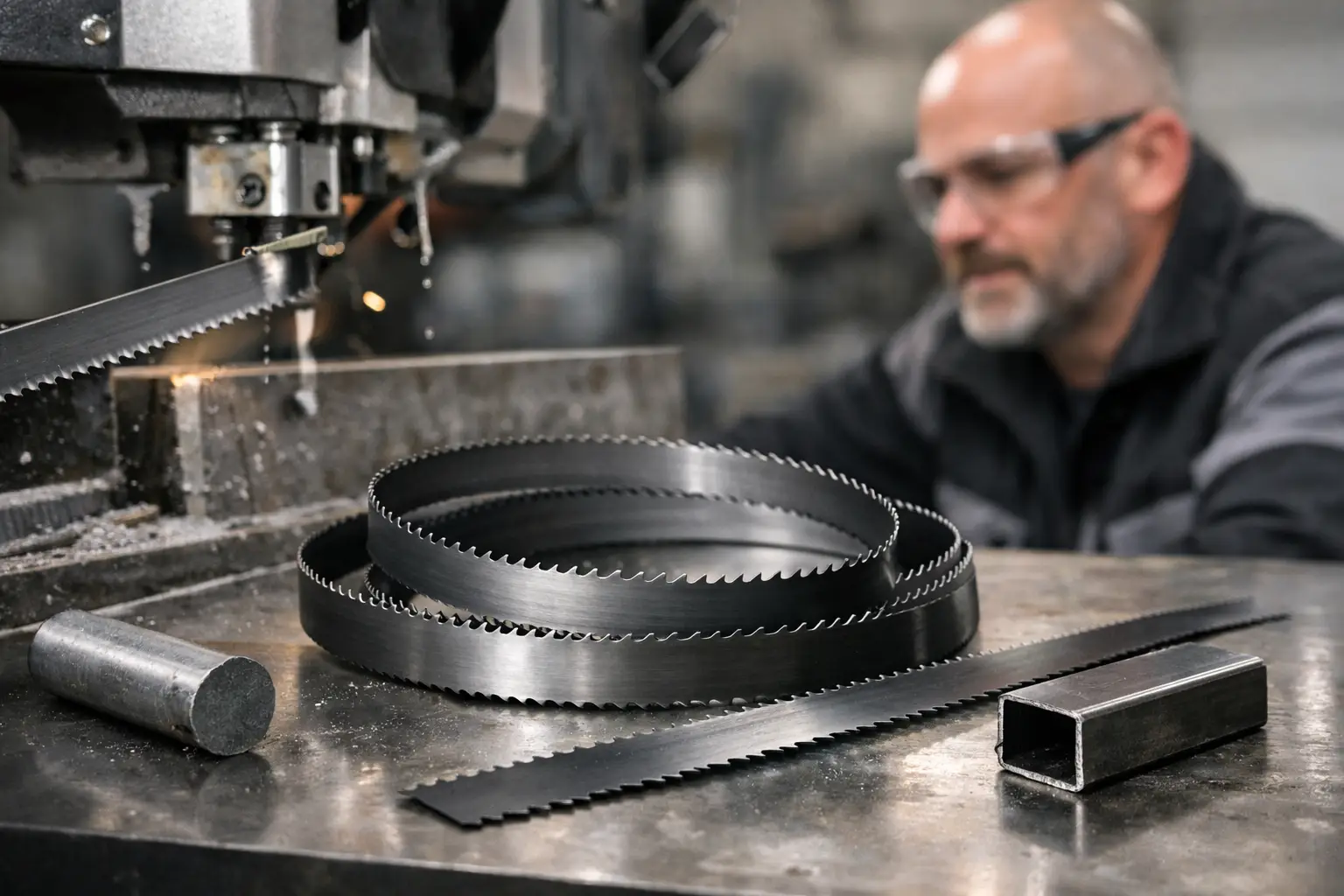
A bandsaw blade that cuts slowly, wanders off line or strips teeth halfway through a batch is not a minor consumable issue. It is lost production, wasted material and unnecessary pressure on the saw. The best metal cutting bandsaw blades are selected around the material, section size, machine capability and the type of work being done – not simply by choosing the most aggressive tooth pattern on the shelf.
For fabrication shops, maintenance departments and engineering contractors, blade selection needs to be repeatable. A suitable blade should produce a square cut, carry swarf clear of the kerf and retain its edge through the expected workload. Getting those basics right will usually reduce cost per cut more effectively than buying the cheapest blade available.
What Makes a Bandsaw Blade Suitable for Metal?
A metal-cutting bandsaw blade has to cope with heat, abrasion and interrupted cuts that would quickly damage a general-purpose blade. Most professional applications call for a bi-metal blade: a flexible alloy-steel backing strip with high-speed steel tooth tips electron-beam welded to it. This combination gives the blade fatigue resistance around the band while keeping a hard, wear-resistant cutting edge.
Carbon steel blades still have a place for light-duty work, low-volume cutting and softer non-ferrous materials. They are economical, but their teeth lose sharpness faster when used on structural steel, stainless or hard alloy sections. For regular workshop production, bi-metal is normally the sounder choice.
Carbide-tipped blades sit at the higher-performance end of the range. Their tooth tips withstand heat and abrasion exceptionally well, making them useful for difficult materials, high-nickel alloys, hardened steels and demanding production cutting. They cost more and require a rigid, correctly set-up machine. On a poorly maintained saw, a carbide blade can be an expensive way to reveal alignment or clamping problems.
Choosing the Best Metal Cutting Bandsaw Blades by Material
The workpiece is the starting point. Mild steel box section, solid stainless bar and a bundle of thin-wall tube demand different tooth forms and pitches.
Mild steel and structural sections
For common fabrication materials such as mild steel angle, channel, flat bar and RHS, a variable-pitch bi-metal blade is a strong all-round option. Variable pitch means the spacing between teeth changes along the blade. This helps reduce vibration and chatter, particularly on interrupted cuts where the teeth repeatedly enter and leave the workpiece.
A medium pitch will suit many general jobs, but wall thickness matters. Thin material needs more teeth in contact with the cut. Heavy sections need wider gullets between teeth to carry swarf away. Using a coarse blade on thin tube risks tooth snagging and stripped teeth. Using a fine blade on thick solid bar can pack the gullets with swarf, generate heat and slow the cut dramatically.
Stainless steel and heat-resistant alloys
Stainless work-hardens if it is rubbed rather than cut. Use a sharp bi-metal blade with a suitable variable pitch, maintain a positive feed and avoid letting the blade dwell in the cut. Reduced speed and a steady feed are usually preferable to a fast blade speed with timid pressure.
Coolant is particularly valuable here. It controls heat at the tooth edge, lubricates the cut and helps flush swarf from the kerf. A dry-cutting approach may be acceptable for occasional light work where the blade specification allows it, but it is rarely the best route for consistent stainless cutting.
Aluminium, brass and other non-ferrous metals
Non-ferrous metals often cut faster than steel, but they can clog a fine tooth pattern. A coarser pitch and a tooth form designed for chip clearance are generally more suitable, especially for thick aluminium sections. Use the correct cutting fluid where required, as it reduces the tendency for material to adhere to the teeth.
Do not assume one blade can move from steel to aluminium without compromise. A blade that performs well on structural steel can load up quickly in soft aluminium, leaving a rough cut and shortening blade life.
Tooth Pitch: Keep the Right Number of Teeth in the Cut
Tooth pitch is usually expressed as teeth per inch, or TPI. The practical rule is to keep at least three teeth engaged in the workpiece at all times. Fewer than this and each tooth takes too heavy a bite, increasing the chance of tooth breakage. Too many teeth in the cut and the gullets cannot clear the swarf effectively.
For thin-wall tube, sheet and small sections, a finer pitch is needed. For medium box section and general bar work, a medium variable pitch is often appropriate. Thick solids, large billets and heavy-wall material benefit from a coarser pitch with deep gullets.
Variable-pitch blades are widely used in fabrication because they cover a useful range of section sizes and suppress vibration. Fixed-pitch blades can still be the better choice for repetitive cutting of one known material size, where a dedicated production set-up justifies a more specific blade.
Tooth Form and Set Matter as Much as Pitch
Pitch alone does not determine performance. Tooth form controls how the blade enters the material and how it handles the swarf. A positive rake tooth has a more aggressive cutting angle and is commonly suited to heavy sections, solids and tougher alloys. A standard rake or regular tooth profile provides a controlled cut on lighter and mixed fabrication work.
The tooth set – the alternating offset of teeth from side to side – creates clearance for the blade body. A variable set helps minimise vibration and is useful for general-purpose metal cutting. A raker set, arranged in a repeating sequence, can give good stability in solid sections. The right choice depends on the blade series and material, but the point remains the same: a blade is an engineered cutting tool, not just a strip of toothed steel.
Match the Blade to the Saw, Not Just the Job
Before ordering, confirm the blade length, width and thickness specified for the machine. Blade width affects straight-line stability and the minimum radius that can be cut on a vertical bandsaw. A wider blade is better for straight production cuts, while a narrower blade is required for contour work.
Machine condition has a direct effect on blade life. Worn guide bearings, damaged carbide guides, poor wheel alignment, weak workholding and incorrect band tension will all cause premature failure. If blades repeatedly crack at the weld, inspect the wheel condition, guide alignment and tension setting before changing blade type.
The saw must also run at the correct blade speed for the material. Excessive speed produces heat and wears tooth tips rapidly. Too little speed can reduce output and encourage operators to force the feed. Feed pressure should create chips, not dust. Fine powder is often a sign that the blade is rubbing or that the feed rate is too light.
Blade Break-In Is Not Optional
A new bi-metal blade needs a controlled break-in period. The teeth arrive with extremely sharp edges, and applying full production feed immediately can chip those edges before they have bedded into the work.
Run the blade at the normal speed for the material but with a reduced feed pressure for the first several cuts. Then increase the feed gradually while checking chip formation and cut quality. The exact duration depends on blade size, material and machine, but the principle is consistent: ease the blade into service before asking it to carry full load.
This small discipline is particularly worthwhile on expensive blades and repetitive cutting jobs. It helps establish a stronger cutting edge and can materially improve service life.
Common Reasons Bandsaw Blades Fail Early
Early tooth stripping is often caused by selecting too coarse a pitch for thin material, inadequate work clamping or excessive feed. A blade that cuts crooked may be dull, incorrectly tensioned, poorly guided or overloaded on one side due to a twisted workpiece.
Cracks in the blade body usually point towards fatigue rather than cutting performance. Check wheel diameter against the blade thickness, inspect the guides and look for swarf trapped on the wheels. For portable bandsaws, avoid twisting the saw through the cut or allowing the work to vibrate unsupported.
Weld failure can occur, but it should not be treated as an automatic blade defect. A machine with misaligned guides or excessive tension loads every weld cycle after cycle. Recording the material, blade specification, cut count and failure type is useful in busy workshops because patterns soon become visible.
A Practical Buying Approach
For mixed fabrication work, start with a quality variable-pitch bi-metal blade matched to the usual material thicknesses. Keep a separate, coarser blade for large solid stock and heavy-wall section if those jobs are common. Where stainless, tool steel or heat-resistant alloys are a regular part of production, specify a blade series designed for those materials rather than expecting a general-purpose blade to do everything.
The lowest purchase price rarely delivers the lowest cutting cost. Measure blade value by cut quality, cutting time, number of cuts achieved and the amount of operator intervention required. A correctly selected blade from a specialist trade supplier such as ProWeld supports predictable production, cleaner fabrication and less avoidable downtime.
A bandsaw should cut with a steady sound, formed chips and no need for force. If it does not, treat that as useful evidence: review the pitch, material grade, feed, speed and machine set-up before the next blade is fitted.