




Blog
Best Welding Helmets for Fabrication Jobs

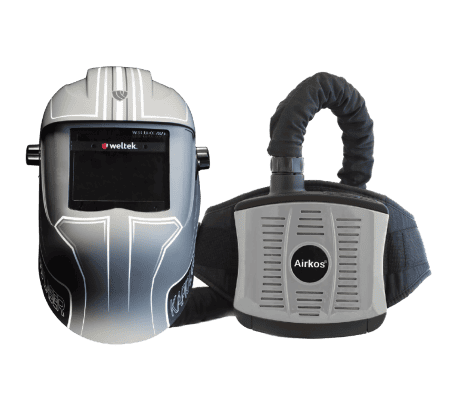
Fabrication work exposes a welding helmet to far more than a few neat bench welds. It has to cope with repeated tacking, awkward joint access, bright arc starts, grinding dust, heat and long shifts. The best welding helmets for fabrication are therefore not simply the darkest or most feature-heavy models. They are the helmets that let a welder see the joint clearly, react consistently to changing processes and stay comfortable enough to be worn properly all day.
For a fabrication business, helmet selection affects weld quality, rework, operator fatigue and safety. A low-cost helmet may be suitable for intermittent repair work, but its limitations become obvious when a welder is moving from MIG tacks to TIG detail work, then grinding and fitting components before the next weld sequence.
What Fabricators Need From a Welding Helmet
The right specification starts with the work being carried out. General steel fabrication often involves MIG or MAG welding, frequent tacking and grinding. Structural work can mean higher amperages, outdoor light and restricted positions. Precision fabrication may include TIG welding on stainless steel or aluminium, where low-amperage arc detection and a clear view of the puddle matter more than sheer lens size.
A fabrication helmet should provide dependable automatic darkening, an adequate shade range, clear optics and a headgear system that stays put when the welder changes position. It also needs a shell and consumable system suited to daily workshop use. Lens covers, sweatbands and headgear components wear out. If they are difficult to replace, a helmet that is otherwise serviceable becomes an unnecessary replacement cost.
The most suitable choice also depends on whether grinding is part of the normal workflow. A proper grind mode prevents the lens from darkening in response to sparks and reflected light, while still allowing the helmet to remain in place for face protection. It is not a substitute for suitable eye protection, but it reduces the temptation to lift the helmet repeatedly between welding and preparation tasks.
Best Welding Helmets for Fabrication by Work Type
There is no single best model for every workshop. The most effective way to buy is to match the helmet category to the work, duty cycle and number of operators.
General fabrication: variable-shade auto-darkening helmets
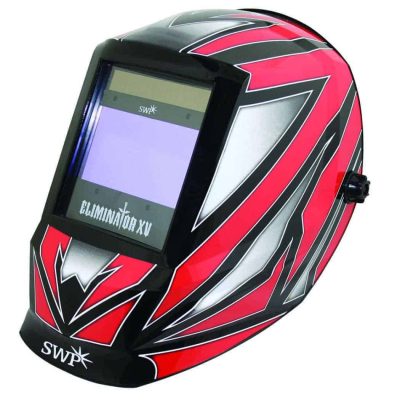
For most fabrication bays, a variable-shade auto-darkening helmet is the practical standard. Look for a shade range that covers common welding processes, typically shade 9 to 13, with a light state around shade 3 or 4. This gives the operator flexibility when moving between lighter MIG work and heavier fabrication without changing helmet.
A model with external controls is useful where operators regularly alter settings, although recessed controls are less likely to be knocked during handling. Sensitivity and delay adjustment are worthwhile on busy shop floors, where nearby arcs and reflected light can otherwise trigger the lens. The delay control also helps the operator set how long the lens remains dark after the arc stops, which can improve comfort during higher-amperage work.
TIG and detail work: premium optical performance
TIG fabrication places greater demands on the cartridge. The arc may be low amperage, particularly on thin material, and the weld pool needs to be visible without distortion. A helmet with high optical classification and reliable low-amp sensing is a sensible investment for stainless, aluminium, pipework, food-grade fabrication and detailed repair work.
Check the lens rating under EN 379. The classification is shown as four figures, with 1/1/1/1 representing the highest available rating for optical class, light diffusion, variations in luminous transmittance and angular dependence. A top classification does not automatically make a helmet right for every operator, but it is a strong indicator where visual accuracy is central to the job.
A larger viewing area is particularly useful for positional work and longer runs because it reduces head movement. The trade-off is that larger cartridges can add weight and may be more exposed to damage. For bench fabrication, that is often acceptable. For cramped repairs or work around plant, a compact shell may be the better tool.
Heavy fabrication and site work: durable, stable protection
For structural steel, maintenance and heavier fabrication, prioritise shell durability, secure headgear and predictable switching. The helmet must remain stable when the operator is working overhead, kneeling or reaching around sections. A loose or poorly balanced helmet is not merely uncomfortable. It can affect weld placement when the welder has to keep readjusting it.
Choose a shell designed to meet the relevant impact and welding protection requirements, including EN 175 for welding equipment. Inspect the headband adjustment range as carefully as the lens specification. Ratchet adjustment, positive tilt settings and a replaceable sweatband make a real difference over a full shift.
If the work includes outdoor fabrication, solar-assisted power can be useful, but do not rely on that feature alone. Battery-supported or dual-powered systems provide more consistent operation in low-light areas, inside vessels or during winter site work. Establish a simple inspection routine so damaged covers and low batteries are dealt with before they interrupt production.
Lens Clarity Matters More Than Marketing Claims
The viewing cartridge is the working part of the helmet. A large window is helpful, but clarity, colour definition and response consistency are more valuable than size alone. Poor optical quality can make it harder to judge the edge of a fillet, hold a tight root gap or follow a marked line. Over time, it also contributes to eye strain.
True-colour lenses can improve contrast compared with the green-tinted view associated with older cartridges. This can make joint edges, puddle boundaries and surrounding material easier to distinguish. It is a useful feature, especially where operators are doing precise fit-up and cosmetic work, but it should not distract from the basics: correct shade, reliable sensors and quality protective lenses.
For fabrication departments with several welders, standardising on a compatible helmet platform can simplify stockholding. Keeping the same front covers, inner covers, batteries and headgear spares reduces downtime and prevents operators fitting unsuitable consumables in a rush.
Fit, Weight and Balance Are Production Issues
A helmet can meet every stated specification and still be wrong for the person wearing it. Fit affects whether it is kept in the correct position, whether the lens sits at a useful angle and whether the operator develops neck fatigue across a shift.
The headgear should spread the load around the crown and allow the distance between lens and face to be adjusted. Enough clearance is needed for safety spectacles and, where required, prescription eyewear. The helmet should also flip up without pulling the headband forward or dropping back unexpectedly when lowered.
Weight needs context. A lightweight shell is attractive, but a slightly heavier helmet with better balance and padding may be less tiring over eight hours. Where possible, have regular users try the helmet with their normal PPE before committing to a fleet purchase. A short fitting check can prevent a costly mismatch.
Features Worth Paying For, and Those That May Not Be
For professional fabrication, spend on optical quality, dependable arc sensors, adjustable headgear, replaceable consumables and suitable grind mode. These features directly influence visibility, usability and operating life.
Extra viewing area, external controls and advanced colour technology can be worthwhile when they suit the process. They are less valuable if the helmet will mainly be used for occasional stick welding or brief repair tasks. Likewise, a highly featured cartridge does not compensate for scratched cover lenses. Protective covers are low-cost consumables and should be changed before visibility becomes compromised.
Do not select by shade range alone. A very broad range may look impressive, but the relevant question is whether it covers the processes and amperages used in your workshop. For common fabrication work, consistent performance within the required range is preferable to unused settings.
A Practical Buying Check Before You Order
Before selecting a helmet, confirm the welding processes, typical amperage range, frequency of grinding and whether TIG work is involved. Then check the EN 379 classification, shade settings, number and placement of sensors, battery arrangement, viewing area and availability of replacement parts.
Also consider the working environment. A clean indoor fabrication shop has different needs from mobile maintenance work, confined spaces or an exposed steel erection site. If several operatives will use the same helmet type, check adjustment range and hygiene requirements, including replaceable sweatbands and easy-clean surfaces.
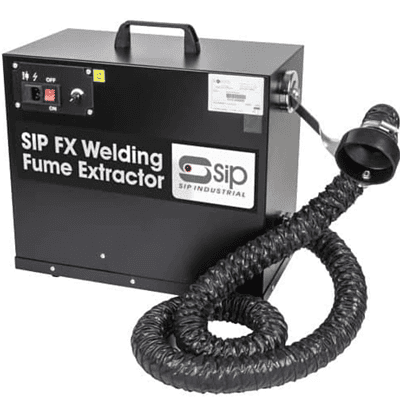
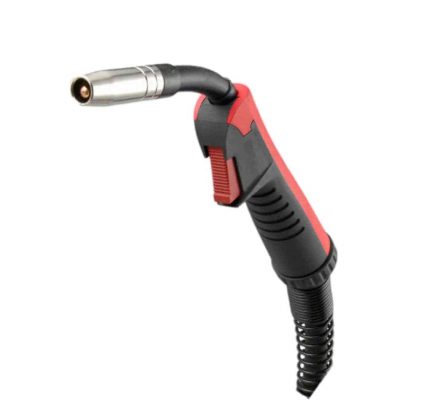
ProWeld buyers should treat a welding helmet as working PPE rather than a disposable accessory. Select it with the same care used for a power source, torch or fume-control arrangement. The right helmet lets skilled welders focus on the joint, not on fighting glare, poor visibility or uncomfortable equipment through the shift.