











Blog
Where Welding Cobots Fit on the Shop Floor
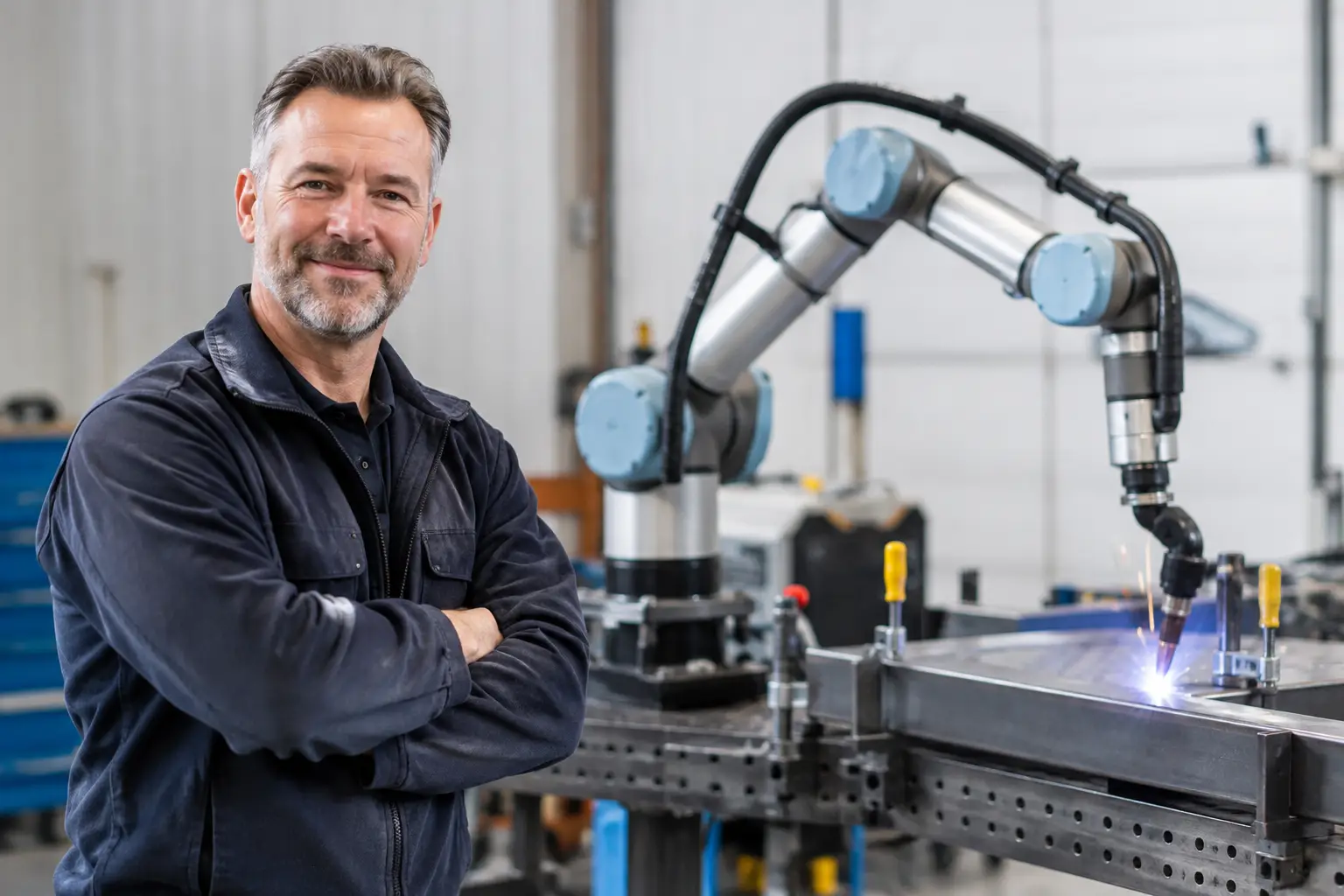
A welder waiting on fit-up is wasted capacity. A robot waiting on an operator to reposition an inconsistent part is no better. Welding cobots can improve output where repeatable welds, sensible part presentation and a steady work queue are already in place. They are not a substitute for sound fabrication practice, competent welding procedure control or proper fixtures.
For fabrication shops facing labour pressure, variable lead times and demand for more consistent production, a collaborative welding cell can be a practical investment. The key is to assess the work before assessing the machine. The right application can release skilled welders from repetitive runs and move them towards set-up, inspection, repair and higher-value fabrication. The wrong application simply automates a bottleneck.
What Welding Cobots Are Designed to Do
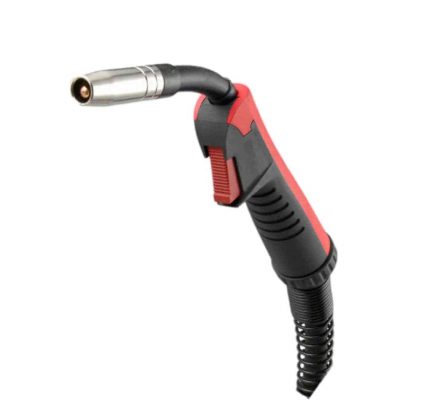
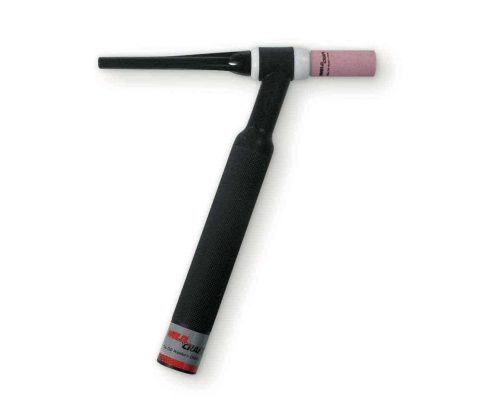
A welding cobot is a robot intended to work in closer proximity to people than a conventional industrial robot, subject to a properly designed and risk-assessed installation. In welding use, it commonly carries a MIG or TIG torch and follows programmed paths around a clamped component. Operators can typically teach positions directly at the arm, then refine weld parameters and travel speed through the control system.
That ease of teaching is the main attraction for smaller and medium-volume fabricators. A conventional robot cell can require substantial engineering, guarding and programming effort. A cobot is generally quicker to deploy for repeat batches, variants and short-to-medium production runs. It can be moved between suitable jobs, but it should not be treated as a plug-and-play welding bench.
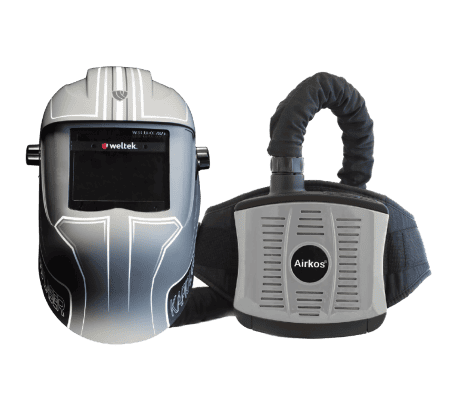
The collaborative label does not remove welding hazards. Arc radiation, hot workpieces, spatter, fume, pinch points and moving tooling remain. A welding cobot installation still requires proper risk assessment, welding screens, fume extraction, emergency stops, suitable guarding where needed, and clear operating procedures. Collaborative operation depends on the complete system, not the robot arm alone.
Where Welding Cobots Earn Their Keep
The strongest case is usually repetitive work with stable geometry. Brackets, frames, guards, tubular assemblies, mounting plates and fabricated sub-components can be well suited when the same joints appear frequently and parts can be located accurately. The cobot brings repeatable torch angle, stick-out, travel speed and weld placement, which can reduce variation between shifts and operators.
Part volume matters, but it is not only about large quantities. A job with 30 identical assemblies every week may justify automation more readily than a one-off order for 500 parts that will never recur. The cell needs enough repeat business to repay programming, fixture manufacture, validation and operator time.
Weld accessibility matters just as much. A cobot works best where the torch can reach the joint without excessive wrist rotation, collision risk or awkward changes in orientation. Positioners can significantly extend the range of practical work by presenting the weld in a favourable position. They also reduce the need for the robot to make complex overhead or vertical-up movements where process control becomes more demanding.
The best applications often have a second benefit: they remove monotonous work from the welder. Repetitive fillet welds on similar assemblies can be physically tiring, particularly where components require frequent handling. If a cobot can take on the repeated passes, the welder can oversee production, load fixtures, inspect results and handle the difficult jobs that still depend on judgement.
Fixture Quality Decides the Result
A cobot repeats exactly what it has been taught. If a component is located 3 mm away from its programmed position, the torch does not know that the joint has moved unless the system includes suitable sensing or seam-tracking capability. It will still follow the original path.
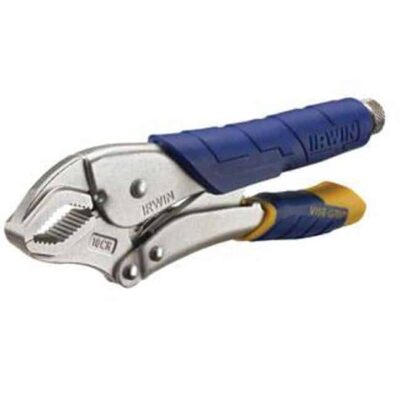
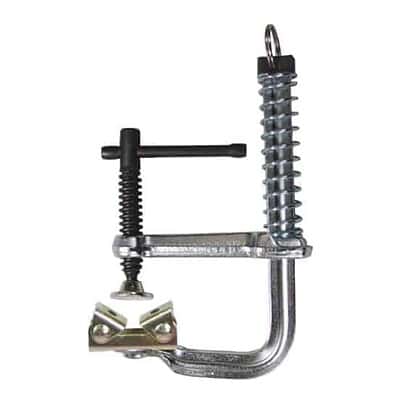
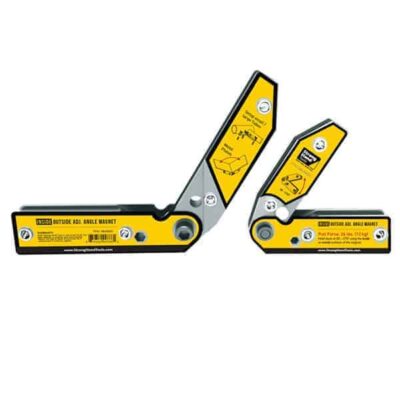
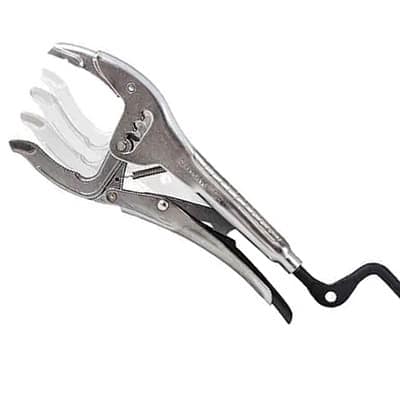
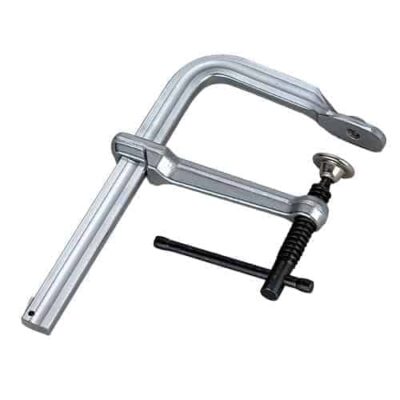
That makes fixtures central to any welding automation project. The fixture must position each component consistently, resist distortion and allow the torch to approach the joint. It also needs to support practical loading and unloading. A fixture that is accurate but slow to use can erase much of the expected gain.
Before programming begins, check whether incoming parts are consistent enough for automated welding. Laser-cut and folded components may be highly repeatable, while manually prepared repair work or variable structural sections may not be. Variation in material thickness, edge condition, gap size and fit-up directly affects weld quality. Automation can expose those weaknesses very quickly.
Clamping also has to account for heat input. A fixture that holds a component securely when cold may allow movement as the assembly heats and contracts. Tack weld location, welding sequence and heat balance should be considered at the design stage. The aim is not simply to hold the part still, but to present a repeatable joint throughout the welding cycle.
Process Control Still Belongs to the Welding Team
A cobot can reproduce a proven welding programme. It cannot decide whether a poor joint preparation is acceptable, whether a procedure suits a changed material grade, or whether a weld defect points to contamination, poor gas coverage or an incorrect set-up. Skilled welding oversight remains essential.
The procedure should be established in the same disciplined way as any production welding operation. Material, joint type, consumable selection, shielding gas, wire feed speed, voltage, travel speed and torch position all need to suit the application. For coded work, the relevant procedure qualification and quality requirements must govern the installation, not the convenience of the automation system.
Consumable management deserves attention. Contact tips, liners, nozzles and wire must be maintained consistently if the cell is expected to run reliably. A blocked nozzle or poor wire feed can stop production or create defects across an entire batch before anyone notices. Regular inspection points and a sensible spares stock should be built into the work routine.
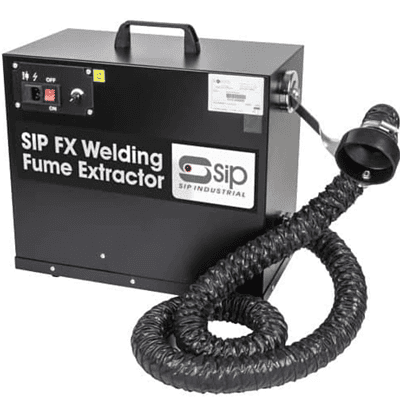
Fume extraction is equally important. Automated welding may increase arc-on time, which can increase the total fume generated in a work area. Extraction should be assessed for the actual welding position and enclosure arrangement, rather than assuming a general workshop system will be sufficient.
Calculating the Real Return
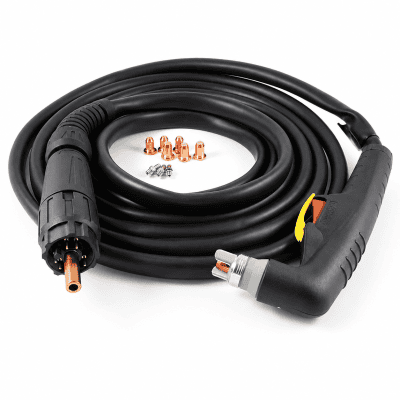
The purchase price of the arm is only part of the cost. A realistic budget includes the welding power source, torch package, wire feed arrangement, extraction, safety equipment, fixtures, positioners where required, installation, programming, training and ongoing support. Time for trial runs and process validation should also be allowed for.
The return should be measured against the actual production constraint. If welding is holding up dispatch, reducing arc time per part can have a clear commercial benefit. If fit-up is the slow stage, a cobot may spend much of its time waiting for parts and deliver less value than expected. In that case, improving preparation, jigs or material flow may be the better first investment.
Cycle time should include more than the weld. Loading, clamping, starting the programme, unloading, cleaning and inspection all count. A quoted welding cycle may look impressive, but the complete cell cycle determines output. It is also worth considering how often programmes will change and who will be responsible for maintaining them.
A sensible trial is to identify one stable part family, measure the current labour content and reject rate, then compare it with a proposed automated process. This gives a clearer basis for investment than broad claims about productivity. It also identifies whether the job needs better fixtures, a positioner or revised component design before automation is considered.
When a Cobot Is Not the Right Answer
Welding cobots are not ideal for every workshop. One-off fabrications, heavily distorted repairs, inconsistent agricultural machinery work and assemblies with poor access can be difficult to automate economically. The same applies where parts are too large, too variable or too awkward to fixture safely.
Very high-volume, tightly controlled production may be better served by a dedicated conventional robot cell designed around one product range. At the other end of the scale, occasional repair and bespoke fabrication work may remain faster in the hands of an experienced welder. The useful middle ground is repeatable fabrication with enough variation that straightforward programming and flexible deployment have value.
Do not buy automation to compensate for poor housekeeping, weak quality control or irregular scheduling. Those issues need to be addressed first. A cobot will make a stable process more productive; it will make an unstable process more visible.
Start With the Parts, Not the Robot
For a fabrication manager, the practical question is simple: which work is repetitive enough to automate, predictable enough to fixture and valuable enough to free a skilled welder from? Start there. Review drawings, part tolerances, joint access, batch frequency and current labour time before choosing equipment.
A well-selected cobot cell can become a dependable production asset, particularly when supported by trade-grade fixtures, consumables, extraction and process discipline. The strongest results come from treating it as part of the fabrication system, not as a standalone answer to every welding problem.