













Blog
Laser Welding vs TIG Welding
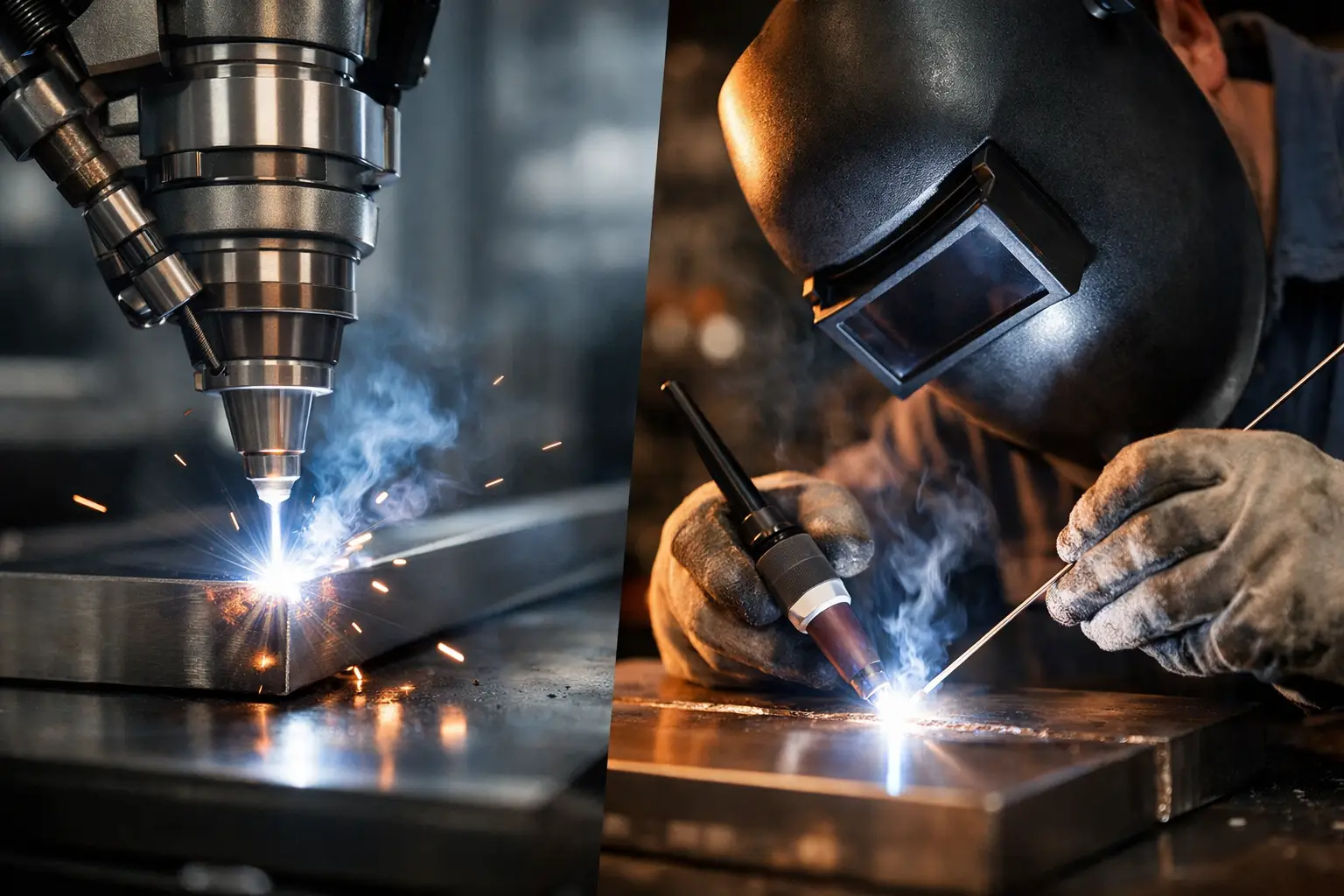
A stainless enclosure run that looks straightforward on paper can turn awkward fast once distortion, finish quality and cycle time start pulling in different directions. That is where the laser welding vs TIG welding decision matters. Both processes can produce high-quality joints, but they suit different production pressures, material conditions and skill requirements.
For fabrication shops, maintenance teams and production buyers, this is rarely a question of which method is better in absolute terms. The real issue is which process gives the best result for the part, the throughput target and the available budget. If the joint is cosmetic, thin, repeatable and high volume, laser often has a clear advantage. If the work is mixed, access is awkward, fit-up varies and operator control matters more than raw speed, TIG remains hard to beat.
Laser welding vs TIG welding: what changes in practice?
The biggest practical difference is how heat enters the job. TIG uses an electric arc and filler control to build a weld pool with excellent visibility and precision. It is slower, but highly adaptable. Laser welding concentrates energy into a very small area, creating a narrow fusion zone with much lower overall heat input and significantly faster travel speeds.
On the bench, that changes more than weld speed. It affects distortion, post-weld finishing, fixturing demands, operator technique and the kind of tolerances the job will accept. A shop moving from TIG to laser on suitable parts will often notice gains in productivity first, but the less obvious change is in process discipline. Laser can be extremely efficient, though it usually rewards cleaner preparation and more consistent joint fit-up.
Heat input and distortion
If distortion is the problem you are trying to solve, laser welding deserves serious attention. Because the energy is tightly focused, less heat spreads into the surrounding material. On thin stainless, mild steel and similar gauge work, that can mean flatter parts, less pull and less time spent correcting panels after welding.
TIG introduces more heat into the workpiece and keeps that heat there for longer. That is not always a drawback. On jobs where the welder needs to manage the puddle carefully, bridge slight gaps or control fusion by hand, TIG gives more room to work. But on delicate fabrications where cosmetic finish and dimensional stability matter, the extra heat can quickly become an expensive penalty.
Speed and throughput
This is where the gap can be substantial. Laser welding is typically much faster than TIG on repetitive production work, especially on thin material and straightforward seams. Faster weld travel also reduces handling time per part, and in some cases cuts back on secondary dressing because the weld profile is cleaner and narrower.
TIG is slower by nature. That does not make it inefficient in every environment. In jobbing workshops and repair settings, the slower pace is often acceptable because flexibility is worth more than pure output. A skilled TIG welder can move between materials, thicknesses and awkward assemblies without needing the same level of dedicated setup that laser systems often require.
Where TIG welding still makes more sense
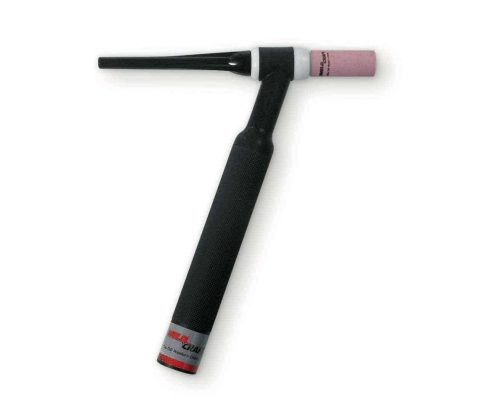
TIG has kept its place in fabrication for good reason. It offers precise manual control, clean welds and excellent versatility across stainless steel, aluminium and other metals commonly found in industrial and architectural work. It is particularly useful when joints are inconsistent, access is restricted or parts are not produced in large, repeatable batches.
For maintenance and repair work, TIG is usually the more practical option. Components in service are not always clean, square or perfectly aligned. A repair welder may need to build up worn edges, fill irregular gaps or work around contamination and variable thickness. Laser welding is less forgiving in those conditions.
TIG also remains a strong choice where welders need visible control of the puddle and filler addition. On thin-wall tube, pressure work, and visible stainless fabrications, that control can be more valuable than top-end travel speed. The process is slower, but it lets the operator respond to the part in real time.
Material condition and fit-up tolerance
One of the most important trade-offs in laser welding vs TIG welding is tolerance for imperfect fit-up. Laser generally prefers tighter joint preparation. If parts are accurately cut, held firmly and presented consistently, the process performs very well. If gaps open up, edges wander or surfaces are poorly prepared, results can deteriorate quickly.
TIG is more forgiving. An experienced welder can compensate for variation using torch angle, travel speed and filler input. That matters in small-batch fabrication, retrofits and repair work, where real-world parts rarely match ideal drawings. If the shop deals with unpredictable assemblies, TIG often protects quality better than a faster but less tolerant process.
Cost is not just machine price
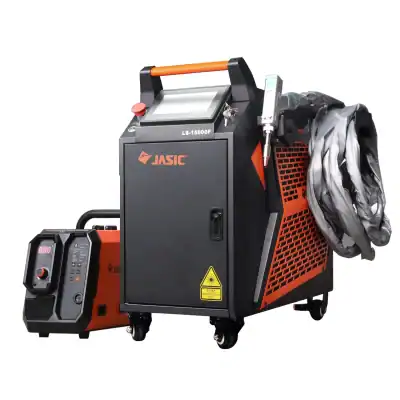
Laser equipment carries a higher upfront cost than most TIG setups, and that is often the first barrier. Capital outlay, guarding requirements, operator training and process integration all need to be considered. For many firms, the question is not whether laser works, but whether there is enough suitable volume to justify the investment.
That calculation changes if labour time is the main pressure point. On repeat work, laser can reduce welding time sharply and lower rework linked to heat distortion. If parts move through finishing faster and output per shift improves, the higher equipment cost may be offset over time. This is especially relevant where thin-gauge stainless or mild steel fabrications are produced in consistent batches.
TIG remains the lower-risk option from a capital perspective. The equipment cost is far more accessible, training pathways are familiar, and the process can cover a wide range of work without specialised fixturing. For many workshops, that flexibility keeps TIG commercially sensible even when it is slower.
Operator skill and workflow
Both processes require skill, but not the same type of skill. TIG depends heavily on hand control, coordination and weldcraft. Results are closely tied to operator experience, especially on cosmetic or critical joints. A very good TIG welder can handle variation that would stop other processes.
Laser welding shifts more of the result towards setup consistency, joint preparation and parameter control. It can reduce dependence on high-level manual dexterity for certain production tasks, but that does not mean it is simple. Poor setup, weak fixturing or incorrect settings can ruin parts quickly. In practice, laser often suits operations that can standardise work, while TIG suits operations that need adaptable human judgement on the shop floor.
Choosing between laser welding and TIG welding
The right choice depends on what kind of work dominates your schedule. If your shop produces repeat stainless assemblies, light-gauge components, enclosures or cosmetic fabrications where speed and low distortion matter, laser welding can offer a strong return. If your work is varied, lower volume, repair-heavy or dependent on operator judgement, TIG will usually remain the better all-round process.
It also depends on the wider workflow. A process that welds quickly but demands exact fit-up may force changes upstream in cutting, forming and fixturing. That is not necessarily a problem, but it needs to be recognised before any investment decision is made. The best welding process is the one that fits the whole manufacturing route, not just the weld itself.
For buyers and workshop managers, it helps to assess five factors honestly: material thickness, batch consistency, required finish, allowable distortion and labour cost per part. Those five usually make the decision clearer than headline claims about technology.
When laser is the stronger option
Laser tends to come into its own on thin to medium-gauge material, production runs with repeatable joints, and applications where post-weld finishing needs to be kept to a minimum. It is especially effective where narrow welds, low heat input and higher throughput create measurable savings across the job.
When TIG is the stronger option
TIG is usually the safer choice for mixed fabrication, site repair, variable fit-up, thicker sections requiring careful manual control, and work where versatility matters more than cycle time. It remains one of the most dependable processes for shops that need one method to cover a broad spread of tasks.
There is no shortage of hype around newer welding technology, but most fabrication decisions still come back to part quality, labour efficiency and repeatability. Laser has real advantages, and on the right work it can outperform TIG by a wide margin. TIG, however, is not outdated – it is simply better suited to jobs where adaptability, access and welder control still decide the result.
If you are weighing up laser against TIG, start with the parts that make or lose you the most time. The answer is usually sitting there in the heat marks, the dressing time and the number of hours it takes to get a batch out the door.