






Blog
How to Reduce Welding Fume Exposure at Work
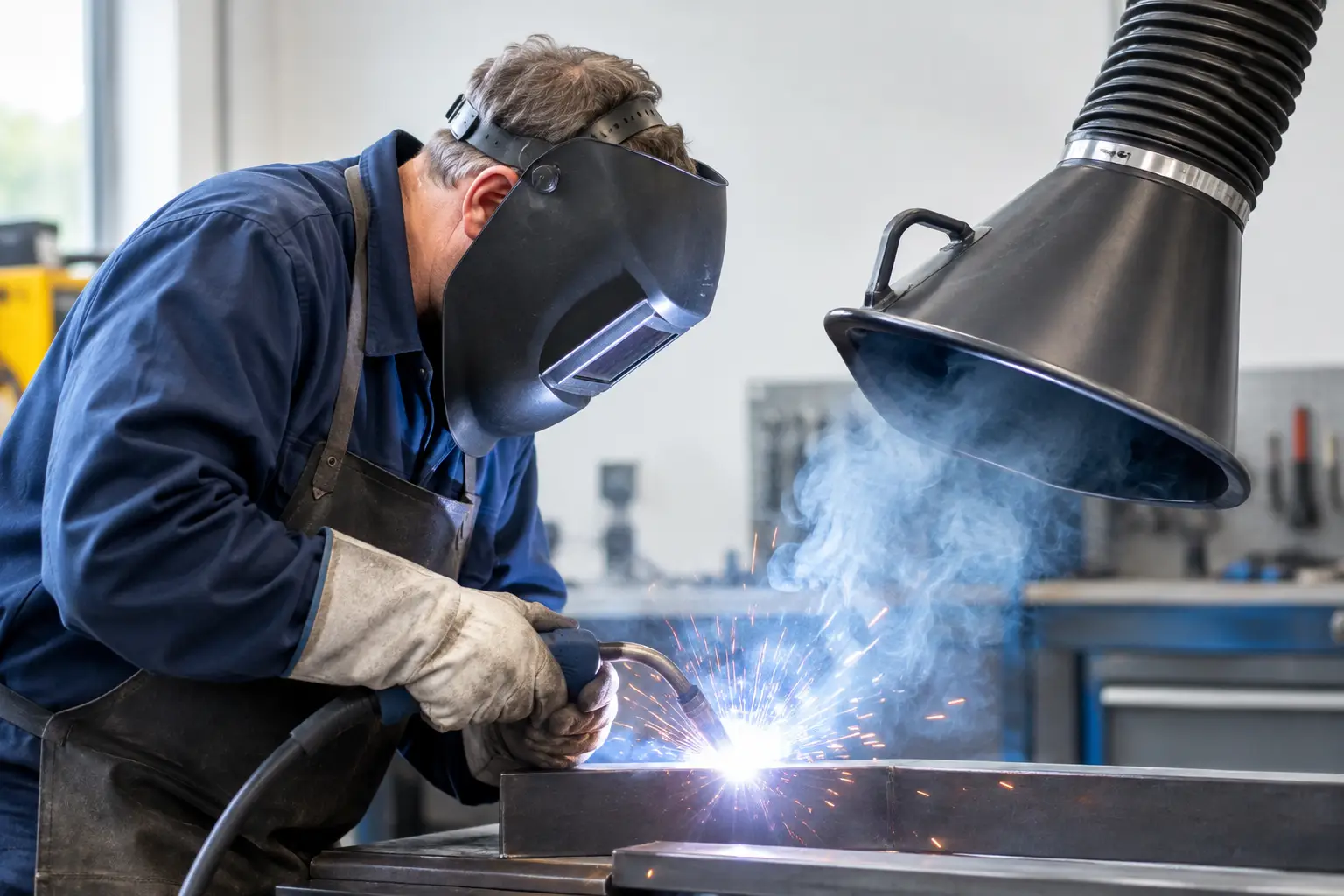
A visible plume above the weld is not a reliable measure of risk. Some of the most hazardous welding fume is made up of fine particles that remain airborne, travel across the bay and are easily drawn into the breathing zone. Knowing how to reduce welding fume exposure means controlling the fume at source first, then supporting that control with suitable work practices and respiratory protection.
For fabrication managers, workshop owners and working welders, this is an operational issue as much as a safety one. Poor fume control can affect attendance, productivity, equipment cleanliness and the ability to carry out work safely in confined or congested areas. The correct approach depends on the welding process, base material, consumable, joint location and the space available around the job.
Start with the source of the fume
Fume is created when metal, coatings and consumables are heated and vaporised in the arc or flame. As that vapour cools, it forms very fine particles. The content varies considerably: mild steel work can generate iron oxide and manganese-containing fume, while stainless steel may introduce chromium and nickel compounds. Galvanised or painted parts create additional concerns, particularly where zinc-rich coatings, primers or old finishes are present.
The first practical control is to identify exactly what is being welded or cut. Check material certificates where available and do not assume that a component is plain steel because it looks like it. Coatings, contamination from oils and cleaning chemicals, or previous repair work can all change the fume profile.
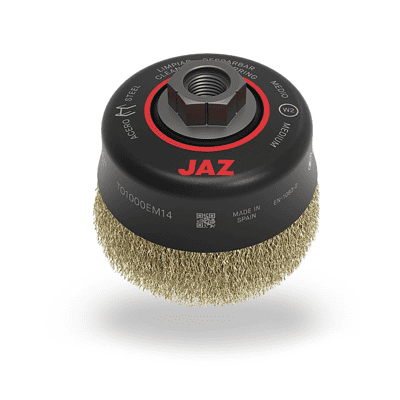
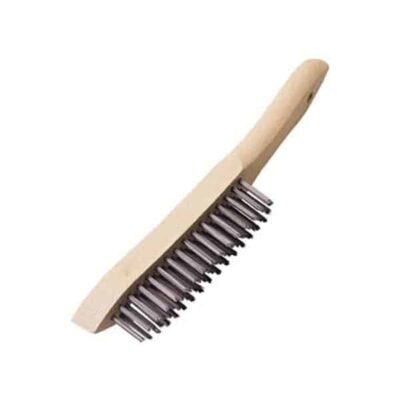
Preparing the joint properly reduces unnecessary contaminants. Remove paint, galvanising and surface residues from the immediate weld area where the specification and corrosion-protection requirements allow it. This must be done with a suitable controlled method, not by creating a second dust hazard with uncontrolled grinding. The coating system should be reinstated correctly after welding.
Process selection also matters. Some processes and consumables produce more fume than others for a given weld deposit. There is no single process that is right for every job, because deposition rate, access, positional welding, weld procedure requirements and finish all matter. However, where procedures allow, reviewing wire, electrode and shielding gas choices can lower fume generation without compromising weld quality.
Use local exhaust ventilation correctly
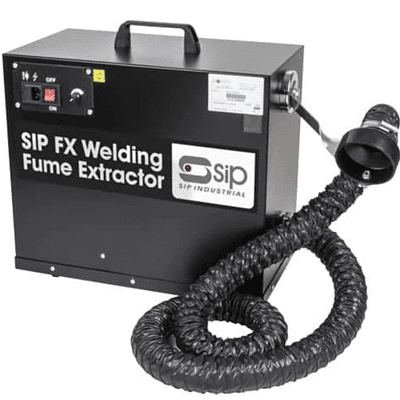
Local exhaust ventilation, commonly called LEV, is normally the most effective engineering control for routine welding. Its purpose is simple: capture fume close to where it is produced before it reaches the welder’s face or spreads through the workshop.
A general extraction canopy or a wall-mounted fan may improve overall air conditions, but it is not a substitute for properly positioned capture. The further the fume travels before extraction, the more likely it is to pass through the breathing zone. Portable extraction units with flexible arms, on-torch extraction and downdraught benches each have a place, but they are not interchangeable.
Position the extraction hood near the arc
The capture hood should be placed as close as practical to the weld without obstructing access, shielding gas coverage or the welder’s movement. If the hood is too far away, its capture performance drops sharply. If it is directly in the path of shielding gas or positioned carelessly, it can contribute to porosity and inconsistent weld quality.
For bench work, a flexible extraction arm can be effective when repositioned as the weld progresses. It should not be set at the start of a job and left there while the welder moves along a long seam. For repetitive fabrication, a fixed hood, backdraft arrangement or downdraught table may offer more consistent control.
On-torch extraction can be useful for production welding and for tasks where placing a capture arm close to the arc is difficult. It needs proper set-up and routine maintenance. A damaged nozzle, blocked hose or poor torch balance can make welders reluctant to use it, so equipment selection should account for duty cycle, consumable access and the type of work being carried out.
Do not rely on general ventilation alone
Opening roller doors or using circulation fans can dilute fume, but neither captures it at source. In some cases, fans can make exposure worse by blowing fume directly towards the welder or across neighbouring workstations. General ventilation is a supporting measure, particularly in larger fabrication bays, rather than the main control.
Airflow needs to be planned around the workspace. Avoid placing welding stations where prevailing draughts carry fume through walkways, assembly areas or inspection benches. Screened welding bays can help contain arc flash and manage airflow, but screens should not create a poorly ventilated pocket around the welder.
Position yourself out of the fume plume
A well-designed extraction system can still be defeated by poor working position. Welders should set up the work, where possible, so the plume rises or moves away from the face. This may mean changing the component orientation, adjusting fixture height, using a positioner or approaching the weld from the opposite side.
The aim is not to lean over the weld pool. This is particularly relevant for downhand bench welding, repair work on plant and awkward positional welds. A small change in body position can have a significant effect on what is breathed in over a shift.
Supervisors should treat this as a practical workshop standard, not an abstract instruction. If a job layout repeatedly forces workers into the plume, the fixture, access arrangement or extraction provision needs changing. Asking a welder to adopt an impossible posture is not a control measure.
Control exposure during site and enclosed work
Fabrication shops usually offer more options for fixed extraction than site work. Maintenance welding, structural repair and work inside vessels, plant rooms or enclosed steelwork require a more deliberate assessment before the arc is struck.
Portable LEV may be needed, along with controlled make-up air so extraction does not simply pull contaminated air through the work area. In restricted spaces, conditions can change quickly as work progresses. Gas monitoring, entry controls, standby arrangements and a task-specific permit system may be necessary depending on the location and materials involved.
Never treat a confined space as merely a small workshop. Ventilation requirements, emergency arrangements and atmospheric hazards must be assessed separately. Welding fume is only one of several risks that may be present.
Respiratory protection is a back-up, not a shortcut
Suitable respiratory protective equipment, or RPE, is often required where residual exposure remains after engineering controls, during short-duration tasks, or where source capture cannot be adequately positioned. It is especially relevant for site repairs, large fabrications and certain positional welds.
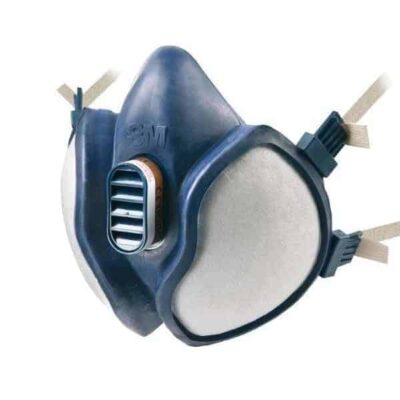
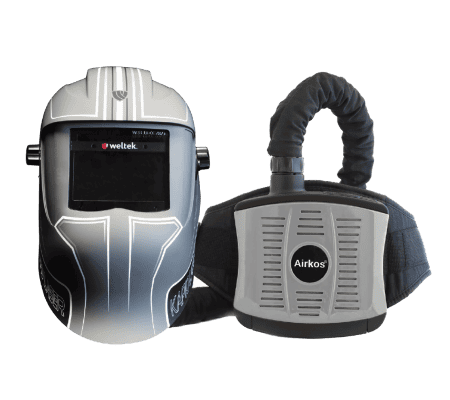
RPE must match the hazard and the task. Disposable filtering facepieces may be appropriate for limited work where selected correctly, but they are easily misused and depend on a good face seal. Reusable half masks with particulate filters can provide a more durable option for regular use. Powered air respirators and air-fed welding helmets can improve comfort for extended welding, particularly where heat and physical workload make tight-fitting protection difficult to tolerate.
Tight-fitting RPE only works when it seals to the face. Workers who wear it need face-fit testing, training, inspection and clean storage. Facial hair in the sealing area prevents an effective seal. A powered or supplied-air solution with an appropriate loose-fitting hood may be required where a tight face seal cannot be achieved.
RPE should never be used to justify poor extraction. If everyone is relying on masks because fume hangs in the bay, the workshop needs an engineering review.
Maintain the controls that protect the team
Extraction equipment needs planned examination, testing and maintenance. A unit can be running audibly while delivering poor capture because of blocked filters, damaged ducting, leaks, a full collection bin or an incorrectly adjusted system. Operators should be able to recognise basic faults and report them before the next shift.
A practical pre-use check includes confirming that airflow is present at the hood, hoses are intact, extraction arms hold position and filters or warning indicators are within service limits. For fixed systems, keep access to hoods and grilles clear. Stacking jobs, pallets or offcuts around extraction points is an easy way to undermine an otherwise capable installation.
Exposure control should also be reviewed when production changes. A larger component, a different wire diameter, a move from mild steel to stainless work, or a new welding bay can all alter the effectiveness of existing arrangements. Monitoring may be needed to verify that controls are working as intended, particularly where higher-risk materials or processes are used.
Make fume control part of job planning
The strongest results come when fume control is built into the job before fabrication begins. Decide where the component will sit, whether it can be rotated, which extraction method will be used, what coatings are present and whether the work will create a confined-space issue. This is faster and more reliable than trying to solve the problem after the first weld has filled the area with fume.
Trade-grade extraction equipment, properly selected RPE and well-organised workstations all have a role. The useful test is straightforward: if the welder is regularly working in a visible plume, stop and change the set-up. A safer weld starts with keeping the fume out of the welder’s breathing zone.