










Blog
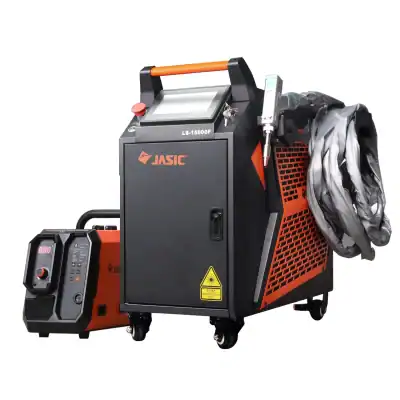
Laser Welding Equipment for Trade Use
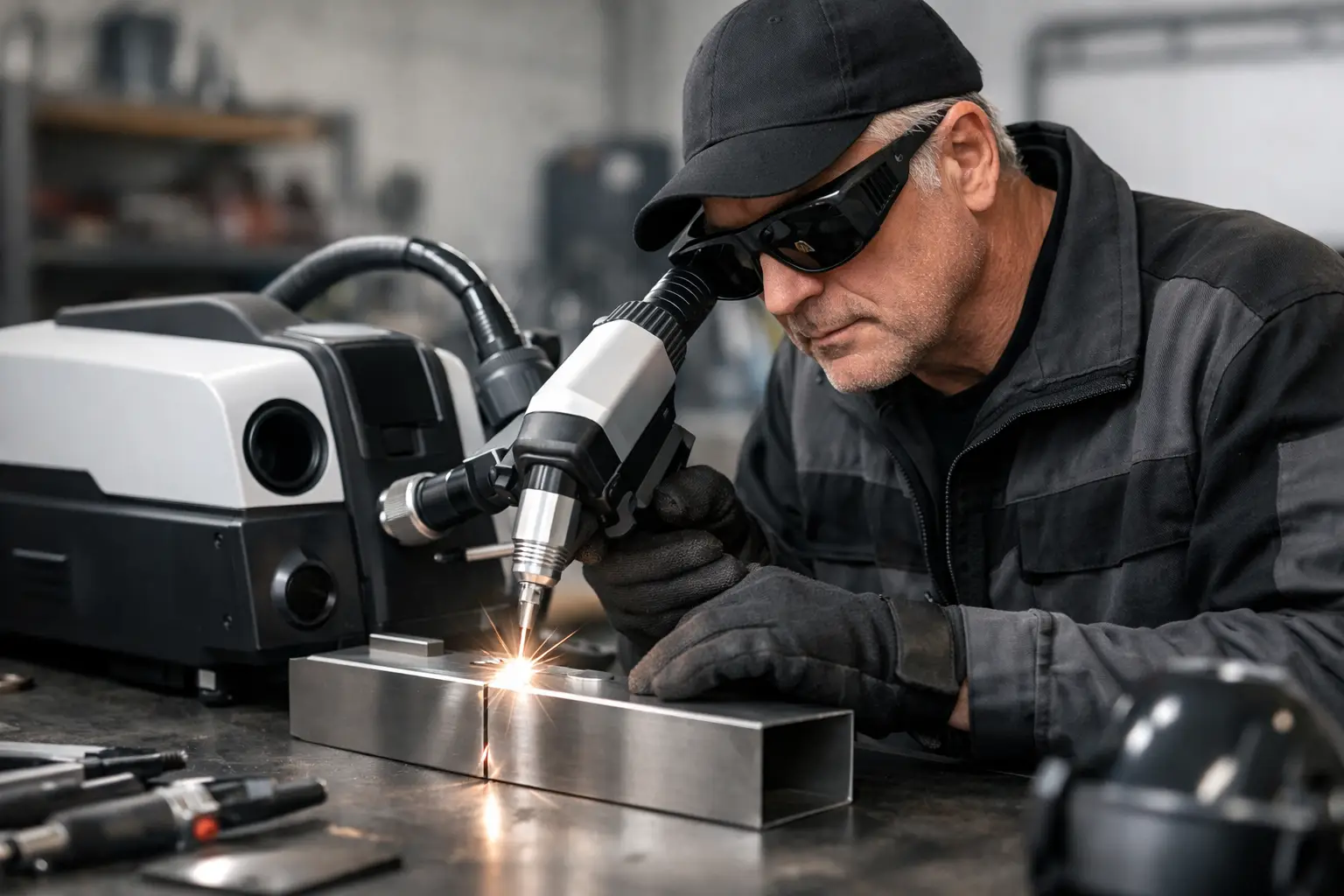
A poor weld on visible stainless, thin sheet or a tight tolerance assembly costs more than rework time. It can mean scrap, dressing, distortion control and delays across the job. That is why laser welding equipment is getting serious attention from fabrication shops, maintenance teams and industrial buyers who need cleaner joints, tighter heat control and faster finishing.
This is not a replacement for every MIG or TIG set on the floor. It is a process with clear strengths, clear limits and a buying decision that needs to be made on specification rather than marketing. If you are assessing whether it belongs in your workshop, the right question is not whether laser is better in general. The right question is where it improves productivity, weld quality and labour efficiency in your actual workload.
Where laser welding equipment makes sense
Laser welding is strongest where heat input needs to stay low and appearance matters. Thin stainless steel, mild steel and selected non-ferrous applications are common examples. The process can produce narrow welds, limited distortion and less post-weld clean-up than conventional methods, particularly on parts that would otherwise need extensive dressing.
For fabrication businesses, that can shift the economics of repeat work. If an operator can join parts quickly and reduce time spent grinding, polishing or correcting heat damage, the machine starts paying for itself through labour savings rather than weld speed alone. On finished assemblies, balustrades, sheet metal housings, cabinets and decorative stainless work, that difference is often more important than raw deposition rate.
Maintenance and repair work can also benefit, especially where access is controlled and a neat, localised repair is preferable to wider heat spread. That said, the process is not automatically the best option for heavy structural work, dirty material or poorly prepared joints. Fit-up still matters, material condition still matters and operator discipline still matters.
What to look for in laser welding equipment
When buyers compare laser welding equipment, wattage usually gets most of the attention. It matters, but it is only one part of the decision. Higher power generally gives more headroom on material thickness and travel speed, but machine stability, beam quality, cooling performance, controls and torch ergonomics all affect day-to-day usability.
A shop buying for production needs to assess the actual material range being welded. If most work is light gauge stainless and carbon steel, the ideal system may be very different from one intended for thicker section repairs or more varied jobbing work. Buying too small limits process window and productivity. Buying too large can mean higher cost, more electrical demand and capacity that never gets used.
Wire feed integration is another practical point. Some applications are handled well autogenously, while others benefit from filler wire for gap bridging, reinforcement or metallurgical control. If your jobs involve inconsistent fit-up, corners, edge prep variation or cosmetic requirements, wire-fed capability may be a serious advantage rather than an optional extra.
Cooling should not be treated as a minor detail. Industrial use places steady demands on thermal management, especially in longer duty cycles. A machine that performs well in short demonstrations may show different behaviour when used across a full working day. For trade buyers, serviceability and cooling reliability deserve as much attention as headline output.
Laser welding versus TIG and MIG
The comparison most workshops make is against TIG. That is logical, because the finish and precision expectations often overlap. In the right application, laser can be faster than TIG and can reduce distortion significantly. It can also shorten finishing time, which is where many shops lose margin without always accounting for it properly.
However, TIG remains highly flexible, especially for varied materials, edge conditions and controlled manual work. A skilled TIG welder can manage awkward fit-up and subtle joint conditions in a way that some laser processes may not tolerate as well. If your workshop deals with one-off fabrication, inconsistent prep or broad material variation, TIG may still carry more of the workload.
Against MIG, laser welding equipment is generally not a direct substitute for high-deposition structural fabrication. MIG remains practical, familiar and cost-effective for heavier work, larger gaps and general steel fabrication. Laser comes into its own when heat control, appearance and reduced finishing are the priorities. For many businesses, the realistic outcome is not replacement but a mixed process environment where each machine is used where it adds value.
Operator skill and safety requirements
There is a misconception that laser welding is simple because travel speeds can be high and the weld zone is narrow. In practice, it changes the skill requirement rather than removing it. Operators still need process understanding, correct settings, sound joint preparation and awareness of how different materials respond.
Training matters from the first day. Beam behaviour, focal position, travel consistency and filler handling all affect results. So does material cleanliness. Laser systems are less forgiving of contamination than some conventional processes, and poor preparation quickly shows in weld quality.
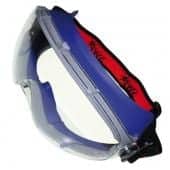
Safety is non-negotiable. Laser welding equipment requires proper controls for beam hazards, reflected energy, fume management and operator protection. That includes compliant eyewear where required, work area control, guarding and disciplined procedures. Buyers should treat installation and operating environment as part of the capital decision, not as an afterthought once the machine arrives.
Workshop factors that affect return on investment
Return on investment comes down to throughput, labour and job mix. If your team spends hours blending welds on visible stainless, correcting distortion on thin sections or rejecting parts due to heat damage, laser welding may solve a real production problem. If most of your work is heavier fabrication with forgiving finish requirements, the gain may be harder to justify.
Batch size matters as well. Repetitive work with stable joint design gives the best chance of consistent savings. Jobbing shops can still benefit, but they need to be honest about variation. The wider the range of materials, thicknesses and joint conditions, the more important operator capability and machine versatility become.
Support and consumable planning should also be considered. Industrial buyers do not just need a machine that can weld. They need one that can be kept productive with available parts, sensible maintenance intervals and credible technical backup. Downtime quickly wipes out any theoretical process advantage.
Common mistakes when buying laser welding equipment
The first mistake is buying on headline power alone. More wattage does not automatically mean better welds or better value. The second is underestimating setup, training and safety requirements. A machine can be technically capable and still underperform if the workshop is not prepared for it.
Another common mistake is assuming every job will move across from TIG or MIG with equal benefit. That rarely happens. The strongest buying case is built around specific work types where laser gives measurable gains in finish, speed or rework reduction. Buyers who map the process to real production tasks usually make better decisions than those chasing general capability.
It is also worth scrutinising duty cycle claims in context. Ask how the equipment performs under sustained workshop conditions, not just ideal test runs. The same goes for handpiece comfort, cable management and control layout. If the system is awkward to use, operators will avoid it or struggle to get the best from it.
Is laser welding equipment right for your business?
If your work involves thin materials, visible welds, distortion-sensitive parts or repetitive fabrication where finishing time erodes margin, laser welding equipment deserves serious consideration. It can improve speed, consistency and presentation while reducing secondary operations. In the right setting, that is a strong commercial advantage.
If your workshop mainly handles heavy section fabrication, inconsistent fit-up, outdoor repair work or lower-finish structural jobs, the case may be weaker. Conventional welding processes will often remain the more practical and economical choice. There is no issue with that. Good purchasing is about fit for purpose, not novelty.
For many professional buyers, the best approach is to evaluate the process against the jobs that cause the most labour loss or quality risk today. That keeps the decision grounded in production reality. When laser is matched to the right application, it is not a showroom extra. It becomes another serious workshop tool, and one that earns its place by reducing waste where it matters most.