




















Blog
Welding Automation Trends That Matter
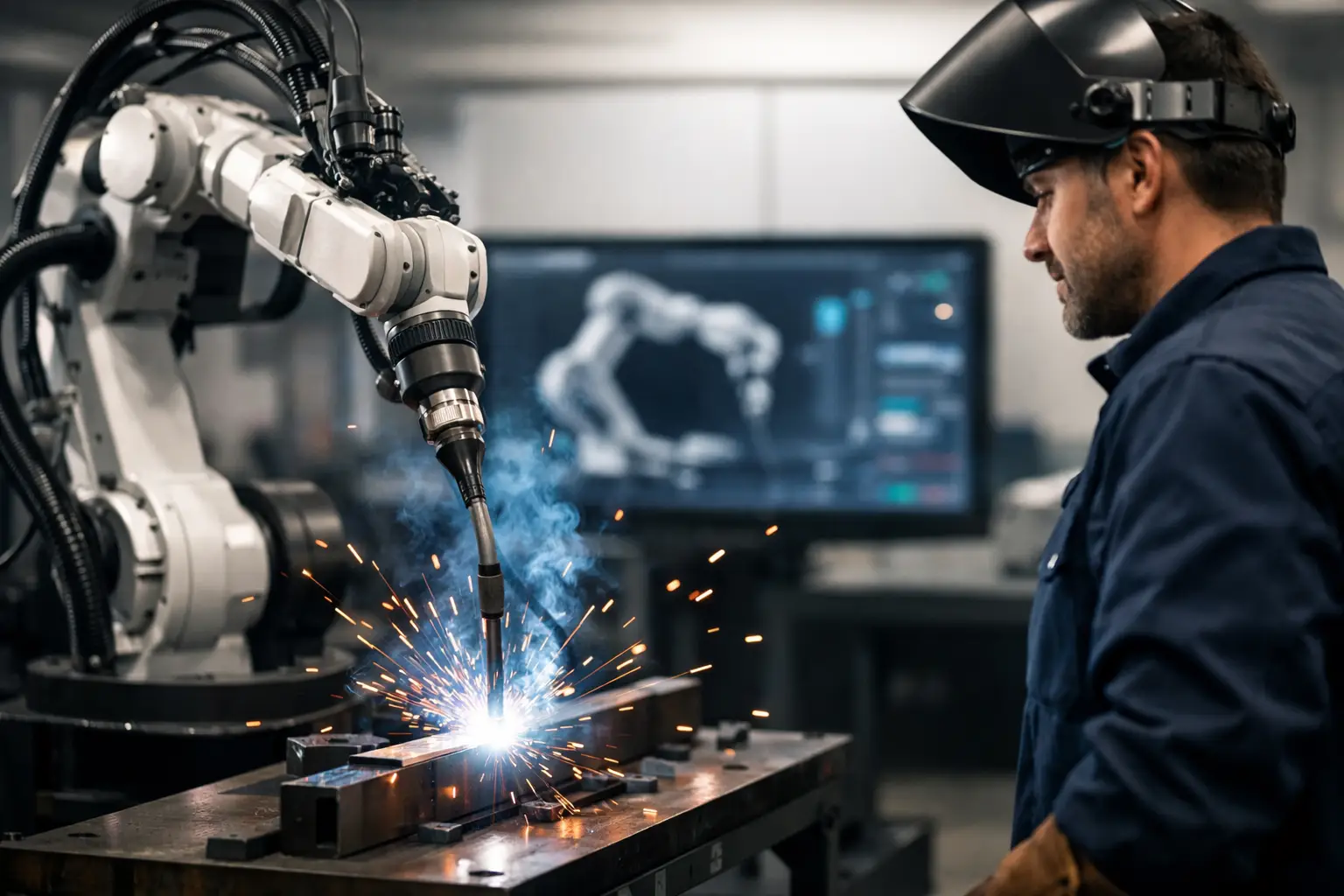
Labour pressure is forcing decisions on the shop floor faster than most fabrication businesses would prefer. When skilled welders are hard to recruit and throughput targets keep rising, welding automation trends stop being a future topic and become a purchasing issue.
For most workshops, the question is not whether automation has value. It is where it delivers the best return without creating unnecessary complexity. A small fabrication shop making varied one-off work needs something different from a manufacturer producing the same weldment every shift. That distinction matters, because the strongest results usually come from matching the level of automation to the job mix, not from buying the most advanced system available.
Welding automation trends are moving towards practical flexibility
A few years ago, automation in welding was often treated as a high-volume production tool only. That view is changing. One of the clearest welding automation trends is the move away from fixed, highly specialised cells and towards equipment that can handle shorter runs, more changeovers and mixed production.
This shift is partly driven by the type of work many British and Irish fabricators actually do. Repetitive batch work still exists, but many shops are balancing repeat contracts with bespoke frames, brackets, handrails, pipe sections and structural assemblies. In that environment, flexibility has a direct financial value. If changeover takes too long, the automated process can cost more than it saves.
That is why modular positioners, programmable travel carriages, collaborative robotic systems and easier-to-teach interfaces are gaining attention. The appeal is straightforward. They reduce arc-on dependency on one operator while keeping setup demands within reason. For buyers, the real measure is not headline technology. It is how quickly the system can be re-tasked between jobs and whether it fits the current workflow.
Better sensing and control are improving weld consistency
Another important development is the improvement in sensing, seam tracking and process control. Older automated systems often relied on tight part consistency. If fit-up varied, results dropped quickly. That remains true to a degree, but modern control systems are better at compensating for small part-to-part variation.
In practical terms, this means more stable weld quality where components are cut, tacked or presented with minor differences. Through-the-arc tracking, laser-based seam detection and more refined parameter control are helping reduce rework, especially in repetitive fabrication where small deviations used to accumulate over a shift.
There is a trade-off. Better sensing does not remove the need for sound preparation. Poor joint design, inconsistent tack-up and contamination still create problems. Automation tends to expose upstream weaknesses rather than hide them. Businesses that see the best results usually improve fixturing, material handling and joint preparation at the same time as introducing automated welding.
Cobots are attracting interest, but they are not right for every bay
Collaborative robots are one of the most talked-about welding automation trends, largely because they promise a lower barrier to entry. For some businesses, that promise is justified. Cobots can suit lower-volume, higher-mix production where a full industrial robotic cell would be difficult to justify on cost or floor space.
Their advantages are clear enough. Programming is typically simpler, installation is often less disruptive and they can be moved between applications more easily than a fixed cell. For workshops making repeat brackets, frames or small assemblies, that can be a sensible route into automation.
Even so, there is a tendency in the market to overstate what cobots can do. They are not automatically the best answer for thick-section work, heavy deposition rates or applications where cycle speed is critical. In many cases, a dedicated mechanised setup with a good positioner and consistent jigging will outperform a cobot on both cost and output. The right choice depends on weld length, part range, required deposition, available floor space and the competence of the team responsible for setup.
Mechanised welding is still one of the smartest investments
Not every automation decision needs to involve robotics. In fact, one of the more grounded welding automation trends is renewed interest in mechanised solutions that sit between manual welding and full robotic integration.
For a lot of fabrication companies, this middle ground is where the best return sits. Rotary positioners, column and boom setups, seam welders, pipe welding systems and linear travel carriages can improve consistency and productivity without the capital cost or programming overhead of a robot. They also tend to be easier to maintain and simpler to integrate into an existing bay.
This matters because many workshops are not trying to automate everything. They are trying to remove bottlenecks. If one repetitive circumferential weld, long seam or hard-to-access joint is slowing dispatch, a mechanised solution can address the problem directly. It is often a more practical buying decision than pursuing complete automation across mixed work.
Data is becoming part of the welding process
More businesses are also looking at data capture, and this is one of the welding automation trends with wider implications than it first appears. Monitoring arc time, parameter compliance, downtime causes and consumable usage gives fabrication managers a clearer picture of where productivity is being lost.
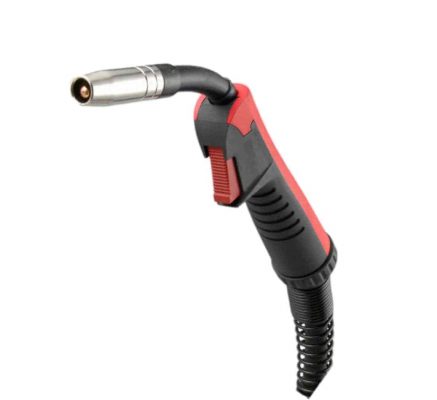
The immediate benefit is visibility. If a welding cell appears underperforming, data can show whether the issue is programming, poor fit-up, excessive changeover, operator intervention or stoppages caused by missing consumables and worn torch components. That sort of information supports better purchasing and maintenance decisions.
There is also a quality angle. In sectors where traceability matters, logged welding data can support process control and documentation. Not every workshop needs that level of record keeping, but where repeatability and compliance are commercially important, digital oversight is becoming harder to ignore.
That said, data only helps if someone uses it properly. Buying connected equipment without assigning responsibility for review usually produces little value. The useful approach is to track a small number of indicators that influence output and weld quality, then act on them.
Labour shortages are changing the economics of automation
The skills issue remains one of the strongest drivers behind automation. Experienced welders are still essential, particularly for setup, procedure control, inspection and difficult manual work. Automation does not replace that expertise. It changes where it is best used.
A skilled welder spending hours on repetitive joints may not be the best use of labour if that work can be mechanised. The stronger model is often to redeploy higher-skill staff into fit-up control, quality assurance, supervision and process optimisation while repetitive welds are handled by automated or mechanised equipment.
This is one reason automation projects are getting approval in shops that would not have considered them previously. The return is no longer based only on output per hour. It is also based on labour resilience. If production depends on a very small number of welders for repeat work, the business carries obvious risk when absence, turnover or peak demand hit.
Buyers are looking harder at integration, not just the welding set
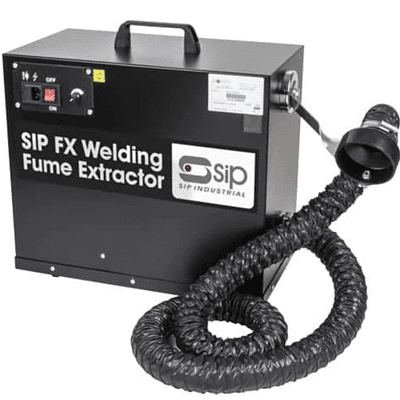
One of the more mature welding automation trends is a shift in buying criteria. Purchasers are now asking harder questions about the whole system. Torch access, table layout, fixture design, fume extraction, guarding, wire feed reliability, spares availability and maintenance support all affect whether automation works in practice.
This is where many projects either deliver or disappoint. A technically capable welding package can still underperform if part presentation is awkward or if consumable changes are frequent and disruptive. Likewise, an automated cell that depends on hard-to-source wear parts can create costly downtime.
For trade buyers and fabrication managers, this means evaluating automation as an operational system rather than a stand-alone machine. Product reliability, serviceability and consumable compatibility matter just as much as software features.
What to watch next
The next phase is likely to be less about headline novelty and more about usable refinement. Easier programming, stronger process feedback, more compact cells and better integration with cutting and fabrication stages will continue to shape investment decisions. Equipment that reduces setup time and tolerates realistic workshop variation will remain attractive.
For most fabrication businesses, the sensible response is not to chase every new development. It is to identify where welding time is repetitive, where quality drift is costing money and where labour is stretched. That usually points to the right level of automation far more accurately than a brochure ever will.
Good automation is not about removing welders from the process. It is about using skilled people where they add the most value, and using dependable equipment to carry the repeatable load. Buyers who stay focused on that principle will make better decisions as the market continues to move.