




Blog
Welding Fume Extractor Review for Workshops
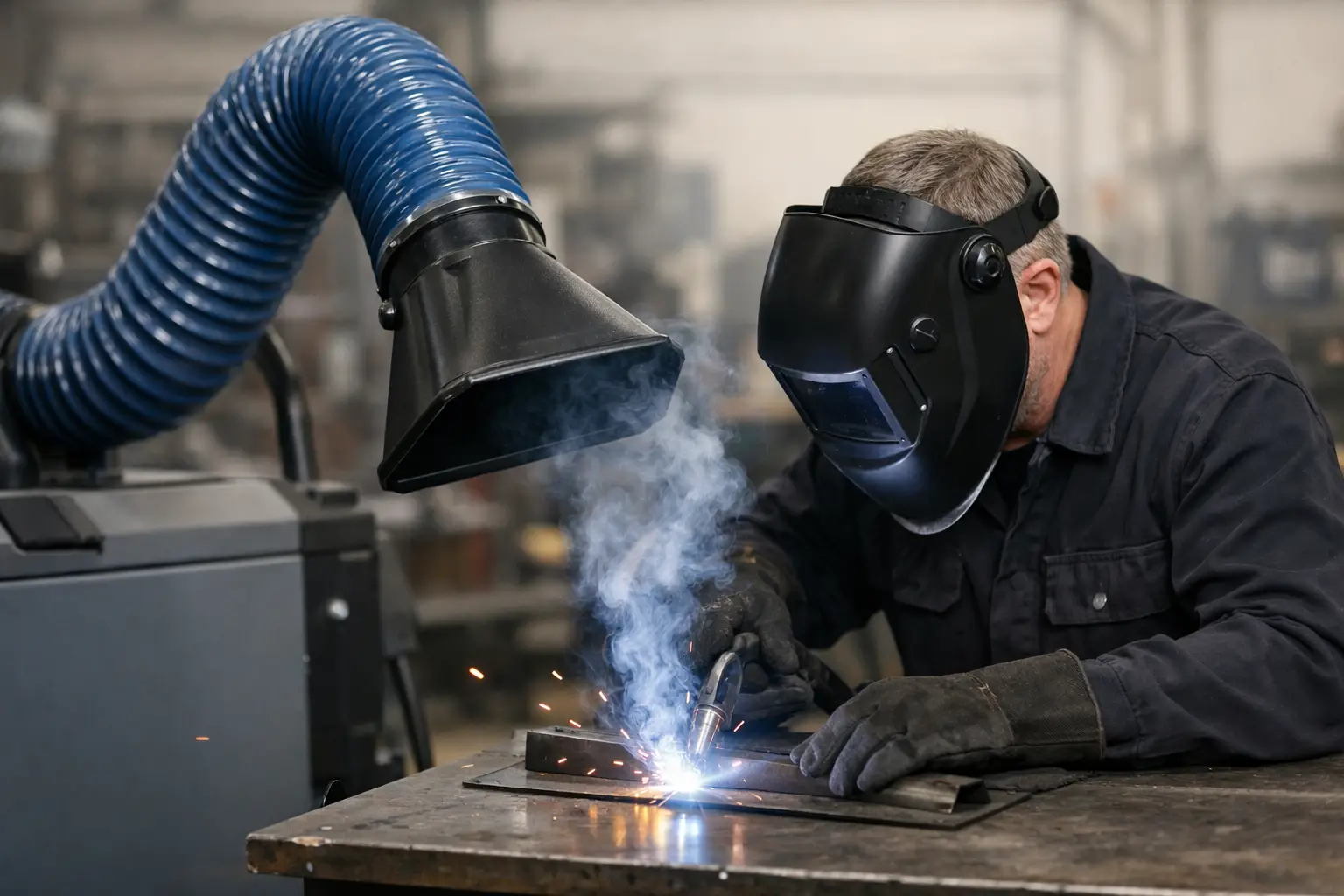
A welding fume extractor review should start at the arc, not at the catalogue specification. A unit can quote impressive airflow, a multi-stage filter and a large motor, yet still leave visible fume in the welder’s breathing zone if the extraction hood is too far from the work or the system is poorly matched to the process. For fabrication shops, the right equipment is the one that captures fume consistently without slowing down production.
Welding fume is not a nuisance to be dealt with after the job. It is a process hazard that needs controlling at source. This is particularly relevant where work involves stainless steel, galvanised material, coated steel, hardfacing consumables or repeated production welding in a confined workshop. The practical question is not simply, “What extractor is most powerful?” It is, “What system will capture this fume, in this position, for this length of shift?”
Welding fume extractor review: what to assess
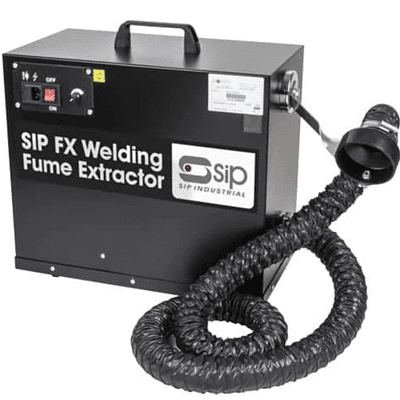
A useful review compares extraction systems by their real working conditions. Consider the welding method, material, joint type, access around the workpiece, number of operators and whether the work remains in one bay. A mobile unit with an articulated extraction arm suits some bench and fabrication table work very well. It is less effective where the welder moves around large fabrications, works inside structures or continually changes position.
Airflow is the first figure most buyers see, but it does not tell the full story. What matters is capture velocity at the hood opening and at the weld. As the extraction arm is moved away from the arc, its ability to pull fume into the hood drops quickly. A high-volume unit cannot compensate for an arm parked 600 mm away because it is more convenient for access.
Filtration is equally important. A typical mobile extraction unit may use a spark arrestor or pre-separation stage, a main cartridge filter and, on some models, a final high-efficiency stage. The arrangement should suit the fume load and the process. Fine MIG and TIG fume can load filters differently from heavy manual metal arc work, while grinding dust can rapidly shorten filter life if it is pulled through a system intended mainly for welding fume.
Do not treat quoted filter efficiency as a complete answer. Ask what particle size the rating applies to, whether the unit has an automatic or manual cleaning system, how filter condition is indicated, and whether replacement filters are readily available. A machine that performs well on day one but loses extraction because the filter is neglected is not a cost-effective solution.
Fixed, mobile and on-torch extraction
The best type of extractor depends on how the workshop operates. Fixed central systems are generally the strongest option for permanent welding bays with predictable activity. They can serve several arms or workstations, keep floor areas clearer and allow more controlled installation. The trade-off is higher capital cost, ductwork design and less flexibility if the workshop layout changes.
Mobile fume extractors are often the practical choice for small and medium fabrication businesses. They can be positioned beside a welding bench, moved between bays and put into service without major ducting work. Their limitation is discipline: the arm needs to be correctly positioned before welding begins, and it must be repositioned as the weld progresses.
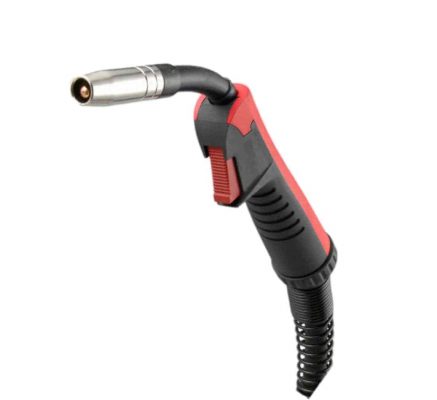
On-torch extraction captures fume close to its point of generation and can be highly effective for repetitive MIG production work. It can also improve capture where a standard extraction hood would obstruct the operator. However, it adds weight and bulk to the torch assembly, may affect handling on fine work, and requires the welding set-up, torch consumables and extraction equipment to work together properly. It is not automatically the best choice for every welder or every joint.
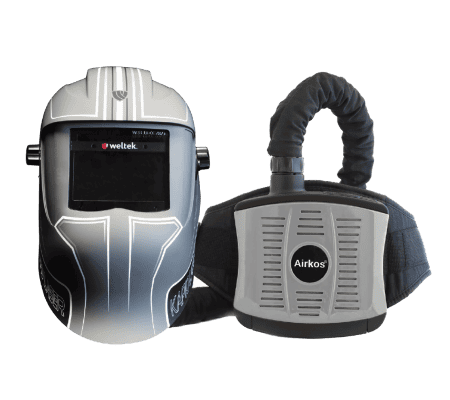
For large fabrications and variable site-style work within a workshop, consider whether a combination is required. An extraction arm may control routine bench work, while portable extraction or respiratory protective equipment may be necessary for awkward positions, internal sections and jobs where source capture cannot be maintained. One unit rarely solves every exposure scenario.
Hood design and positioning matter more than expected
An extraction arm is only as good as its hood position. The hood should draw fume away from the welder without pulling the plume through their face. In most cases, this means placing it to the side and above the weld, with the opening directed towards the fume plume. Positioning needs to allow for the shielding gas and avoid creating excessive draught around gas-shielded welding.
The hood should be close enough to capture fume but not so close that it interferes with torch movement, obscures the joint or becomes vulnerable to spatter. The right distance varies by system and process, so follow the equipment guidance and verify performance in the actual work position. A few minutes spent setting the arm correctly at the start of a job can make more difference than upgrading to a slightly larger unit.
Duty cycle, noise and workshop practicality
A fume extractor should be specified for the working day, not only for occasional repair work. Check the stated duty cycle, motor rating, airflow under load and intended number of concurrent users. If two welders are expected to use a shared system, the design airflow must account for both stations operating at the same time. Running an undersized unit continuously leads to poor capture, frequent filter cleaning and avoidable downtime.
Noise deserves attention as well. A loud mobile extractor may encourage operators to switch it off, particularly in smaller shops where several machines are already running. Compare sound levels, but also consider where the unit will stand. A fixed fan located away from the welding area may improve the working environment, though duct routing and make-up air then become more significant.
Floor space and access are operational issues, not minor details. A mobile unit needs stable castors, a sensible cable arrangement and an arm that holds its position without drifting. In a busy fabrication area, it should not create a trip hazard or block material handling routes. For fixed extraction, assess where ductwork, fans and discharge points can be installed before selecting equipment.
Maintenance is part of the purchase decision
Extraction performance depends on routine inspection. Operators should be able to see whether the arm is damaged, whether the hood is correctly positioned and whether the system is running normally. Supervisors need a clear maintenance plan covering filter cleaning or replacement, seals, hose condition, fan operation and airflow indication.
Automatic filter cleaning can reduce manual intervention, especially in higher-use environments, but it does not remove the need for maintenance. Dust collected from filters must be handled appropriately, and damaged cartridges or blocked pre-filters need prompt attention. Keep service consumables available rather than allowing a machine to sit idle while parts are sourced.
Where extraction forms part of local exhaust ventilation control, it also needs formal examination and testing. Under UK COSHH requirements, LEV systems generally require a thorough examination and test at least every 14 months, with records retained. This is separate from basic operator checks. A new extractor is not proof of compliance unless it is installed, used, maintained and tested as part of a suitable control strategy.
Choosing the right specification
Before purchasing, establish the welding processes and materials used most often, the number of active welding positions and the maximum expected operating hours. Measure the work area and identify whether the welder can keep an extraction hood close to the arc throughout the task. If they cannot, choose another capture method rather than assuming an arm will be enough.
Also consider future workload. A compact mobile unit may suit one fabrication bench now, but a growing workshop may soon need multiple extraction points or a fixed system. Buying trade-grade equipment with available filters, replacement arms and service support is usually more sensible than treating fume control as a disposable workshop accessory.
ProWeld customers should approach fume extraction as part of the welding process, alongside machine selection, consumables and operator technique. Specify for capture at source, make positioning easy for the welder, and maintain the equipment as carefully as the welding set itself. That is how an extractor becomes a working control rather than a machine collecting dust in the corner.