
























Blog
Laser Welding Trends 2026 for Fabrication Shops
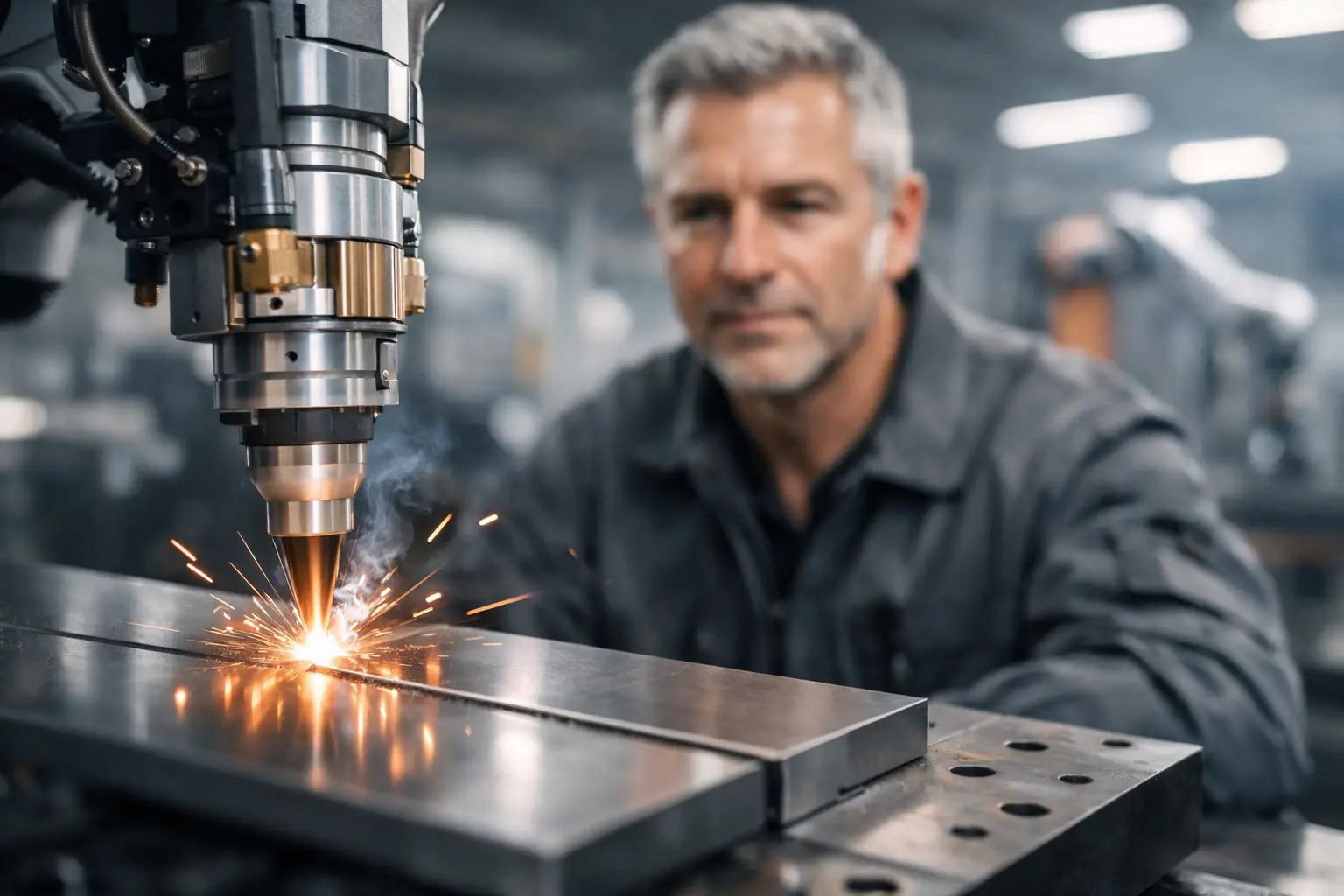
A handheld laser welder can produce an impressively clean bead on a test coupon. That does not automatically make it the right answer for a production job, a repair bay or a site fabrication team. The laser welding trends 2026 that matter to professional buyers are less about novelty and more about where the process can reliably reduce rework, handling time and heat distortion without creating new safety or quality-control problems.
For fabrication shops, the real question is not whether laser welding is replacing conventional processes. It is where it earns its place alongside MIG, TIG and other established methods. The strongest applications are usually repetitive, well-prepared joints in thinner material, stainless steel work, cosmetic fabrication and assemblies where controlling distortion has a direct value.
Laser Welding Trends 2026: Practical Changes on the Shop Floor
The market is moving from demonstration-led sales towards more disciplined process selection. Buyers are asking about duty cycle, service support, consumable availability, interlocks, extraction, weld procedure qualification and operator competence. That is a healthy shift. A fast travel speed is useful only when the finished joint meets the required strength, appearance and inspection standard.
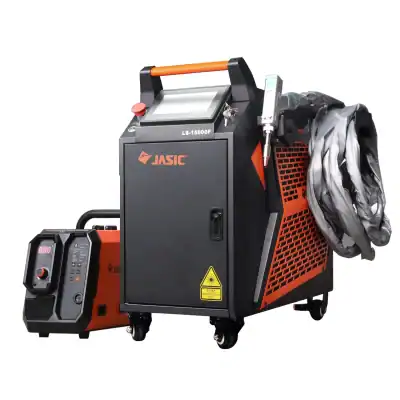
Portable fibre laser systems continue to attract attention because they combine a compact power source with a hand-held welding head. For suitable lap joints, fillet welds and butt joints, the process can be considerably quicker than TIG and may require less finishing work. The narrow heat-affected zone is a major advantage where thin sheet, polished stainless or distortion-sensitive components are involved.
However, portability should not be confused with casual use. These systems are generally Class 4 laser equipment. Reflections from shiny metal, gaps around screens and poor access control can turn a compact work cell into a serious hazard. In 2026, a professionally specified installation will increasingly include controlled working areas, suitable laser-rated barriers, door interlocks, clear operating procedures, fume extraction and named trained operators rather than treating the unit like a standard welding set.
More focus on joint fit-up
Laser welding rewards preparation. A joint with inconsistent gaps, contamination, heavy mill scale or poor alignment can quickly lose the speed and appearance benefits shown in ideal demonstrations. Fabricators are therefore pairing laser equipment with better fixturing, accurate cut parts and more consistent edge preparation.
This is particularly relevant for subcontract workshops. If incoming parts vary from batch to batch, the operator may spend time correcting fit-up, adjusting technique or repairing defects. In that situation, a conventional process with better gap tolerance can remain the more productive choice. Laser welding is most effective when it is part of a controlled fabrication route, not a workaround for poor parts.
Wire-fed capability becomes more relevant
Hand-held laser welding without filler can work well on closely fitted material, but it is not the answer to every joint. Wire-fed laser setups are becoming more important where a fillet profile needs building, where there is slight variation in fit-up, or where metallurgy and dilution need closer control.
The trade-off is greater equipment complexity and a more demanding setup. The wire, shielding gas, torch angle, travel speed and material condition all affect the result. Shops considering wire-fed systems should assess the full application range rather than choosing solely on maximum quoted welding speed. A machine that handles the common jobs consistently is more valuable than one that performs exceptionally on a narrow sample piece.
Automation Is Moving Beyond Large Production Lines
Laser welding has long been associated with high-volume automated manufacture, but smaller fabrication businesses are gaining access to more practical automation options. Collaborative robot cells, compact positioners and programmable fixtures can make sense for repeat assemblies that are too variable for a dedicated production line but too frequent for fully manual welding.
The key development is not automation for its own sake. It is the ability to hold a repeatable part position, maintain a consistent focal distance and reduce dependence on manual presentation. These factors improve weld consistency and make the process easier to inspect. For batch work such as brackets, enclosures, housings, frames and stainless fabrications, the combination of laser source, fixture and simple automation can be more significant than the laser power rating alone.
That said, automation has a payback threshold. Low-volume repair work, irregular structural jobs and products with frequent design changes may not justify dedicated tooling. A workshop should calculate the cost of fixtures, programming, guarding, operator training and changeover time before assuming a robot cell will solve labour constraints.
Vision and seam tracking improve tolerance handling
Vision systems and seam-tracking technology are becoming more accessible, particularly on automated cells. They can help locate joints, identify positional variation and maintain a more stable welding path. For shops producing repeat work from laser-cut or pressed components, this can reduce manual adjustment and improve traceability.
It does not remove the need for sound manufacturing control. Cameras cannot correct a badly distorted assembly, unsuitable joint design or inconsistent material condition. They are most useful where tolerances are already reasonable and the aim is to reduce minor variation rather than compensate for fundamental process weaknesses.
Quality Control Will Decide Which Applications Stay with Laser
The clean appearance of a laser weld can be misleading. A narrow, smooth bead is not proof of adequate penetration, fusion or mechanical performance. As laser welding takes on more production work, fabricators will place greater emphasis on procedure development, sample testing and inspection methods suited to the application.
For non-critical decorative work, visual inspection and practical production checks may be sufficient. For load-bearing, pressure-related or safety-sensitive components, the required standard can be much higher. Material grade, thickness, joint type, filler use, shielding gas and heat input must all be considered. Where formal welding procedures or customer specifications apply, buyers should confirm that the intended laser process can be qualified before committing to the equipment.
Traceability is also becoming more common. Digital parameter recording can help a workshop identify what settings were used on a batch and investigate any later quality issue. This is useful, but it does not replace operator judgement. An experienced welder who understands joint condition, heat effects and defect indicators remains central to a reliable process.
The Cost Case Is About Throughput, Not Just Machine Price
Laser welding equipment can carry a higher initial cost than a conventional manual set, especially once safety infrastructure and extraction are included. The proper comparison is therefore not purchase price against purchase price. It is total job cost: preparation, welding time, filler consumption, distortion correction, grinding, polishing, inspection, rework and delivery performance.
Stainless steel fabrication often provides a clear example. If a laser process produces an acceptable cosmetic finish with less heat tint, reduced distortion and less post-weld dressing, the saving may be substantial. On heavier sections with wide gaps, outdoor site conditions or joints requiring significant filler deposition, the gain may be limited. Conventional welding may remain faster, more forgiving and easier to deploy.
Consumables should also be assessed realistically. Contact tips, nozzles, protective optics, shielding gas, wire where used and cleaning materials all affect operating cost. So do planned servicing arrangements and the availability of competent technical support. For a production workshop, downtime caused by damaged optics or an unresolved fault can remove any theoretical savings very quickly.
Safety and Extraction Are No Longer Add-Ons
Among the most significant laser welding trends 2026 is the expectation that safety provisions are designed into the purchase from the outset. A laser source, welding head and basic screens are not a complete safety solution. The installation must be assessed for reflected beam risk, access routes, adjacent work, windows, surface finishes and the possibility of untrained staff entering the area.
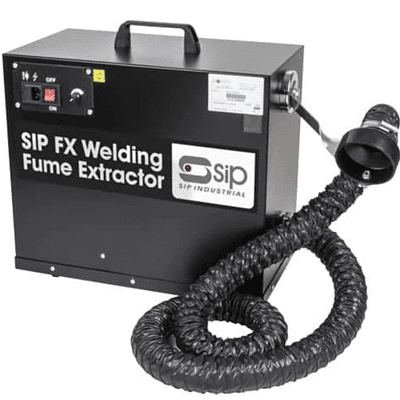
Fume control deserves the same attention. Laser welding can produce visible and fine particulate fume, particularly when coatings, oils or surface contaminants are present. Local extraction, clean workpieces and appropriate respiratory protection where required protect operators and prevent contamination of nearby operations. Galvanised, painted or otherwise coated materials need specific consideration before any welding process is selected.
A sensible buying specification should cover the work area as well as the machine. Include guarding, interlocks, extraction capacity, fire precautions, maintenance requirements, operator training and a documented risk assessment. This approach may appear slower at the purchasing stage, but it prevents expensive changes after equipment arrives.
Where Laser Welding Fits Best
Laser welding is likely to gain ground in controlled workshop applications where part repeatability, finish quality and low heat input matter. It is less likely to displace established methods across every fabrication task. The best-equipped shops will treat it as another capable process, selecting it where it improves the job rather than forcing every job through it.
Before investing, run representative parts rather than showroom samples. Include the material conditions, joint gaps, production rates and finishing standards that occur in normal work. Check the welds against the requirements that matter to your customers. If the process reduces handling and delivers repeatable quality, it has a credible place on the shop floor. If not, the right answer may be better fixturing, a different welding process or improved preparation first.
For buyers building that capability, the most useful next step is a frank review of the parts already causing bottlenecks. The jobs that consume hours in dressing, straightening and repair are usually the ones that reveal whether laser welding is a practical investment or simply an impressive demonstration.